Acila
Searched as Acila (Acila) isthmica isthmica. The Paleobiology Database treats Acila as the accepted name.
Acila is a genus of marine bivalves in the family Nuculidae. Acila fossils have been found dating back to 113.0 Ma ago.

EcologyWA · CC BY 2.0 · via Wikipedia/Commons. May be a photograph of a specimen, or an artist’s reconstruction — an interpretation of a skeleton, since colour and soft tissue are almost never preserved.
On record
Recorded, not inferred- Also called
- divaricate nutclamPBDB
- Sits inside
- NuculidaePBDB
- Diet
- deposit feeder, suspension feederPBDB, for Nuculidae
- Life habit
- infaunalPBDB, for Nuculidae
- Motility
- facultatively mobilePBDB, for Nuculidae
- Vision
- blindPBDB, for Bivalvia
- Environment
- coastal,inner shelf,outer shelf,oceanicPBDB, for Nuculidae
Time the record covers
At least 15 million years on record.
The record covers at least 23.04 Mya to 7.246 Mya. No occurrence read is dated outside 27.3 Mya to 5.333 Mya.
10 occurrences of Acila on record, most of them in the Miocene. The Paleobiology Database records this as a living group, and the chart stops with its fossils rather than at the present. Bar height is expected occurrences, not a count: each fossil is spread across the span it is dated to, so a tall narrow bar means tight dating and a low wide one means loose.
When
10 occurrencesThese are dates about fossils, not the animal: the record can only begin after it arose and end before it died out, so either end may reach further. Shares are expected occurrences: a fossil dated to a span is counted partly in each period it straddles. More on what this infers.
Found in
3 formations
Loading coastlines…
The named rock units Acila has been recovered from, largest first. Drawn where the rock is now, not where it formed.
Acila and its relatives
MioceneWhere Acila and its relatives were recorded in the Miocene.
Found in the same rock
2,048 taxa- Dentalium32 sites
- Cyclocardia23 sites
- Macoma23 sites
- Ostrea23 sites
- Glycymeris22 sites
- Macrocallista pittsburgensis22 sites
- Yoldia22 sites
- Anomia20 sites
- Inoceramus20 sites
- Turritella20 sites
- Nucula17 sites
- Panopea17 sites
- Lucinoma acutilineata16 sites
- Mactromeris pittsburgensis16 sites
- Nuculana16 sites
- Glossaulax reclusiana15 sites
- Nuculana (Saccella) washingtonensis15 sites
- Anadara14 sites
- Bruclarkia columbiana14 sites
- Clinocardium14 sites
- Crassatella14 sites
- Neverita (Neverita) washingtonensis14 sites
- Pitar14 sites
- Spisula14 sites
The Paleobiology Database records 426 sites for Acila, and this reads 240 of them. The number is how many of those sites it was catalogued from too. The 24 sharing the most are listed.
This is not a list of everything alive at the time. It is only what has come out of the same ground as this animal and been written down.
Entered from
2 references- Geology and paleontology of canal zone and adjoing parts of Panama: Description of Tertiary mollusks (additions to gastropods, scaphopods, pelecypods: Nuculidae to Malleidae)5
- Geology and Paleontology of Canal Zone and adjoining parts of Panama.5
Each of the 10 occurrences read was entered from one of these publications, ordered by how many each accounts for. This is not a search for papers mentioning the name. Each entry links to doi.org. Relayed as the Paleobiology Database holds them, not checked against what they resolve to.
Media and terms
Media content2

Picture of Acila
- Source
- Wikipedia/Commons
- Credit
- EcologyWA
- Licence
- CC BY 2.0
- Commercial use
- the licence allows it
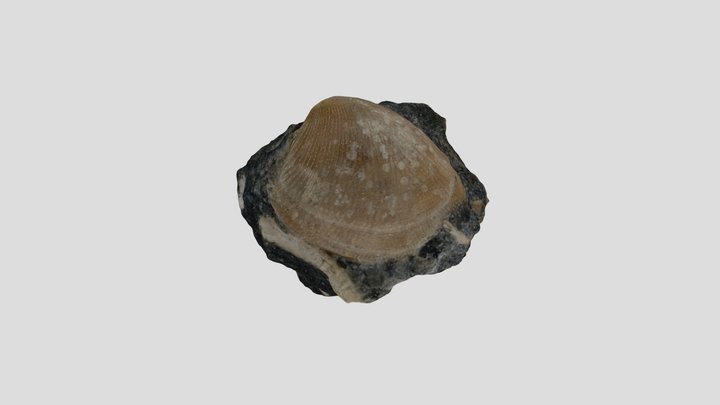
3D model
- Source
- Sketchfab
- Licence
- CC Attribution-NonCommercial
- Commercial use
- the licence does not allow it
MorphoSource was not reached for this taxon, so this list is what the others held rather than everything there is.
The description on this site
- Source
- Wikipedia, “Acila”
- Licence
- CC BY-SA 4.0
This is what the site found, which is not the same as what exists.
Keep going
What may have been alongside itNuculidae through timeFormations of the MioceneThe world it lived on
Occurrence data from the Paleobiology Database, CC BY 4.0. (Adams and Adams 1858)