Aepyornis
Aepyornis is an extinct genus of elephant bird formerly endemic to Madagascar. The genus had two species, the smaller A. hildebrandti and the larger A. maximus, which is possibly the largest bird ever to have lived. Its closest living relative is the New Zealand kiwi. The genus became extinct sometime around AD 1000, probably as a result of human activity.

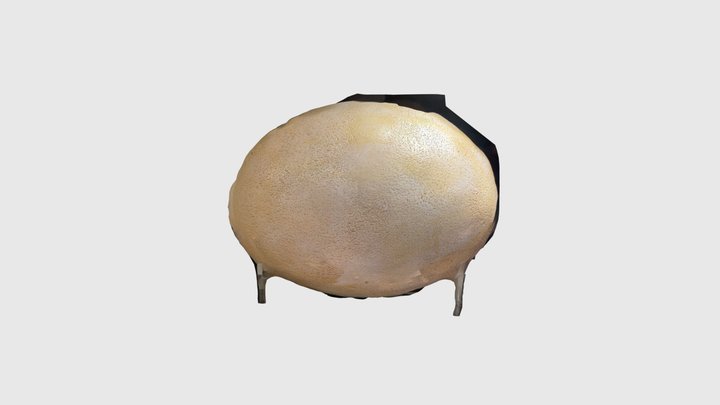
Monnier · Public Domain · via Wikipedia/Commons. May be a photograph of a specimen, or an artist’s reconstruction — an interpretation of a skeleton, since colour and soft tissue are almost never preserved.
On record
Recorded, not inferred- Sits inside
- AepyornithidaePBDB
- Diet
- herbivorePBDB
- Life habit
- ground dwellingPBDB
- Motility
- actively mobilePBDB, for Theropoda
- Environment
- terrestrialPBDB
- Mass
- 540 kgWikidata
Time the record covers
At most 129 thousand years on record.
Every occurrence read is dated to somewhere between 129 ka and 0 Mya, and nothing in the dating separates them, so that window is what the record shows rather than a span.
8 occurrences of Aepyornis on record, most of them in the Pleistocene. Bar height is expected occurrences, not a count: each fossil is spread across the span it is dated to, so a tall narrow bar means tight dating and a low wide one means loose.
When
8 occurrences- Pleistocene59%
- Holocene41%
These are dates about fossils, not the animal: the record can only begin after it arose and end before it died out, so either end may reach further. Shares are expected occurrences: a fossil dated to a span is counted partly in each period it straddles. More on what this infers.
Aepyornis and its relatives
PleistoceneWhere Aepyornis and its relatives were recorded in the Pleistocene.
Found in the same rock
94 taxa- Mullerornis5 sites
- Alopochen sirabensis4 sites
- Aldabrachelys3 sites
- Anas bernieri3 sites
- Anas erythrorhyncha3 sites
- Asio madagascariensis3 sites
- Anas melleri2 sites
- Archaeolemur majori2 sites
- Ardea alba2 sites
- Buteo brachypterus2 sites
- Coracopsis vasa2 sites
- Gallinula chloropus2 sites
- Hippopotamus2 sites
- Hippopotamus lemerlei2 sites
- Lophotibis cristata2 sites
- Megaladapis edwardsi2 sites
- Numida meleagris2 sites
- Pachylemur insignis2 sites
- Porphyrio porphyrio2 sites
- Pterocles personatus2 sites
- Sarkidiornis melanotos2 sites
- Stephanoaetus mahery2 sites
- Voay robustus2 sites
- Accipiter madagascariensis1 site
The Paleobiology Database records 8 sites for Aepyornis, and this reads all of them. The number is how many of those sites it was catalogued from too. The 24 sharing the most are listed.
This is not a list of everything alive at the time. It is only what has come out of the same ground as this animal and been written down.
Entered from
5 references- Holocene bird subfossils from the sites of Ampasambazimba, Antsirabe and Ampoza, Madagascar: changes in the avifauna of south central Madagascar over the past few millennia3
- A new late Pleistocene subfossil site (Tsaramody, Sambaina basin, central Madagascar) with implications for the chronology of habitat and megafaunal community change on Madagascar’s Central Highlands2
- Bird fossils from Ankilitelo Cave: inference about Holocene environmental changes in southwestern Madagascar1
- New findings at Andrahomana Cave, southeastern Madagascar1
- Early Holocene fauna from a new subfossil site: A first assessment from Christmas River, south central Madagascar1
Each of the 8 occurrences read was entered from one of these publications, ordered by how many each accounts for. This is not a search for papers mentioning the name. Entries link to doi.org where the Paleobiology Database holds an identifier, and to its own record where it does not. Relayed as the Paleobiology Database holds them, not checked against what they resolve to.
Media and terms
Media content2

Picture of Aepyornis
- Source
- Wikipedia/Commons
- Credit
- Monnier
- Licence
- Public Domain
- Commercial use
- the licence allows it
Smithsonian Open Access and MorphoSource were not reached for this taxon, so this list is what the others held rather than everything there is.
The description on this site
- Source
- Wikipedia, “Aepyornis”
- Licence
- CC BY-SA 4.0
This is what the site found, which is not the same as what exists.
Keep going
What may have been alongside itAepyornithidae through timeFormations of the PleistoceneThe world it lived on
Occurrence data from the Paleobiology Database, CC BY 4.0. Geoffroy 1850