Animalia
Animals are multicellular, eukaryotic organisms belonging to the biological kingdom Animalia. Animals consume organic material, breathe oxygen, have muscle cells, can reproduce sexually, and grow from a hollow sphere of cells, the blastula, during embryonic development. With few exceptions, animals are able to move. Animals form a clade, meaning that they arose from a single common ancestor. Over 1.5 million living animal species have been described, of which around 1.05 million are insects, over 85,000 are molluscs, and around 65,000 are vertebrates. It has been estimated there are as many as 7.77 million animal species on Earth. Animal body lengths range from 8.5 μm (0.00033 in) to 33.6 m (110 ft). They have complex ecologies and interactions with each other and their environments, forming intricate food webs. The scientific study of animals is known as zoology, and the study of animal behaviour is known as ethology.

Chiswick Chap · CC BY-SA 4.0 · via Wikipedia/Commons. May be a photograph of a specimen, or an artist’s reconstruction — an interpretation of a skeleton, since colour and soft tissue are almost never preserved.
On record
Recorded, not inferred- Sits inside
- OpisthokontaPBDB
Time the record covers
At least 504 million years on record.
The record covers at least 509.7 Mya to 5.333 Mya. No occurrence read is dated outside 538.8 Mya to 2.58 Mya.
12,000+ occurrences of Animalia on record. The Paleobiology Database records this as a living group, and the chart stops with its fossils rather than at the present. Bar height is expected occurrences, not a count: each fossil is spread across the span it is dated to, so a tall narrow bar means tight dating and a low wide one means loose.
When
12,000 occurrences read- Cambrian8%
- Ordovician34%
- Silurian23%
- Devonian11%
- Carboniferous22%
- Permian1%
- Plioceneunder 1%
These are dates about fossils, not the animal: the record can only begin after it arose and end before it died out, so either end may reach further. Shares are expected occurrences: a fossil dated to a span is counted partly in each period it straddles. The read hit its cap, so every figure above is a floor and the shares are of the occurrences read. More on what this infers.
Found in
at least 301 formations
- Kope Formation324
- Foraker Limestome Formation291
- Edwardsville Formation265
- Waynesville Formation242
- Deadwood Formation196
- Mahantango Formation196
Loading coastlines…
The named rock units Animalia has been recovered from, largest first. Drawn where the rock is now, not where it formed. The read hit its cap, so each count is a floor. 277 further formations hold fewer occurrences each and are not listed. 1,649 occurrences have no formation on record, which is common for older literature.
Found in the same rock
634 taxa- Crinoidea83 sites
- Brachiopoda74 sites
- Crurithyris71 sites
- Rhombopora64 sites
- Gastropoda45 sites
- Hustedia35 sites
- Punctospirifer35 sites
- Chonetinella31 sites
- Composita27 sites
- Hyolithes27 sites
- Derbyia24 sites
- Bivalvia23 sites
- Lophophyllidium22 sites
- Vertebrata21 sites
- Lingulella20 sites
- Mesolobus20 sites
- Bryozoa19 sites
- Nucula19 sites
- Rhipidomella17 sites
- Trepospira16 sites
- Glaphyrites15 sites
- Agaricocrinus14 sites
- Paterina14 sites
- Euphemites13 sites
The Paleobiology Database records at least 221 sites for Animalia, and this reads 221 of them. The number is how many of those sites it was catalogued from too. The 24 sharing the most are listed.
This is not a list of everything alive at the time. It is only what has come out of the same ground as this animal and been written down.
Entered from
at least 245 references- The fossil fauna of the Ordovician in the Cincinnati Region1,081
- Paleoecology and taphonomy of faunal assemblages in gray "core" (offshore) shales in Midcontinent Pennsylvanian cyclothems1,030
- T.D. Olszewski''s Ph.D. - Penn State University550
- Fossil Communities of the Middle Trenton Group (Ordovician) of New York State330
- Fossil communities of the Borden (Mississippi) delta in Indiana and northern Kentucky329
- Ecological associations in a regressive sequence: the latest Ordovician of the Oslo-Asker district, Norway285
- Benthic community organization in the Ludlow Series of the Welsh Borderland247
- Uppermost Clinton (Middle Silurian) stratigraphy and petrology, east-central New York241
- The Clinton of Western and Central New York211
- Silurian stratigraphy and palæontology of the Niagara escarpment in Ontario207
- Conodont biostratigraphy of the upper part of the Clinton Group and the Lockport Group (Silurian) in the Niagara Gorge region, New York and Ontario205
- Stratigraphy and Paleontology of the Mahantango Formation in south-central Pennsylvania196
Each of the 12,000 occurrences read was entered from one of these publications, ordered by how many each accounts for. This is not a search for papers mentioning the name. That read hit its cap, so each count is a floor. 233 further references are not listed. Entries link to doi.org where the Paleobiology Database holds an identifier, and to its own record where it does not. Relayed as the Paleobiology Database holds them, not checked against what they resolve to.
Media and terms
Media content2

Picture of Animalia
- Source
- Wikipedia/Commons
- Credit
- Chiswick Chap
- Licence
- CC BY-SA 4.0
- Commercial use
- the licence allows it
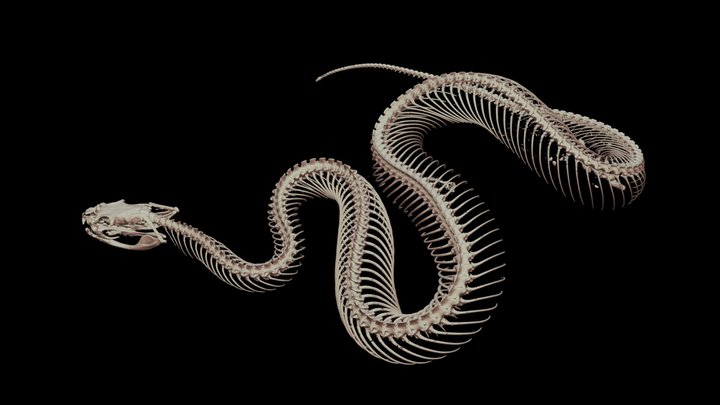
3D model
- Source
- Sketchfab
- Licence
- CC Attribution-NonCommercial-ShareAlike
- Commercial use
- the licence does not allow it
Smithsonian Open Access and MorphoSource were not reached for this taxon, so this list is what the others held rather than everything there is.
The description on this site
- Source
- Wikipedia, “Animal”
- Licence
- CC BY-SA 4.0
This is what the site found, which is not the same as what exists.
Keep going
What may have been alongside itOpisthokonta through timeThe world it lived on
Occurrence data from the Paleobiology Database, CC BY 4.0. (Linnaeus 1758)