Arecaceae
The Arecaceae are a family of perennial, flowering plants in the monocot order Arecales. Their growth form can be climbers, shrubs, tree-like and stemless plants, all commonly known as palms. Those having a tree-like form are colloquially called palm trees. Currently, 181 genera with around 2,600 species are known, most of which are restricted to tropical and subtropical climates. Most palms are distinguished by their large, compound, evergreen leaves, known as fronds, arranged at the top of an unbranched stem, except for the Hyphaene genus, which has branched palms. However, palms exhibit an enormous diversity in physical characteristics and inhabit nearly every type of habitat within their range, from rainforests to deserts.

Patrick Verdier, Free On Line Photos · Copyrighted free use · via Wikipedia/Commons. May be a photograph of a specimen, or an artist’s reconstruction — an interpretation of a skeleton, since colour and soft tissue are almost never preserved.
On record
Recorded, not inferred- Also called
- palmPBDB
- Sits inside
- MonocotsPBDB
- Diet
- "photoautotroph"PBDB, for Angiospermae
Time the record covers
At least 227 million years on record.
The record covers at least 227.3 Mya to 11.7 ka. No occurrence read is dated outside 237 Mya to 0 Mya.
1,677 occurrences of Arecaceae on record, most of them in the Eocene. The Paleobiology Database records this as a living group. Bar height is expected occurrences, not a count: each fossil is spread across the span it is dated to, so a tall narrow bar means tight dating and a low wide one means loose.
When
1,677 occurrences- Late Triassicunder 1%
- Late Jurassicunder 1%
- Early Cretaceousunder 1%
- Late Cretaceous17%
- Paleocene31%
- Eocene36%
- Oligocene4%
- Miocene6%
- Pliocene1%
- Pleistocene3%
- Holoceneunder 1%
These are dates about fossils, not the animal: the record can only begin after it arose and end before it died out, so either end may reach further. Shares are expected occurrences: a fossil dated to a span is counted partly in each period it straddles. More on what this infers.
Found in
169 formations
- Yaw Formation131
- Deccan Intertrappean Formation99
- Misoa Formation83
- Bara Formation · Ranikot Group68
- London Clay Formation67
- Mirador Formation65
Loading coastlines…
The named rock units Arecaceae has been recovered from, largest first. Drawn where the rock is now, not where it formed. 145 further formations hold fewer occurrences each and are not listed. 255 occurrences have no formation on record, which is common for older literature.
Arecaceae and its relatives
EoceneWhere Arecaceae and its relatives were recorded in the Eocene.
Found in the same rock
2,023 taxa- Mauritiidites franciscoi franciscoi43 sites
- Plantae42 sites
- Cicatricosisporites dorogensis40 sites
- Rhizophora38 sites
- Monocolpopollenites ovatus36 sites
- <Fern>35 sites
- Laevigatosporites tibuensis35 sites
- Psilamonocolpites medius34 sites
- Laevigatosporites28 sites
- Amesoneuron27 sites
- Polypodiisporites27 sites
- Dicotyledoneae26 sites
- Taxodium26 sites
- Tetracolporopollenites26 sites
- Coniferales25 sites
- Arecipites24 sites
- Momipites24 sites
- Spirosyncolpites spiralis24 sites
- Triporopollenites24 sites
- Caryapollenites23 sites
- Mauritiidites franciscoi minutus23 sites
- Bombacacidites22 sites
- Casurinidites pulcher22 sites
- Converrucosisporites22 sites
The Paleobiology Database records 741 sites for Arecaceae, and this reads 240 of them. The number is how many of those sites it was catalogued from too. The 24 sharing the most are listed.
This is not a list of everything alive at the time. It is only what has come out of the same ground as this animal and been written down.
Entered from
211 references- Palaeofloristic and palaeovegetational changes across the Paleocene/Eocene boundary in northern South America180
- Middle Paleogene palynology of Central Colombia, South America: A study of pollen and spores from tropical latitudes150
- Palynological contribution to geologic mapping of coal-bearing upper Paleocene rocks in the lower Indus coal region, Pakistan150
- A proto-monsoonal climate in the late Eocene of Southeast Asia: evidence from a sedimentary record in central Myanmar131
- A Catalogue of Indian Fossil Plants83
- A Catalogue of Fossil Plants from India Part 4: Cenozoic (Tertiary) Megafossils73
- Palinología del entorno cretácico/paleógeno del SO de la provincia de Santa Cruz: significado estratigráfico y paleoambiental69
- Biostratigraphy of selected K/T boundary sections in southwestern North Dakota, USA: toward a refinement of palynological identification criteria44
- Cretaceous/Paleogene Floral Turnover in Patagonia: Drop in Diversity, Low Extinction, and a Classopollis Spike37
- Chandler, 196136
- Pollen from the K–Pg boundary of the La Colonia Formation, Patagonia, Argentina34
- Paleocene flora of the Rocky Mountains and Great Plains34
Each of the 1,677 occurrences read was entered from one of these publications, ordered by how many each accounts for. This is not a search for papers mentioning the name. 199 further references are not listed. Entries link to doi.org where the Paleobiology Database holds an identifier, and to its own record where it does not. Relayed as the Paleobiology Database holds them, not checked against what they resolve to.
Media and terms
Media content1
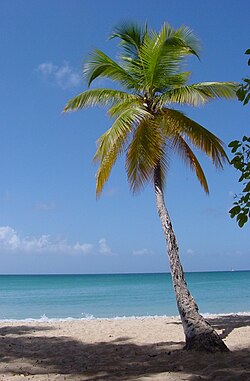
Picture of Arecaceae
- Source
- Wikipedia/Commons
- Credit
- Patrick Verdier, Free On Line Photos
- Licence
- Copyrighted free use
- Commercial use
- cannot be read from the licence given — check the record
No 3D scan was found. Smithsonian Open Access, MorphoSource and Sketchfab were all searched.
The description on this site
- Source
- Wikipedia, “Arecaceae”
- Licence
- CC BY-SA 4.0
This is what the site found, which is not the same as what exists.
Keep going
What may have been alongside itMonocots through timeFormations of the EoceneThe world it lived on
Occurrence data from the Paleobiology Database, CC BY 4.0. von Berchtold and Presl 1820