Artocarpus
Artocarpus is a genus of approximately 60 trees and shrubs of Southeast Asian and Pacific origin, belonging to the mulberry family, Moraceae. Most species of Artocarpus are restricted to Southeast Asia; a few cultivated species are more widely distributed, especially A. altilis (breadfruit) and A. heterophyllus (jackfruit), which are cultivated throughout the tropics.

Forest & Kim Starr · CC BY 3.0 · via Wikipedia/Commons. May be a photograph of a specimen, or an artist’s reconstruction — an interpretation of a skeleton, since colour and soft tissue are almost never preserved.
On record
Recorded, not inferred- Sits inside
- MoraceaePBDB
- Diet
- "photoautotroph"PBDB, for Angiospermae
Time the record covers
At least 72 million years on record.
The record covers at least 72.2 Mya to 129 ka. No occurrence read is dated outside 89.8 Mya to 11.7 ka.
31 occurrences of Artocarpus on record, most of them in the Late Cretaceous. The Paleobiology Database records this as a living group. Bar height is expected occurrences, not a count: each fossil is spread across the span it is dated to, so a tall narrow bar means tight dating and a low wide one means loose.
When
31 occurrences- Late Cretaceous48%
- Paleocene19%
- Eocene19%
- Miocene9%
- Plioceneunder 1%
- Pleistocene3%
These are dates about fossils, not the animal: the record can only begin after it arose and end before it died out, so either end may reach further. Shares are expected occurrences: a fossil dated to a span is counted partly in each period it straddles. More on what this infers.
Found in
16 formations
- Hell Creek Formation12
- Sepulcher Formation1
- Comox Formation · Nanaimo Group1
- Extension Formation · Nanaimo Group1
- Denver Formation1
- Raton Formation1
Loading coastlines…
The named rock units Artocarpus has been recovered from, largest first. Drawn where the rock is now, not where it formed. 4 occurrences have no formation on record, which is common for older literature.
Artocarpus and its relatives
Late CretaceousWhere Artocarpus and its relatives were recorded in the Late Cretaceous.
Found in the same rock
476 taxa- Dicotyledoneae11 sites
- Dryophyllum subfalcatum8 sites
- Amesoneuron7 sites
- Ficus planicostata7 sites
- Laurales7 sites
- Magnoliid7 sites
- Marmarthia trivialis7 sites
- Platanites marginata7 sites
- Grewiopsis6 sites
- Rhamnus cleburni6 sites
- Trochodendroides6 sites
- Dryophyllum5 sites
- Elatides5 sites
- Marmarthia pearsonii5 sites
- Nilsonia5 sites
- Paranymphaea5 sites
- Ulmaceae5 sites
- Vitis5 sites
- Allantodiopsis erosa4 sites
- Filicales4 sites
- Rhamnaceae4 sites
- Rosidae4 sites
- Cercidiphyllum3 sites
- Cissites3 sites
The Paleobiology Database records 30 sites for Artocarpus, and this reads all of them. The number is how many of those sites it was catalogued from too. The 24 sharing the most are listed.
This is not a list of everything alive at the time. It is only what has come out of the same ground as this animal and been written down.
Entered from
14 references- Megaflora of the Hell Creek and lower Fort Union Formations in the western Dakotas: Vegetational response to climate change, the Cretaceous-Tertiary boundary event, and rapid marine transgression11
- Paleocene flora of the Rocky Mountains and Great Plains6
- Angiospermous fossil leaves from the Siwalik foreland basins and their palaeoclimatic implications2
- Flora of the Upper Cretaceous Nanaimo Group of Vancouver Island, British Columbia2
- Fossil Leaf Species from the Fox Hills Formation (Upper Creataceous: North Dakota, USA) and their Paleographic Significance1
- First discovery of the Coccoidea (Hemiptera: Sternorrhyncha) from the Siwalik sediments (Middle Miocene) of Darjeeling foothills, Eastern Himalaya, India1
- Decoupled plant and insect diversity after the end-Cretaceous extinction1
- Denver Museum of Nature & Science archival records of Kirk Johnson fieldwork in Cretaceous rocks of the Rocky Mountain region.1
- A Catalogue of Fossil Plants from India Part 6: Cenozoic (Quaternary) Palynology and Palaeobotany1
- A Catalogue of Fossil Plants from India Part 4: Cenozoic (Tertiary) Megafossils1
- A new paratropical angiosperm florule in the Eocene Rockdale Formation of Bastrop County, Texas1
- A Middle Eocene Flora from the Central Sierra Nevada1
Each of the 31 occurrences read was entered from one of these publications, ordered by how many each accounts for. This is not a search for papers mentioning the name. 2 further references are not listed. Entries link to doi.org where the Paleobiology Database holds an identifier, and to its own record where it does not. Relayed as the Paleobiology Database holds them, not checked against what they resolve to.
Media and terms
Media content2

Picture of Artocarpus
- Source
- Wikipedia/Commons
- Credit
- Forest & Kim Starr
- Licence
- CC BY 3.0
- Commercial use
- the licence allows it
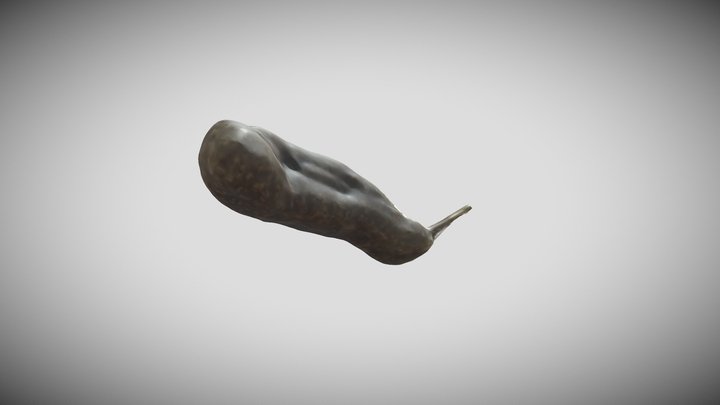
3D model
- Source
- Sketchfab
- Credit
- openseedspace
- Licence
- CC Attribution
- Commercial use
- cannot be read from the licence given — check the record
Smithsonian Open Access was not reached for this taxon, so this list is what the others held rather than everything there is.
The description on this site
- Source
- Wikipedia, “Artocarpus”
- Licence
- CC BY-SA 4.0
This is what the site found, which is not the same as what exists.
Keep going
What may have been alongside itMoraceae through timeFormations of the Late CretaceousThe world it lived on
Occurrence data from the Paleobiology Database, CC BY 4.0. Forster and Forster 1776