Cheiloceras
Cheiloceras is a subglobular to thickly lenticular goniatite with a closed umbilicus from the Upper Devonian and type genus for the Cheiloceratidae.

Dr. René Hoffmann · CC BY-SA 3.0 · via Wikipedia/Commons. May be a photograph of a specimen, or an artist’s reconstruction — an interpretation of a skeleton, since colour and soft tissue are almost never preserved.
On record
Recorded, not inferred- Sits inside
- CheiloceratinaePBDB
- Diet
- carnivorePBDB, for Ammonoidea
- Life habit
- nektonicPBDB, for Goniatitida
- Motility
- fast-movingPBDB, for Ammonoidea
- Vision
- well-developedPBDB, for Cephalopoda
- Environment
- marinePBDB, for Cephalopoda
Time the record covers
At most 14 million years on record.
Every occurrence read is dated to somewhere between 372.15 Mya and 358.86 Mya, and nothing in the dating separates them, so that window is what the record shows rather than a span.
100 occurrences of Cheiloceras on record, most of them in the Devonian. Bar height is expected occurrences, not a count: each fossil is spread across the span it is dated to, so a tall narrow bar means tight dating and a low wide one means loose.
When
100 occurrences- Devonian100%
These are dates about fossils, not the animal: the record can only begin after it arose and end before it died out, so either end may reach further. Shares are expected occurrences: a fossil dated to a span is counted partly in each period it straddles. More on what this infers.
Found in
7 formations
- Nehden Formation59
- Virgin Hills Formation11
- Gowanda Formation · Canadaway Group10
- Knoppenbiessen Formation9
- Shangdamingshan Formation1
- Coumiac Formation1
Loading coastlines…
The named rock units Cheiloceras has been recovered from, largest first. Drawn where the rock is now, not where it formed. 8 occurrences have no formation on record, which is common for older literature.
Cheiloceras and its relatives
DevonianWhere Cheiloceras and its relatives were recorded in the Devonian.
Found in the same rock
128 taxa- Lobobactrites9 sites
- Tornoceras simplex7 sites
- Linguatornoceras haugi5 sites
- Paratorleyoceras globosum5 sites
- Puncticeras pompeckji5 sites
- Sporadoceras (Sporadoceras) biferum5 sites
- Staffites curvispinus5 sites
- Palmatolepis4 sites
- Phoenixites concentricus4 sites
- Puncticeras ovatus4 sites
- Cheiloceratidae3 sites
- Polonoceras3 sites
- Polygnathus3 sites
- Puncticeras schmidti3 sites
- Sporadoceras3 sites
- Sporadoceras (Sporadoceras) latilobatum3 sites
- Angustidontus seriatus2 sites
- Archoceras paeckelmanni2 sites
- Armatites planidorsatus2 sites
- Bactrites2 sites
- Dimeroceras2 sites
- Dimeroceras padbergense2 sites
- Elasmatium gowandense2 sites
- Epitornoceras peracutum2 sites
The Paleobiology Database records 51 sites for Cheiloceras, and this reads all of them. The number is how many of those sites it was catalogued from too. The 24 sharing the most are listed.
This is not a list of everything alive at the time. It is only what has come out of the same ground as this animal and been written down.
Entered from
9 references- The “Nehden Goniatite Shale” (lower Famennian, Brilon Reef Complex, NE Rhenish Massif)59
- Late Devonian goniatites (Cephalopoda, Ammonoidea) from New York State11
- Upper Devonian (Famennian) ammonoids from the Canning Basin, Western Australia11
- Die Fauna aus dem mittleren Oberdevon (Nehden-Stufe) des suedwestlichen Bergischen Landes (Rheinisches Schiefergebirge); The lower Famennian fauna (Nehden-substage) of the southwestern region of the Bergisches Land (Rhenish Schiefergebirge)9
- Devonskie ammonoidei I. Agoniatitidy5
- Upper Devonian goniatites and co-occurring conodonts from the Holy Cross Mountains: studies of the Polish Geological Institute collections2
- Angustidontus, a Late Devonian pelagic predatory crustacean1
- Definition of the Frasnian/Famennian Stage boundary1
- Some Late Devonian trilobites of China1
Each of the 100 occurrences read was entered from one of these publications, ordered by how many each accounts for. This is not a search for papers mentioning the name. Entries link to doi.org where the Paleobiology Database holds an identifier, and to its own record where it does not. Relayed as the Paleobiology Database holds them, not checked against what they resolve to.
Media and terms
Media content2

Picture of Cheiloceras
- Source
- Wikipedia/Commons
- Credit
- Dr. René Hoffmann
- Licence
- CC BY-SA 3.0
- Commercial use
- the licence allows it
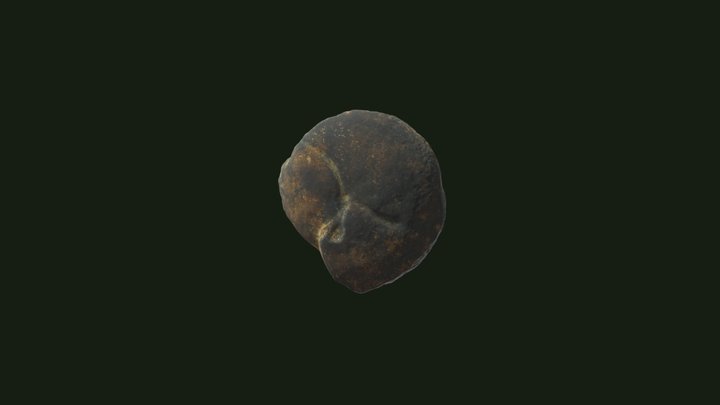
3D model
- Source
- Sketchfab
- Credit
- Shellie Luallin
- Licence
- CC Attribution
- Commercial use
- cannot be read from the licence given — check the record
Smithsonian Open Access was not reached for this taxon, so this list is what the others held rather than everything there is.
The description on this site
- Source
- Wikipedia, “Cheiloceras”
- Licence
- CC BY-SA 4.0
This is what the site found, which is not the same as what exists.
Keep going
What may have been alongside itCheiloceratinae through timeFormations of the DevonianThe world it lived on
Occurrence data from the Paleobiology Database, CC BY 4.0. Frech 1897