Cibolites uddeni
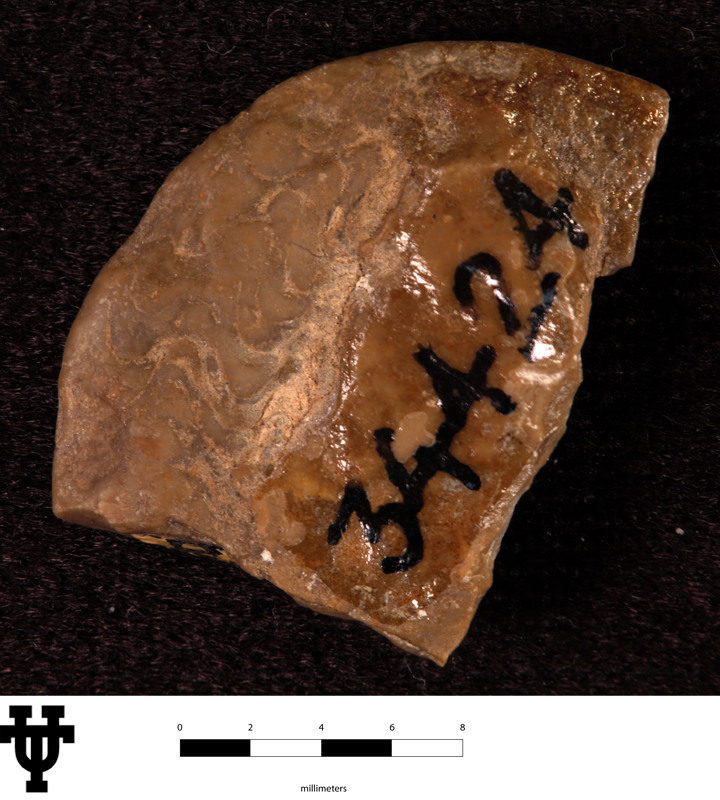
via GBIF · CC0 · via GBIF. May be a photograph of a specimen, or an artist’s reconstruction — an interpretation of a skeleton, since colour and soft tissue are almost never preserved.
On record
Recorded, not inferred- Sits inside
- CibolitesPBDB
- Diet
- carnivorePBDB, for Ceratitida
- Life habit
- nektonicPBDB, for Ceratitida
- Motility
- actively mobilePBDB, for Ceratitida
- Vision
- well-developedPBDB, for Cephalopoda
- Environment
- marinePBDB, for Cephalopoda
Time the record covers
At most 7.1 million years on record.
Every occurrence read is dated to somewhere between 266.9 Mya and 259.857 Mya, and nothing in the dating separates them, so that window is what the record shows rather than a span.
15 occurrences of Cibolites uddeni on record, most of them in the Permian. Bar height is expected occurrences, not a count: each fossil is spread across the span it is dated to, so a tall narrow bar means tight dating and a low wide one means loose.
When
15 occurrences- Permian100%
These are dates about fossils, not the animal: the record can only begin after it arose and end before it died out, so either end may reach further. Shares are expected occurrences: a fossil dated to a span is counted partly in each period it straddles. More on what this infers.
Found in
6 formations
- Bell Canyon Formation5
- Kamiyasse Formation3
- Cherry Canyon Formation2
- Word Formation1
- Shigejizawa Formation1
- Las Delicias Formation1
Loading coastlines…
The named rock units Cibolites uddeni has been recovered from, largest first. Drawn where the rock is now, not where it formed. 2 occurrences have no formation on record, which is common for older literature.
Cibolites uddeni and its relatives
PermianWhere Cibolites uddeni and its relatives were recorded in the Permian.
Found in the same rock
93 taxa- Mexicoceras guadalupense5 sites
- Altudoceras altudense4 sites
- Roadoceras roadense2 sites
- Timorites schucherti2 sites
- Acanthocrania1 site
- Allorhynchus1 site
- Allorisma1 site
- Altiplecus deltosus1 site
- Altiplecus extensus1 site
- Anisopyge perannulata1 site
- Anteridocus bicostatus1 site
- Anteridocus swallovianus1 site
- Arionthia polypleura1 site
- Bryorhynchus bisulcatum1 site
- Cancrinella1 site
- Cartorhium1 site
- Chonetinetes1 site
- Chonetinetes varians1 site
- Composita1 site
- Composita pyriformis1 site
- Cooperina inexpectata1 site
- Craspedona newelli1 site
- Crenispirifer jubatus1 site
- Crurithyris1 site
The Paleobiology Database records 15 sites for Cibolites uddeni, and this reads all of them. The number is how many of those sites it was catalogued from too. The 24 sharing the most are listed.
This is not a list of everything alive at the time. It is only what has come out of the same ground as this animal and been written down.
Entered from
7 references- Permian ammonoids of the Guadalupe Mountain region and adjacent area4
- Middle Permian ammonoids from the Kamiyasse-Imo district in the southern Kitakami Massif, northeast Japan3
- The Xenodiscidae, Permian ceratitoid ammonoids3
- Upper Paleozoic ammonites in Texas2
- Permian ammonoids from the Guadalupian (Wordian–Capitanian) of Las Delicias, Coahuila state, Mexico: new biostratigraphical and paleobiogeographical insights1
- Permian Brachiopods of West Texas, VI1
- Some Permian fossils from southern Kitakami. III Ammonoidea1
Each of the 15 occurrences read was entered from one of these publications, ordered by how many each accounts for. This is not a search for papers mentioning the name. Entries link to doi.org where the Paleobiology Database holds an identifier, and to its own record where it does not. Relayed as the Paleobiology Database holds them, not checked against what they resolve to.
Media and terms
Media content1
Picture of Cibolites uddeni
- Source
- GBIF
- Credit
- via GBIF
- Licence
- CC0
- Commercial use
- the licence allows it
No 3D scan of Cibolites uddeni was found in MorphoSource and Sketchfab.
Smithsonian Open Access was not reached for this taxon, so this list is what the others held rather than everything there is.
This is what the site found, which is not the same as what exists.
Keep going
What may have been alongside itCibolites through timeFormations of the PermianThe world it lived on
Occurrence data from the Paleobiology Database, CC BY 4.0. Plummer and Scott 1937