Claraia
Searched as Claraia griesbachi concentrica. The Paleobiology Database treats Claraia as the accepted name.
Claraia is an extinct genus of scallop-like bivalve molluscs that lived from the Capitanian stage of the Middle Permian to the Anisian stage of the Middle Triassic, 266-237 million years ago. Fossils have been found worldwide in North America, Europe, Asia, Africa, and Australia. These are common fossils subsequent to the Permian-Triassic boundary, suggesting that the genus experienced rapid diversification during and after the Permian–Triassic extinction event, around 251.9 million years ago, making it a disaster taxon.

This Photo was taken by Wolfgang Moroder . Feel free to use my photos, but please mention me as the author and send m… · CC BY-SA 3.0 · via Wikipedia/Commons. May be a photograph of a specimen, or an artist’s reconstruction — an interpretation of a skeleton, since colour and soft tissue are almost never preserved.
On record
Recorded, not inferred- Sits inside
- ClaraiiniPBDB
- Diet
- suspension feederPBDB, for Pectinida
- Life habit
- epifaunalPBDB, for Pectinida
- Motility
- stationaryPBDB, for Pectinida
- Vision
- blindPBDB, for Bivalvia
- Environment
- marinePBDB, for Pectinida
Time the record covers
At most 1.2 million years on record.
The one occurrence read is dated to somewhere between 251.902 Mya and 250.8 Mya, which is a dating window rather than a span.
1 occurrence of Claraia on record, most of them in the Early Triassic. Bar height is expected occurrences, not a count: each fossil is spread across the span it is dated to, so a tall narrow bar means tight dating and a low wide one means loose.
When
1 occurrences- Early Triassic100%
These are dates about fossils, not the animal: the record can only begin after it arose and end before it died out, so either end may reach further. Shares are expected occurrences: a fossil dated to a span is counted partly in each period it straddles. More on what this infers.
Found in
1 formation
Loading coastlines…
The named rock units Claraia has been recovered from, largest first. Drawn where the rock is now, not where it formed.
Claraia and its relatives
Early TriassicWhere Claraia and its relatives were recorded in the Early Triassic.
Found in the same rock
590 taxa- Eumorphotis27 sites
- Ophiceras21 sites
- Hindeodus parvus19 sites
- Lytophiceras17 sites
- Promyalina16 sites
- Isarcicella12 sites
- Hindeodus11 sites
- Ophiceras commune11 sites
- Ophiceras medium11 sites
- Peribositra bioni11 sites
- Coelostylina9 sites
- Nanogyra (Nanogyra) nana9 sites
- Naticopsis9 sites
- Radulopecten fibrosus9 sites
- Unionites canalensis9 sites
- Pleuromya uniformis8 sites
- Anotoceras nala7 sites
- Bakevellia7 sites
- Neogondolella planata7 sites
- Towapteria scythica7 sites
- Clarkina6 sites
- Dicellonema abrekensis6 sites
- Discophiceras wordiei6 sites
- Etheripecten haydeni6 sites
The Paleobiology Database records 791 sites for Claraia, and this reads 240 of them. The number is how many of those sites it was catalogued from too. The 24 sharing the most are listed.
This is not a list of everything alive at the time. It is only what has come out of the same ground as this animal and been written down.
Entered from
1 referenceEach of the 1 occurrence read was entered from one of these publications, ordered by how many each accounts for. This is not a search for papers mentioning the name. Each entry links to doi.org. Relayed as the Paleobiology Database holds them, not checked against what they resolve to.
Media and terms
Media content2

Picture of Claraia
- Source
- Wikipedia/Commons
- Credit
- This Photo was taken by Wolfgang Moroder . Feel free to use my photos, but please mention me as the author and send m…
- Licence
- CC BY-SA 3.0
- Commercial use
- the licence allows it
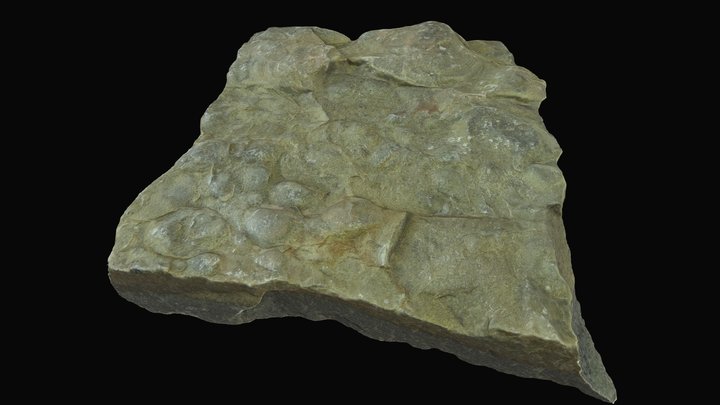
3D model
- Source
- Sketchfab
- Credit
- Sara Carena
- Licence
- CC Attribution-NonCommercial
- Commercial use
- the licence does not allow it
Smithsonian Open Access and MorphoSource were not reached for this taxon, so this list is what the others held rather than everything there is.
The description on this site
- Source
- Wikipedia, “Claraia”
- Licence
- CC BY-SA 4.0
This is what the site found, which is not the same as what exists.
Keep going
What may have been alongside itClaraiini through timeFormations of the Early TriassicThe world it lived on
Occurrence data from the Paleobiology Database, CC BY 4.0. (Bittner 1901)