Crassatella
Searched as Crassatella uvasana cf. uvasana. The Paleobiology Database treats Crassatella as the accepted name.
Crassatella is a genus of saltwater clams, marine bivalve molluscs of the order Carditida.

H. Zell · CC BY-SA 3.0 · via Wikipedia/Commons. May be a photograph of a specimen, or an artist’s reconstruction — an interpretation of a skeleton, since colour and soft tissue are almost never preserved.
On record
Recorded, not inferred- Sits inside
- CrassatellinaePBDB
- Diet
- suspension feederPBDB, for Crassatellidae
- Life habit
- shallow infaunalPBDB, for Crassatellidae
- Motility
- facultatively mobilePBDB, for Crassatellidae
- Vision
- blindPBDB, for Crassatelloidea
- Environment
- marinePBDB, for Crassatelloidea
Time the record covers
At most 7.1 million years on record.
Every occurrence read is dated to somewhere between 48.07 Mya and 41.03 Mya, and nothing in the dating separates them, so that window is what the record shows rather than a span.
2 occurrences of Crassatella on record, most of them in the Eocene. The Paleobiology Database records this as a living group, and the chart stops with its fossils rather than at the present. Bar height is expected occurrences, not a count: each fossil is spread across the span it is dated to, so a tall narrow bar means tight dating and a low wide one means loose.
When
2 occurrences- Eocene100%
These are dates about fossils, not the animal: the record can only begin after it arose and end before it died out, so either end may reach further. Shares are expected occurrences: a fossil dated to a span is counted partly in each period it straddles. More on what this infers.
Found in
1 formation
- Mission Valley Formation · Poway Group2
Loading coastlines…
The named rock units Crassatella has been recovered from, largest first. Drawn where the rock is now, not where it formed.
Crassatella and its relatives
EoceneWhere Crassatella and its relatives were recorded in the Eocene.
Found in the same rock
1,378 taxa- Exogyra (Exogyra) costata105 sites
- Anomia argentaria93 sites
- Veniella conradi88 sites
- Nuculana81 sites
- Pycnodonte vesicularis77 sites
- Turritella76 sites
- Idonearca capax75 sites
- Cyprimeria71 sites
- Crenella serica70 sites
- Serpula69 sites
- Turritella vertebroides67 sites
- Granocardium66 sites
- Syncyclonema65 sites
- Bryozoa64 sites
- Cliona63 sites
- Cymbophora61 sites
- Gryphaeostrea vomer61 sites
- Linearis61 sites
- Liopistha protexta57 sites
- Cubitostrea tecticosta54 sites
- Pseudolimea reticulata54 sites
- Camptonectes bubonis53 sites
- Nucula percrassa52 sites
- Pterotrigonia (Scabrotrigonia)51 sites
The Paleobiology Database records 1,097 sites for Crassatella, and this reads 240 of them. Of that, one read hit the database's own return limit, so every count below is a floor rather than a total. The number is how many of those sites it was catalogued from too. The 24 sharing the most are listed.
This is not a list of everything alive at the time. It is only what has come out of the same ground as this animal and been written down.
Entered from
1 referenceEach of the 2 occurrences read was entered from one of these publications, ordered by how many each accounts for. This is not a search for papers mentioning the name. Each entry links to the Paleobiology Database's own record for the work.
Media and terms
Media content2

Picture of Crassatella
- Source
- Wikipedia/Commons
- Credit
- H. Zell
- Licence
- CC BY-SA 3.0
- Commercial use
- the licence allows it
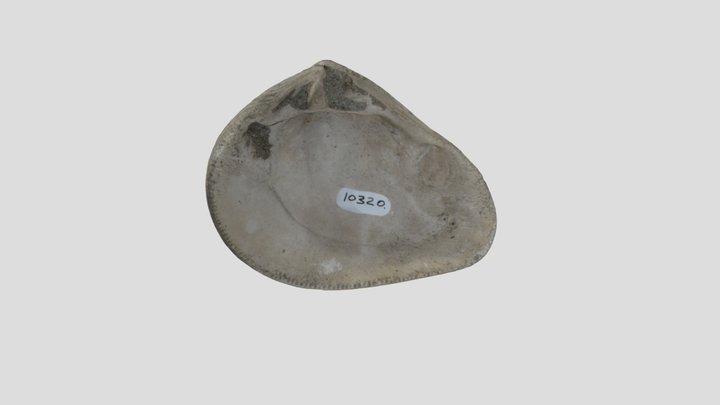
3D model
- Source
- Sketchfab
- Licence
- CC Attribution-NonCommercial
- Commercial use
- the licence does not allow it
Smithsonian Open Access was not reached for this taxon, so this list is what the others held rather than everything there is.
The description on this site
- Source
- Wikipedia, “Crassatella”
- Licence
- CC BY-SA 4.0
This is what the site found, which is not the same as what exists.
Keep going
What may have been alongside itCrassatellinae through timeFormations of the EoceneThe world it lived on
Occurrence data from the Paleobiology Database, CC BY 4.0. Lamarck 1799