Cyclostoma
Cyclostoma is an obsolete genus name of operculate snails with circular aperture.

Uncredited · Public Domain · via Wikipedia/Commons. May be a photograph of a specimen, or an artist’s reconstruction — an interpretation of a skeleton, since colour and soft tissue are almost never preserved.
Time the record covers
At least 47 million years on record.
The record covers at least 48.07 Mya to 129 ka. No occurrence read is dated outside 56 Mya to 11.7 ka.
23 occurrences of Cyclostoma on record, most of them in the Eocene. The Paleobiology Database records this as a living group. Bar height is expected occurrences, not a count: each fossil is spread across the span it is dated to, so a tall narrow bar means tight dating and a low wide one means loose.
When
23 occurrences- Eocene87%
- Miocene9%
- Pleistocene4%
These are dates about fossils, not the animal: the record can only begin after it arose and end before it died out, so either end may reach further. Shares are expected occurrences: a fossil dated to a span is counted partly in each period it straddles. More on what this infers.
Found in
2 formations
Loading coastlines…
The named rock units Cyclostoma has been recovered from, largest first. Drawn where the rock is now, not where it formed. 20 occurrences have no formation on record, which is common for older literature.
Cyclostoma and its relatives
EoceneWhere Cyclostoma and its relatives were recorded in the Eocene.
Found in the same rock
436 taxa- Calyptraea trochiformis6 sites
- Bulla cylindrica4 sites
- Fissurella labiata4 sites
- Auricula ovata3 sites
- Bulla striatella3 sites
- Calyptraea laevigata3 sites
- Chiton grignionensis3 sites
- Hydrobia (Tournoueria) sexiona3 sites
- Limnaea3 sites
- Parmophorus elongatus3 sites
- Pileopsis cornucopiae3 sites
- Pileopsis dilatata3 sites
- Pileopsis spirirostris3 sites
- Amaurellina spirata2 sites
- Amphicyon major2 sites
- Ampullaria canaliculata2 sites
- Ampullaria depressa2 sites
- Ampullaria patula2 sites
- Ampullaria sigaretina2 sites
- Anchitherium aurelianense2 sites
- Auricula hordeola2 sites
- Auricula miliola2 sites
- Auricula ringens2 sites
- Auricula sulcata2 sites
The Paleobiology Database records 16 sites for Cyclostoma, and this reads all of them. The number is how many of those sites it was catalogued from too. The 24 sharing the most are listed.
This is not a list of everything alive at the time. It is only what has come out of the same ground as this animal and been written down.
Entered from
7 references- Deshayes, 182411
- Suite des mémoires sur les fossiles des environs de Paris6
- On the Tertiary fluvio-marine formation of the Isle of Wight2
- Los primeros micromamíferos de la cuenca valenciana, en Buñol (nota preliminar)1
- The Tertiary limestone of the southern coastal regions of Cape Province, South Africa1
- Recherches sur le Neogene et le Quaternaire marins de la cote Atlantique du Maroc1
- Nomenclature des mammifères et des coquilles qu'il a trouvés dans un terrain d'eau douce près de Simorre et de Sansan (Gers)1
Each of the 23 occurrences read was entered from one of these publications, ordered by how many each accounts for. This is not a search for papers mentioning the name. Entries link to doi.org where the Paleobiology Database holds an identifier, and to its own record where it does not. Relayed as the Paleobiology Database holds them, not checked against what they resolve to.
Media and terms
Media content2

Picture of Cyclostoma
- Source
- Wikipedia/Commons
- Credit
- nobody named on the record
- Licence
- Public Domain
- Commercial use
- the licence allows it
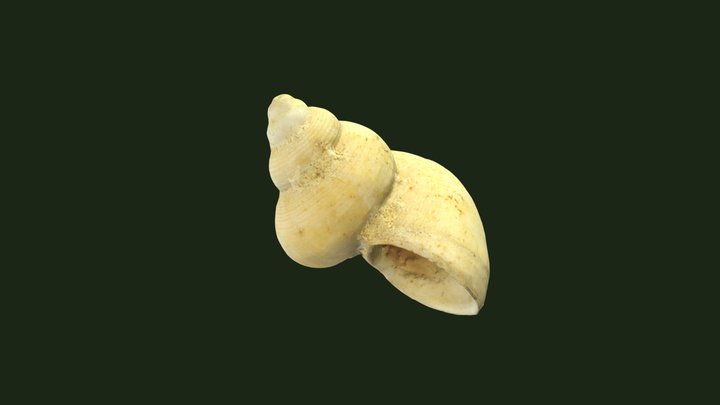
3D model
- Source
- Sketchfab
- Credit
- Shellie Luallin
- Licence
- CC Attribution
- Commercial use
- cannot be read from the licence given — check the record
Smithsonian Open Access and MorphoSource were not reached for this taxon, so this list is what the others held rather than everything there is.
The description on this site
- Source
- Wikipedia, “Cyclostoma”
- Licence
- CC BY-SA 4.0
This is what the site found, which is not the same as what exists.
Keep going
What may have been alongside itFormations of the EoceneThe world it lived on
Occurrence data from the Paleobiology Database, CC BY 4.0. Lamarck 1799