Daonella
Daonella is a genus of oyster-like saltwater clams, marine bivalve mollusks which lived in the middle to late Triassic period. They are related to the genera Aparimella and Halobia. Since they were ubiquitous in the Arctic, Tethys and Panthalassa seas, they are frequently used as index fossils in dating rocks to the Triassic period. However, the systematic classification of the Daonella is still an area of ongoing research.

Ghedoghedo · CC BY-SA 3.0 · via Wikipedia/Commons. May be a photograph of a specimen, or an artist’s reconstruction — an interpretation of a skeleton, since colour and soft tissue are almost never preserved.
On record
Recorded, not inferred- Sits inside
- HalobiidaePBDB
- Diet
- suspension feederPBDB, for Ostreida
- Life habit
- epifaunalPBDB, for Ostreida
- Motility
- stationary, attachedPBDB, for Ostreida
- Vision
- blindPBDB, for Bivalvia
- Environment
- marine,brackishPBDB, for Ostreida
Time the record covers
At least 171 million years on record.
The record covers at least 382.31 Mya to 211.18 Mya. No occurrence read is dated outside 393.47 Mya to 201.4 Mya.
622 occurrences of Daonella on record, most of them in the Middle Triassic. Bar height is expected occurrences, not a count: each fossil is spread across the span it is dated to, so a tall narrow bar means tight dating and a low wide one means loose.
When
622 occurrences- Devonianunder 1%
- Early Triassicunder 1%
- Middle Triassic89%
- Late Triassic10%
These are dates about fossils, not the animal: the record can only begin after it arose and end before it died out, so either end may reach further. Shares are expected occurrences: a fossil dated to a span is counted partly in each period it straddles. More on what this infers.
Found in
90 formations
- Prida Formation · Star Peak Group51
- Buchenstein Formation44
- Botneheia Formation · Sassendalen Group25
- Besano Formation15
- Cassian Formation · Wegen Group13
- Wetterstein Formation13
Loading coastlines…
The named rock units Daonella has been recovered from, largest first. Drawn where the rock is now, not where it formed. 66 further formations hold fewer occurrences each and are not listed. 270 occurrences have no formation on record, which is common for older literature.
Daonella and its relatives
Middle TriassicWhere Daonella and its relatives were recorded in the Middle Triassic.
Found in the same rock
1,305 taxa- Posidonia19 sites
- Trematoceras elegans18 sites
- Longobardites zsigmondyi14 sites
- Bositra wengensis12 sites
- Frechites occidentalis12 sites
- Entolium discites10 sites
- Gymnotoceras rotelliformis10 sites
- Gymnotoceras blakei9 sites
- Longobardites parvus9 sites
- Proarcestes gabbi9 sites
- Sakawairhynchia zealandica9 sites
- Aplococeras parvus8 sites
- Protrachyceras8 sites
- Punctospirella fragilis8 sites
- Alipunctifera kaihikuana7 sites
- Calliconites nevadensis7 sites
- Eutomoceras laubei7 sites
- Fletcherina zealandica7 sites
- Mentzelia mentzeli7 sites
- Monophyllites wengensis7 sites
- Mysidioptera7 sites
- Atractites6 sites
- Gastropoda6 sites
- Nevadites humboldtensis6 sites
The Paleobiology Database records 424 sites for Daonella, and this reads 240 of them. The number is how many of those sites it was catalogued from too. The 24 sharing the most are listed.
This is not a list of everything alive at the time. It is only what has come out of the same ground as this animal and been written down.
Entered from
103 references- Materialen zu einer Monographie der Halobiidae und Monotidae der Trias [Monograph on the Halobiidae and Monotidae of the Triassic]115
- Middle Triassic Molluscan Fossils of Biostratigraphic Significance from the Humboldt Range, Northwestern Nevada54
- Towards a better definition of the Anisian/Ladinian boundary: new biostratigraphic data and correlations of boundary sections from the Southern Alps42
- [Sections of the Trias from the upper River Kolym and northern Priochotya]32
- Das Grödener-, Fassa- und Enneberggebiet in den Südtiroler Dolomiten: Geologische Beschreibung mit besonderer Berücksichtigung der Überschiebungserscheinungen. Teil III. Paläontologie21
- A systematic survey of the Mesozoic Bivalvia from Japan18
- The Triassic stratigraphy of Svalbard17
- The Triassic of Indochina Peninsula and its interregional correlation13
- The Triassic bivalves Daonella and Halobia in New Zealand, New Caledonia, and Svalbard.13
- Stratigraphy and composition of the Mesozoic deposits in central Vestspitsbergen12
- Die Brachiopoden, Lamellibranchiaten und Gastropoden der Trias von Timor I12
- Revision der Untergattung Daonella (Pichlerella) (Bivalvia, Ladin)11
Each of the 622 occurrences read was entered from one of these publications, ordered by how many each accounts for. This is not a search for papers mentioning the name. 91 further references are not listed. Entries link to doi.org where the Paleobiology Database holds an identifier, and to its own record where it does not. Relayed as the Paleobiology Database holds them, not checked against what they resolve to.
Media and terms
Media content2

Picture of Daonella
- Source
- Wikipedia/Commons
- Credit
- Ghedoghedo
- Licence
- CC BY-SA 3.0
- Commercial use
- the licence allows it
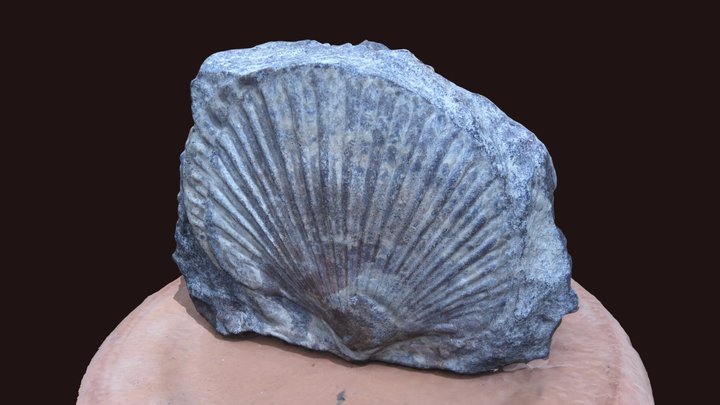
3D model
- Source
- Sketchfab
- Credit
- archeologya
- Licence
- CC Attribution
- Commercial use
- cannot be read from the licence given — check the record
The description on this site
- Source
- Wikipedia, “Daonella”
- Licence
- CC BY-SA 4.0
This is what the site found, which is not the same as what exists.
Keep going
What may have been alongside itHalobiidae through timeFormations of the Middle TriassicThe world it lived on
Occurrence data from the Paleobiology Database, CC BY 4.0. (Mojsisovics 1874)