Deiphon
Deiphon is a distinctive genus of Silurian phacopid trilobites of the family Cheiruridae found in Western and Central Europe, and in Central and Eastern United States. The type species, D. forbesi, from England, Bohemia, and Sweden, was discovered and described by the French paleontologist, Joachim Barrande in 1850.

Stanton F. Fink · CC BY-SA 2.5 · via Wikipedia/Commons. May be a photograph of a specimen, or an artist’s reconstruction — an interpretation of a skeleton, since colour and soft tissue are almost never preserved.
On record
Recorded, not inferred- Sits inside
- CheiruridaePBDB
- Diet
- carnivorePBDB, for Cheiruridae
- Life habit
- low-level epifaunalPBDB, for Trilobita
- Motility
- fast-movingPBDB, for Trilobita
- Vision
- well-developedPBDB
- Environment
- marinePBDB, for Trilobita
Time the record covers
At least 18 million years on record.
The record covers at least 443.1 Mya to 425 Mya. No occurrence read is dated outside 449.5 Mya to 422.7 Mya.
53 occurrences of Deiphon on record, most of them in the Silurian. Bar height is expected occurrences, not a count: each fossil is spread across the span it is dated to, so a tall narrow bar means tight dating and a low wide one means loose.
When
53 occurrences- Ordovician2%
- Silurian98%
These are dates about fossils, not the animal: the record can only begin after it arose and end before it died out, so either end may reach further. Shares are expected occurrences: a fossil dated to a span is counted partly in each period it straddles. More on what this infers.
Found in
25 formations
- Delorme Formation8
- Whittaker Formation6
- Motol Formation4
- Racine Dolomite Formation4
- Racine Formation3
- Slite Beds Formation3
Loading coastlines…
The named rock units Deiphon has been recovered from, largest first. Drawn where the rock is now, not where it formed. One further formation holds fewer occurrences and is not listed. 1 occurrence has no formation on record, which is common for older literature.
Deiphon and its relatives
SilurianWhere Deiphon and its relatives were recorded in the Silurian.
Found in the same rock
580 taxa- Leonaspis17 sites
- Ceratocephala14 sites
- Encrinurus14 sites
- Acidaspis12 sites
- Calymene11 sites
- Eophacops11 sites
- Bumastus10 sites
- Dalmanites10 sites
- Dicranopeltis9 sites
- Dudleyaspis9 sites
- Harpidella9 sites
- Bryozoa7 sites
- Calymene celebra7 sites
- Hemiarges7 sites
- Kosovopeltis7 sites
- Radiaspis7 sites
- Sphaerexochus dimorphus7 sites
- Cheirurus6 sites
- Hadromeros6 sites
- Otarion6 sites
- Scharyia6 sites
- Spirinella struszi6 sites
- Struszia6 sites
- Antirhynchonella5 sites
The Paleobiology Database records 50 sites for Deiphon, and this reads all of them. The number is how many of those sites it was catalogued from too. The 24 sharing the most are listed.
This is not a list of everything alive at the time. It is only what has come out of the same ground as this animal and been written down.
Entered from
19 references- Silurian cheirurid trilobites from the Mackenzie Mountains, northwestern Canada11
- Silurian cheirurid trilobites from Gotland9
- Silurian trilobite associations in North America6
- The Llandovery trilobites of England and Wales. Part 14
- Scottish Silurian trilobites4
- Guild structure and tiering in a high-diversity Silurian community, Milwaukee County, Wisconsin3
- Ecostratigraphy of Silurian trilobite assemblages of the Barrandian area, Czechoslovakia3
- Wenlock trilobites and brachiopods from the Mackenzie Mountains, north-western Canada2
- Middle Silurian trilobites from Arkansas and Oklahoma, USA. Orders Lichida and Odontopleurida1
- Silurian and Lochkovian communities in the Prague basin (Barrandian area, Czech Republic)1
- Silurian field excursions: Prague Basin (Barrandian), Bohemia1
- A Bohemian-type Silurian (Wenlock) pelecypod faunule from arctic Canada1
Each of the 53 occurrences read was entered from one of these publications, ordered by how many each accounts for. This is not a search for papers mentioning the name. 7 further references are not listed. Entries link to doi.org where the Paleobiology Database holds an identifier, and to its own record where it does not. Relayed as the Paleobiology Database holds them, not checked against what they resolve to.
Media and terms
Media content2

Picture of Deiphon
- Source
- Wikipedia/Commons
- Credit
- Stanton F. Fink
- Licence
- CC BY-SA 2.5
- Commercial use
- the licence allows it
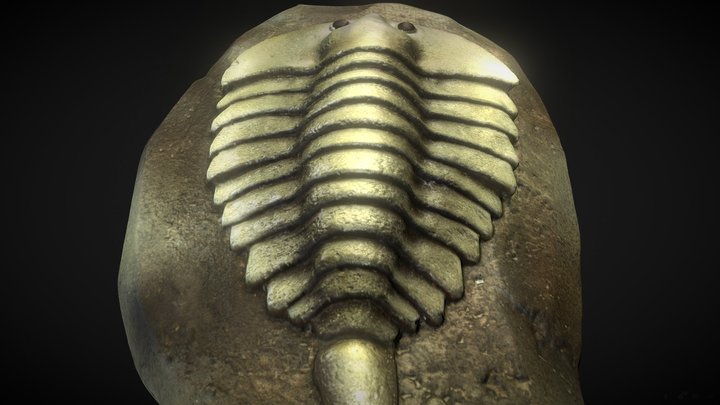
3D model
- Source
- Sketchfab
- Credit
- darwinmuseum.ru
- Licence
- CC Attribution-NonCommercial-NoDerivs
- Commercial use
- the licence does not allow it
The description on this site
- Source
- Wikipedia, “Deiphon”
- Licence
- CC BY-SA 4.0
This is what the site found, which is not the same as what exists.
Keep going
What may have been alongside itCheiruridae through timeFormations of the SilurianThe world it lived on
Occurrence data from the Paleobiology Database, CC BY 4.0. Barrande 1846