Eccyliopterus regularis
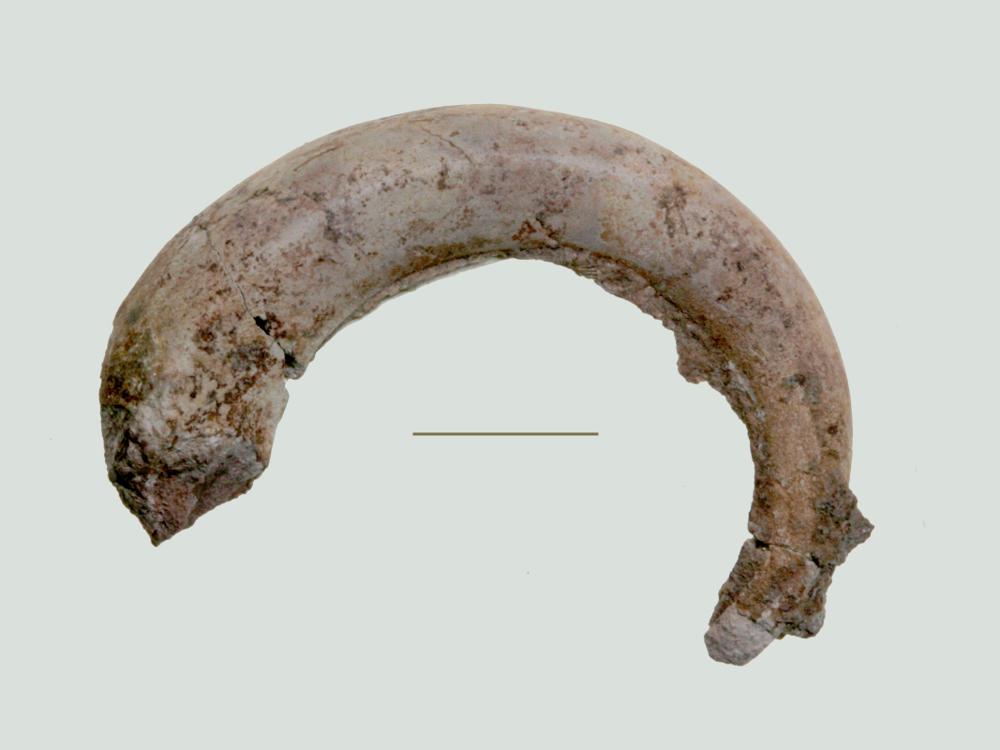
Mickwitz · CC BY-NC 4.0 · via GBIF. May be a photograph of a specimen, or an artist’s reconstruction — an interpretation of a skeleton, since colour and soft tissue are almost never preserved.
On record
Recorded, not inferred- Sits inside
- EccyliopterusPBDB
- Diet
- suspension feederPBDB, for Eccyliopterus
- Life habit
- epifaunalPBDB, for Eccyliopterus
- Motility
- stationaryPBDB, for Eccyliopterus
- Vision
- limitedPBDB, for Gastropoda
Time the record covers
At least 10 million years on record.
The record covers at least 464.3 Mya to 453.9 Mya. No occurrence read is dated outside 471.3 Mya to 452.8 Mya.
17 occurrences of Eccyliopterus regularis on record, most of them in the Ordovician. Bar height is expected occurrences, not a count: each fossil is spread across the span it is dated to, so a tall narrow bar means tight dating and a low wide one means loose.
When
17 occurrences- Ordovician100%
These are dates about fossils, not the animal: the record can only begin after it arose and end before it died out, so either end may reach further. Shares are expected occurrences: a fossil dated to a span is counted partly in each period it straddles. More on what this infers.
Found in
10 formations
- Väo Formation4
- Kandle Formation2
- Holen Formation2
- Viivikonna Formation2
- Körgekallas Formation1
- Kangaroo Creek Formation1
Loading coastlines…
The named rock units Eccyliopterus regularis has been recovered from, largest first. Drawn where the rock is now, not where it formed. 1 occurrence has no formation on record, which is common for older literature.
Eccyliopterus regularis and its relatives
OrdovicianWhere Eccyliopterus regularis and its relatives were recorded in the Ordovician.
Found in the same rock
147 taxa- Deacheospira elliptica6 sites
- Holopea eichwaldi5 sites
- Liospira rossica5 sites
- Proturritella bicarinata5 sites
- Lesueurilla infundibulum4 sites
- Pararaphistoma qualteriata4 sites
- Sinuites rugulosus4 sites
- Subulites priscus4 sites
- Deacheospira inflata3 sites
- Lesueurilla marginalis marginalis3 sites
- Lophospira mickwitzi3 sites
- Lytospira angelini3 sites
- Salpingostoma megalostoma3 sites
- Tetranota rudicostata3 sites
- Aserioceras purtsensis2 sites
- Ctenoceras2 sites
- Curtoceras2 sites
- Cymbularia angusta2 sites
- Dianulites2 sites
- Ecculiomphalus centrifugus2 sites
- Echinosphaerites aurantium infrum2 sites
- Endoceras2 sites
- Esthoniopora curvata2 sites
- Favositella discoidalis2 sites
The Paleobiology Database records 16 sites for Eccyliopterus regularis, and this reads all of them. The number is how many of those sites it was catalogued from too. The 24 sharing the most are listed.
This is not a list of everything alive at the time. It is only what has come out of the same ground as this animal and been written down.
Entered from
7 references- Stratigrafia viruskoy i kharjuskoy seriy (ordovik) Sevemoy Estonii. [Stratigraphy of the Viruan and Harjuan Series (Ordovician) in North Estonia]7
- Koken and Perner, 19255
- Paragastropoda, Tergomya and Gastropoda (Mollusca) from the Upper Ordovician Dalby Limestone, Sweden1
- Gastropoden aus paläozoischen Geschieben des Kies-Sand-Rückens in der Laerheide (Landkreis Osnabrück)1
- Ordovician - Devonian Gastropoda from the Klamath Mountains, California1
- The Middle Ordovician of the Oslo Region, Norway. 15. Monoplacophora and Gastropoda1
- Ueber einige Glossophoren aus Untersilur-Geschieben des norddeutschen Diluviums1
Each of the 17 occurrences read was entered from one of these publications, ordered by how many each accounts for. This is not a search for papers mentioning the name. Entries link to doi.org where the Paleobiology Database holds an identifier, and to its own record where it does not. Relayed as the Paleobiology Database holds them, not checked against what they resolve to.
Media and terms
Media content1
Picture of Eccyliopterus regularis
- Source
- GBIF
- Credit
- Mickwitz
- Licence
- CC BY-NC 4.0
- Commercial use
- the licence does not allow it
No 3D scan was found. Smithsonian Open Access, MorphoSource and Sketchfab were all searched.
This is what the site found, which is not the same as what exists.
Keep going
What may have been alongside itEccyliopterus through timeFormations of the OrdovicianThe world it lived on
Occurrence data from the Paleobiology Database, CC BY 4.0. (Remelé 1888)