Ecphora
Ecphora is a genus of extinct predatory ocenebrinid murexes indigenous to the North American Eastern Seaboard from Miocene until their extinction during the Pliocene. The common name for this genus and a group of related genera is "ecphora"(s).

The original uploader was Ecphora at English Wikipedia . · Public Domain · via Wikipedia/Commons. May be a photograph of a specimen, or an artist’s reconstruction — an interpretation of a skeleton, since colour and soft tissue are almost never preserved.
On record
Recorded, not inferred- Sits inside
- RapaninaePBDB
- Diet
- carnivorePBDB, for Muricidae
- Life habit
- epifaunalPBDB, for Muricidae
- Motility
- actively mobilePBDB, for Muricidae
- Vision
- limitedPBDB, for Gastropoda
Time the record covers
At least 68 million years on record.
The record covers at least 72.2 Mya to 3.6 Mya. No occurrence read is dated outside 83.6 Mya to 2.58 Mya.
129 occurrences of Ecphora on record, most of them in the Miocene. The Paleobiology Database records this as a living group, and the chart stops with its fossils rather than at the present. Bar height is expected occurrences, not a count: each fossil is spread across the span it is dated to, so a tall narrow bar means tight dating and a low wide one means loose.
When
129 occurrences- Late Cretaceous11%
- Oligocene5%
- Miocene60%
- Pliocene24%
These are dates about fossils, not the animal: the record can only begin after it arose and end before it died out, so either end may reach further. Shares are expected occurrences: a fossil dated to a span is counted partly in each period it straddles. More on what this infers.
Found in
26 formations
- Choptank Formation · Chesapeake Group26
- Calvert Formation · Chesapeake Group22
- Yorktown Formation · Chesapeake Group17
- Ripley Formation · Selma Group9
- Tamiami Formation · Okeechobee Group8
- Eastover Formation · Chesapeake Group7
Loading coastlines…
The named rock units Ecphora has been recovered from, largest first. Drawn where the rock is now, not where it formed. 2 further formations hold fewer occurrences each and are not listed. 1 occurrence has no formation on record, which is common for older literature.
Ecphora and its relatives
MioceneWhere Ecphora and its relatives were recorded in the Miocene.
Found in the same rock
1,846 taxa- Chesapecten (Chesapecten) nefrens26 sites
- Stewartia anodonta26 sites
- Bicorbula idonea24 sites
- Dosinia acetabulum24 sites
- Mercenaria24 sites
- Corbula inaequalis20 sites
- Cyclocardia granulata19 sites
- Euspira heros19 sites
- Busycon18 sites
- Chesacardium laqueatum18 sites
- Turritella plebeia plebeia18 sites
- Astarte thisphila17 sites
- Marvacrassatella turgidula17 sites
- Chesapecten madisonius16 sites
- Dallarca staminea16 sites
- Panopea16 sites
- Turritella16 sites
- Concavus concavus15 sites
- Isognomon maxillata15 sites
- Mariacolpus plebeia15 sites
- Pitar15 sites
- Spisula (Hemimactra) subparilis15 sites
- Astarte14 sites
- Florimetis biplicata14 sites
The Paleobiology Database records 108 sites for Ecphora, and this reads all of them. The number is how many of those sites it was catalogued from too. The 24 sharing the most are listed.
This is not a list of everything alive at the time. It is only what has come out of the same ground as this animal and been written down.
Entered from
31 references- Molluscan biostratigraphy of the Miocene Middle Atlantic Coastal Plain of North America35
- Stratigraphy, invertebrate taphonomy and depositional history of the Miocene Calvert and Choptank Formations, Atlantic Coastal Plain15
- Geological and paleontological relations, with a review of earlier investigations12
- Unpublished census data from Atlantic coastal plain and circum-Caribbean Neogene assemblages and taxonomic opinions10
- The G.D Harris 1890 manuscript on the stratigraphy of Miocene and Pliocene beds at Yorktown, Virginia7
- Archeogastropoda, Mesogastropoda and stratigraphy of the Ripley, Owl Creek, and Prairie Bluff Formations7
- Petuch and Roberts, 20076
- Petuch, 19884
- New ecphoras (Gastropoda: Thaididae: Ecphorinae) from the Calvert Formation of Maryland (Langhian Miocene)3
- Preliminary biostratigraphy and molluscan fauna of the Goose Creek Limestone of eastern South Carolina2
- Molluscan fauna of the Pungo River Formation, Lee Creek Mine, North Carolina2
- Species of Ecphora, including the subgenus Stenomphalus, in the Pungo River Formation2
Each of the 129 occurrences read was entered from one of these publications, ordered by how many each accounts for. This is not a search for papers mentioning the name. 19 further references are not listed. Entries link to doi.org where the Paleobiology Database holds an identifier, and to its own record where it does not. Relayed as the Paleobiology Database holds them, not checked against what they resolve to.
Media and terms
Media content3

Picture of Ecphora
- Source
- Wikipedia/Commons
- Credit
- The original uploader was Ecphora at English Wikipedia .
- Licence
- Public Domain
- Commercial use
- the licence allows it
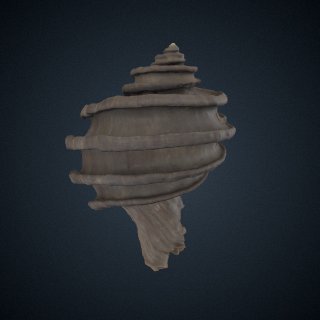
3D scan
- Source
- Smithsonian
- Licence
- CC0 — this site’s default, not the record’s
- Commercial use
- the licence allows it
- Specimen
- Ecphora gardnerae gardnerae Wilson
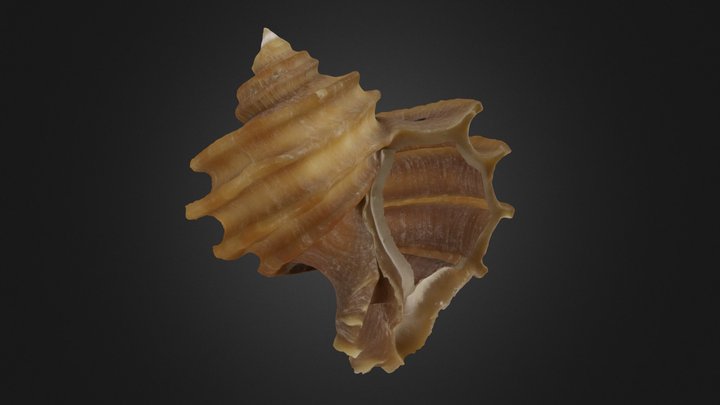
3D model
- Source
- Sketchfab
- Licence
- CC0 Public Domain
- Commercial use
- the licence allows it
The description on this site
- Licence
- CC BY-SA 4.0
This is what the site found, which is not the same as what exists.
Keep going
What may have been alongside itRapaninae through timeFormations of the MioceneThe world it lived on
Occurrence data from the Paleobiology Database, CC BY 4.0. Conrad 1843