Encope
Encope is a genus of echinoderms belonging to the family Mellitidae.

porshunta · CC BY-SA 3.0 · via Wikipedia/Commons. May be a photograph of a specimen, or an artist’s reconstruction — an interpretation of a skeleton, since colour and soft tissue are almost never preserved.
On record
Recorded, not inferred- Sits inside
- MellitidaePBDB
- Diet
- detritivorePBDB, for Clypeasteroida
- Life habit
- semi-infaunalPBDB, for Clypeasteroida
- Motility
- slow-movingPBDB, for Clypeasteroida
- Vision
- limitedPBDB, for Echinoidea
- Environment
- marinePBDB, for Echinodermata
Time the record covers
At least 13 million years on record.
The record covers at least 13.82 Mya to 129 ka. No occurrence read is dated outside 23.04 Mya to 11.7 ka.
75 occurrences of Encope on record, most of them in the Pliocene. The Paleobiology Database records this as a living group. Bar height is expected occurrences, not a count: each fossil is spread across the span it is dated to, so a tall narrow bar means tight dating and a low wide one means loose.
When
75 occurrences- Miocene17%
- Pliocene46%
- Pleistocene37%
These are dates about fossils, not the animal: the record can only begin after it arose and end before it died out, so either end may reach further. Shares are expected occurrences: a fossil dated to a span is counted partly in each period it straddles. More on what this infers.
Found in
23 formations
- San Marcos Formation8
- Waccamaw Formation7
- Caloosahatchee Formation6
- Tamiami Formation4
- Mulege Formation4
- Gatun Formation3
Loading coastlines…
The named rock units Encope has been recovered from, largest first. Drawn where the rock is now, not where it formed. 21 occurrences have no formation on record, which is common for older literature.
Encope and its relatives
PlioceneWhere Encope and its relatives were recorded in the Pliocene.
Found in the same rock
1,091 taxa- Anomia simplex7 sites
- Ostrea7 sites
- Balanus6 sites
- Argopecten5 sites
- Hyotissa haitensis5 sites
- Plicatula gibbosa5 sites
- Amusium mortoni4 sites
- Anadara4 sites
- Anomia peruviana4 sites
- Carditamera4 sites
- Chione cancellata4 sites
- Clypeaster4 sites
- Clypeaster bowersi4 sites
- Conradostrea sculpturata4 sites
- Echinocardium orthonotum4 sites
- Larkinia multicostata4 sites
- Oliva (Ispidula) sayana4 sites
- Oliva spicata4 sites
- Polinices4 sites
- Tegula4 sites
- Acanthina3 sites
- Agassizia porifera3 sites
- Argopecten abietis3 sites
- Argopecten ventricosus3 sites
The Paleobiology Database records 51 sites for Encope, and this reads all of them. The number is how many of those sites it was catalogued from too. The 24 sharing the most are listed.
This is not a list of everything alive at the time. It is only what has come out of the same ground as this animal and been written down.
Entered from
27 references- The West American Cenozoic Echinoidea9
- 1940 E.W. Scripps cruise to the Gulf of California. Part II - Megascopic paleontology and marine stratigraphy8
- Cenozoic irregular echinoids of the Eastern United States7
- Diversity patterns and biostratigraphy of Cenozoic echinodems from Florida6
- Upper Pleistocene Rocky Shores and Intertidal Biotas at Playa La Palmita (Baja California Sur,Mexico)4
- Neotectonics and taphonomy; Pleistocene molluscan shell accumulations in the northern Gulf of California4
- Neogene molluscs, shallow marine paleoenvironments, and chronostratigraphy of the Guajira Peninsula, Colombia3
- Neogene and Quaternary geology of Aruba, Curaçao and Bonaire3
- Pliocene fossils from limestone in southern Florida3
- Preliminary biostratigraphy and molluscan fauna of the Goose Creek Limestone of eastern South Carolina2
- Onshore marine Cenozoic along southwest Pacific coast of Mexico2
- Pliocene fossils from Baltra (South Seymour) Island, Galápagos Islands2
Each of the 75 occurrences read was entered from one of these publications, ordered by how many each accounts for. This is not a search for papers mentioning the name. 15 further references are not listed. Entries link to doi.org where the Paleobiology Database holds an identifier, and to its own record where it does not. Relayed as the Paleobiology Database holds them, not checked against what they resolve to.
Media and terms
Media content3

Picture of Encope
- Source
- Wikipedia/Commons
- Credit
- porshunta
- Licence
- CC BY-SA 3.0
- Commercial use
- the licence allows it
CT scan
- Source
- MorphoSource
- Licence
- In Copyright
- Commercial use
- cannot be read from the licence given — check the record
- Specimen
- Encope michelini · TxVP:M:4113
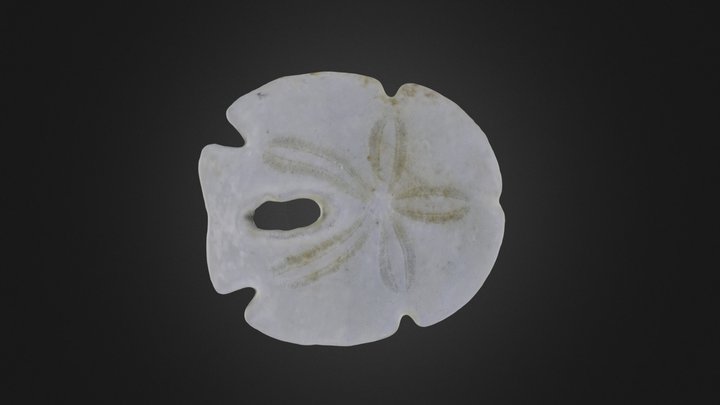
3D model
- Source
- Sketchfab
- Licence
- CC0 Public Domain
- Commercial use
- the licence allows it
The description on this site
- Source
- Wikipedia, “Encope”
- Licence
- CC BY-SA 4.0
This is what the site found, which is not the same as what exists.
Keep going
What may have been alongside itMellitidae through timeFormations of the PlioceneThe world it lived on
Occurrence data from the Paleobiology Database, CC BY 4.0. Agassiz 1840