Encrinus liliiformis
Encrinus is an extinct genus of crinoids, and "one of the most famous". It lived during the Late Silurian-Late Triassic, and its fossils have been found in Europe.

Ghedoghedo · CC BY-SA 3.0 · via Wikipedia/Commons. May be a photograph of a specimen, or an artist’s reconstruction — an interpretation of a skeleton, since colour and soft tissue are almost never preserved.
On record
Recorded, not inferred- Sits inside
- EncrinusPBDB
- Diet
- suspension feederPBDB, for Encrinida
- Life habit
- epifaunalPBDB, for Encrinida
- Motility
- stationaryPBDB, for Encrinida
- Vision
- blindPBDB, for Crinoidea
- Environment
- marinePBDB, for Echinodermata
Time the record covers
At least 6.4 million years on record.
The record covers at least 243.43 Mya to 237 Mya. No occurrence read is dated outside 247 Mya to 227.3 Mya.
36 occurrences of Encrinus liliiformis on record, most of them in the Middle Triassic. Bar height is expected occurrences, not a count: each fossil is spread across the span it is dated to, so a tall narrow bar means tight dating and a low wide one means loose.
When
36 occurrencesThese are dates about fossils, not the animal: the record can only begin after it arose and end before it died out, so either end may reach further. Shares are expected occurrences: a fossil dated to a span is counted partly in each period it straddles. More on what this infers.
Found in
6 formations
- Qingyan Formation23
- Trochitenkalk Formation · Muschelkalk Group4
- Muschelkalk Formation1
- Zhuganpo Formation1
- brachiopod-limestone Formation1
- Calcaire à Entroques Formation · Muschelkalk Group1
Loading coastlines…
The named rock units Encrinus liliiformis has been recovered from, largest first. Drawn where the rock is now, not where it formed. 5 occurrences have no formation on record, which is common for older literature.
Encrinus liliiformis and its relatives
Middle TriassicWhere Encrinus liliiformis and its relatives were recorded in the Middle Triassic.
Found in the same rock
440 taxa- Diholkorhynchia sinensis23 sites
- Mentzelia subspherica23 sites
- Cassianella simplex22 sites
- Weixiserpula22 sites
- Elegantinia elegans21 sites
- Lepismatina hsui21 sites
- Newaagia21 sites
- Cassianella20 sites
- Mentzelia mentzeli20 sites
- Praechlamys20 sites
- Protostrea sinensis20 sites
- Qingyanocrinus kueichounensis20 sites
- Angustothyris angustaeformis19 sites
- Bivalvia19 sites
- Elegantinia19 sites
- Ostreoidea19 sites
- Pseudoplacunopsis19 sites
- Septaliphorioidea paucicostata19 sites
- Solenopora19 sites
- Balanocrinus18 sites
- Elegantarca subareata18 sites
- Ruxingella18 sites
- Terquemiidae18 sites
- Wortheniella18 sites
The Paleobiology Database records 35 sites for Encrinus liliiformis, and this reads all of them. The number is how many of those sites it was catalogued from too. The 24 sharing the most are listed.
This is not a list of everything alive at the time. It is only what has come out of the same ground as this animal and been written down.
Entered from
12 references- Fossilvergesellschaftungen, Paläoökologie und paläosynökologische Entwicklung im Oberen Anisium (Mittlere Trias) von Qingyan, insbesondere Bangtoupo, Provinz Guizhou, Südwestchina23
- Der Obere Muschelkalk im nordwestlichen Niederhessen3
- Slipped through the bottleneck: Lazarechinus mirabeti gen. et sp. nov., a Paleozoic‑like echinoid from the Triassic Muschelkalk (late Anisian) of East France1
- The Late Triassic black shales of the Guanling area, Guizhou province, south-west China: a unique marine reptile and pelagic crinoid fossil lagerstätte1
- Position of the Middle Triassic Tyros Beds in the Gavrovo-Tripolis Unit (Rhodes Island, Dodecanese, Greece)1
- Ofiuras (Echinodermata) del Ladiniense catalan.1
- Muschel/Krinoiden-Bioherme im Oberen Muschelkalk (mo1, Anis) von Crailsheim und Schwäbisch Hall (Südwestdeutschland) [Pelecypod/Crinoid bioherms in the Upper Muschelkalk (mo1, Anisian) of Crailsheim and Schwäbisch Hall (SW Germany)]1
- Die stratigrafische Stellung der Gibsvorkommen in der Trias von Recoaro (Vicentin, Italien), [The stratigraphic position of the occurrence at the Triassic]1
- Fazies und Fauna des Oberen Muschelkalkes von Willebadessen1
- Ein Beitrag zur Genese mittletriassischer Crinoidenkalke im Gebiet von Reutte, Tirol (Nördliche Kalkalpen)1
- Zur Stratigraphie der Mitteltrias südwestlich der Kampenwand (Chiemgauer Alpen)1
- Die Versteinerungen in Muschelkalk von Lieskau bei Halle1
Each of the 36 occurrences read was entered from one of these publications, ordered by how many each accounts for. This is not a search for papers mentioning the name. Entries link to doi.org where the Paleobiology Database holds an identifier, and to its own record where it does not. Relayed as the Paleobiology Database holds them, not checked against what they resolve to.
Media and terms
Media content2

Picture of Encrinus liliiformis
- Source
- Wikipedia/Commons
- Credit
- Ghedoghedo
- Licence
- CC BY-SA 3.0
- Commercial use
- the licence allows it
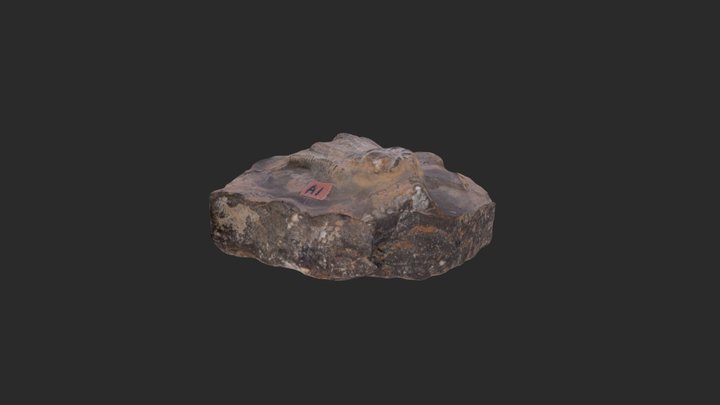
3D model
- Source
- Sketchfab
- Credit
- anco.lankreijer
- Licence
- CC Attribution-NonCommercial-NoDerivs
- Commercial use
- the licence does not allow it
The description on this site
- Source
- Wikipedia, “Encrinus”
- Licence
- CC BY-SA 4.0
This is what the site found, which is not the same as what exists.
Keep going
What may have been alongside itEncrinus through timeFormations of the Middle TriassicThe world it lived on
Occurrence data from the Paleobiology Database, CC BY 4.0. Lamarck 1801