Fallotaspis
Fallotaspis is a genus of redlichiid trilobites found in Early Cambrian-aged strata of the United States and Morocco.

Sam Gon III · Attribution · via Wikipedia/Commons. May be a photograph of a specimen, or an artist’s reconstruction — an interpretation of a skeleton, since colour and soft tissue are almost never preserved.
On record
Recorded, not inferred- Sits inside
- FallotaspididaePBDB
- Diet
- deposit feederPBDB, for Redlichiida
- Life habit
- low-level epifaunalPBDB, for Redlichiida
- Motility
- fast-movingPBDB, for Redlichiida
- Vision
- well-developedPBDB, for Fallotaspididae
- Environment
- marinePBDB, for Trilobita
Time the record covers
At least 1 million years on record.
The record covers at least 521 Mya to 520 Mya. No occurrence read is dated outside 530.7 Mya to 515.3 Mya.
21 occurrences of Fallotaspis on record, most of them in the Cambrian. Bar height is expected occurrences, not a count: each fossil is spread across the span it is dated to, so a tall narrow bar means tight dating and a low wide one means loose.
When
21 occurrences- Cambrian100%
These are dates about fossils, not the animal: the record can only begin after it arose and end before it died out, so either end may reach further. Shares are expected occurrences: a fossil dated to a span is counted partly in each period it straddles. More on what this infers.
Found in
7 formations
- Amouslek Formation12
- Idoudine Formation3
- Puerto Blanco Formation · Fallotaspis Group2
- Campito Formation1
- Pestrotsvet Formation1
- Issafen Formation1
Loading coastlines…
The named rock units Fallotaspis has been recovered from, largest first. Drawn where the rock is now, not where it formed.
Fallotaspis and its relatives
CambrianWhere Fallotaspis and its relatives were recorded in the Cambrian.
Found in the same rock
42 taxa- Choubertella spinosa4 sites
- Nochoroicyathus3 sites
- Antatlasia2 sites
- Brevipelta chouberti2 sites
- Protopharetra2 sites
- ? Onuphlonella sp.1 site
- Agastrocyathus1 site
- Agyrekocyathus1 site
- Ajacicyathus1 site
- Bigotina1 site
- Bigotinops dangeardi1 site
- Bulaiaspis1 site
- Chancelloria eros1 site
- Coscinocyathus1 site
- Delgadella amouslekensis1 site
- Delgadella souzai1 site
- Dictyocyathus1 site
- Dipharus1 site
- Eofallotaspis tioutensis1 site
- Eoredlichia1 site
- Erismacoscinus1 site
- Fallotaspidella1 site
- Helcionellidae1 site
- Hyolithellus1 site
The Paleobiology Database records 17 sites for Fallotaspis, and this reads all of them. The number is how many of those sites it was catalogued from too. The 24 sharing the most are listed.
This is not a list of everything alive at the time. It is only what has come out of the same ground as this animal and been written down.
Entered from
11 references- The Moroccan fallotaspidid trilobites revisited6
- The earliest known West Gondwanan trilobites from the Anti-Atlas Mountains of Morocco, with a revision of the Family Bigotinidae Hupe, 19535
- Contribution à l'étude du Cambrien inferieur et du Précambrien III de l'Anti-Atlas marocain2
- Age of Phosphorites from the Khubsugul Basin1
- A candidate position for the base of the Montezuman stage1
- The Lower Middle Cambrian Transition Along the Northwestern Margin of Gondwana (Anti-Atlas and High Atlas Ranges, Morocco)1
- The Cambrian of the Moroccan Atlas regions1
- Faunas and depositional environments of the Cambrian of the Moroccan Atlas regions1
- Lower Cambrian trilobites, donation, and correlation of the Puerto Blanco formation, Sonora Mexico1
- Upper Proterozoic and Cambrian rocks in the Caborca Region, Sonora, Mexico - physical stratigraphy, biostratigraphy, paleocurrent studies, and regional relations1
- Tommotskiu jarus i problema nizhney granisty kembriya [The Tommotian Stage and the Cambrian lower Boundary problem]1
Each of the 21 occurrences read was entered from one of these publications, ordered by how many each accounts for. This is not a search for papers mentioning the name. Entries link to doi.org where the Paleobiology Database holds an identifier, and to its own record where it does not. Relayed as the Paleobiology Database holds them, not checked against what they resolve to.
Media and terms
Media content2

Picture of Fallotaspis
- Source
- Wikipedia/Commons
- Credit
- Sam Gon III
- Licence
- Attribution
- Commercial use
- cannot be read from the licence given — check the record
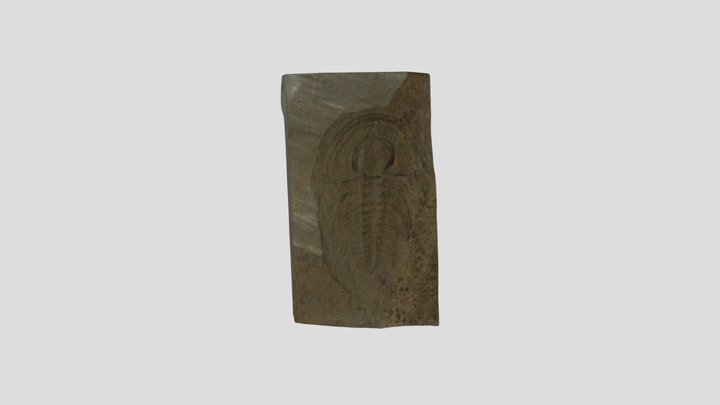
3D model
- Source
- Sketchfab
- Licence
- CC Attribution-NonCommercial
- Commercial use
- the licence does not allow it
Smithsonian Open Access was not reached for this taxon, so this list is what the others held rather than everything there is.
The description on this site
- Source
- Wikipedia, “Fallotaspis”
- Licence
- CC BY-SA 4.0
This is what the site found, which is not the same as what exists.
Keep going
What may have been alongside itFallotaspididae through timeFormations of the CambrianThe world it lived on
Occurrence data from the Paleobiology Database, CC BY 4.0. Hupé 1953