Fucoides
No picture of Fucoides was found. Wikipedia, Wikidata and iDigBio were searched and had none. GBIF was not searched: the Paleobiology Database does not place Fucoides firmly enough to tell it from something else bearing the same name, and a search on the name alone returns whichever of them was photographed. Smithsonian Open Access did not answer, so this is what the others held rather than everything there is.
On record
Recorded, not inferred- Sits inside
- AlgaePBDB
- Diet
- "photoautotroph"PBDB, for Algae
Time the record covers
At least 269 million years on record.
The record covers at least 475.6 Mya to 205.7 Mya. No occurrence read is dated outside 488.9 Mya to 201.4 Mya.
22 occurrences of Fucoides on record, most of them in the Ordovician. Bar height is expected occurrences, not a count: each fossil is spread across the span it is dated to, so a tall narrow bar means tight dating and a low wide one means loose.
When
22 occurrences- Cambrianunder 1%
- Ordovician77%
- Late Triassic23%
These are dates about fossils, not the animal: the record can only begin after it arose and end before it died out, so either end may reach further. Shares are expected occurrences: a fossil dated to a span is counted partly in each period it straddles. More on what this infers.
Found in
6 formations
- Aorangi Mine Formation12
- Ningkuo Formation1
- Lower Road River Formation · Road River Group1
- Al Rose Formation1
- Cochinoca-Escaya Magmatic Sedimentary Complex Formation1
- Sementsovskaya Formation1
Loading coastlines…
The named rock units Fucoides has been recovered from, largest first. Drawn where the rock is now, not where it formed. 5 occurrences have no formation on record, which is common for older literature.
Fucoides and its relatives
OrdovicianWhere Fucoides and its relatives were recorded in the Ordovician.
Found in the same rock
95 taxa- Isograptus victoriae maximodivergens9 sites
- Didymograptus8 sites
- Pseudisograptus6 sites
- Baltograptus deflexus5 sites
- Isograptus caduceus imitatus5 sites
- Tetragraptus reclinatus5 sites
- Anatina praecursor4 sites
- Isograptus4 sites
- Phyllograptus4 sites
- Pseudisograptus hastatus4 sites
- Tetragraptus amii4 sites
- Tetragraptus quadribrachiatus4 sites
- Cardiograptus morsus3 sites
- Dichograptus3 sites
- Didymograptus extensus3 sites
- Goniograptus3 sites
- Goniograptus macer3 sites
- Tetragraptus3 sites
- Tristichograptus sp.3 sites
- Apiograptus2 sites
- Cryptograptus2 sites
- Etagraptus harti2 sites
- Graptoloidea2 sites
- Harrisgraptus eocaduceus2 sites
The Paleobiology Database records 22 sites for Fucoides, and this reads all of them. The number is how many of those sites it was catalogued from too. The 24 sharing the most are listed.
This is not a list of everything alive at the time. It is only what has come out of the same ground as this animal and been written down.
Entered from
7 references- Ordovician Geology and Graptolite faunas of the Aorangi Mine area, North-west Nelson, New Zealand12
- Etude géologique et paléontologique des environs de St-Ambroix (Gard). Première partie (Houiller, Trias, Infralias)5
- Early-Middle Ordovician graptolites from the Argentine Puna: quantitative paleobiogeographic analysis based on a systematic revision1
- Legend of the Central European series of sheets of the State Geological Map of the Russian Federation, scale 1:1,000,000 (third generation)1
- The sequence and correlation of Early Ordovician (Arenig) graptolite faunas in the Richardson Trough and Misty Creek Embayment, Yukon Territory and District of Mackenzie, Canada1
- Definition of a global boundary stratotype for the Darriwilian Stage of the Ordovician System1
- Fauna of the Lower Ordovician Al Rose Formation, Mazourka Canyon, Inyo County, California1
Each of the 22 occurrences read was entered from one of these publications, ordered by how many each accounts for. This is not a search for papers mentioning the name. Entries link to doi.org where the Paleobiology Database holds an identifier, and to its own record where it does not. Relayed as the Paleobiology Database holds them, not checked against what they resolve to.
Media and terms
Media content1
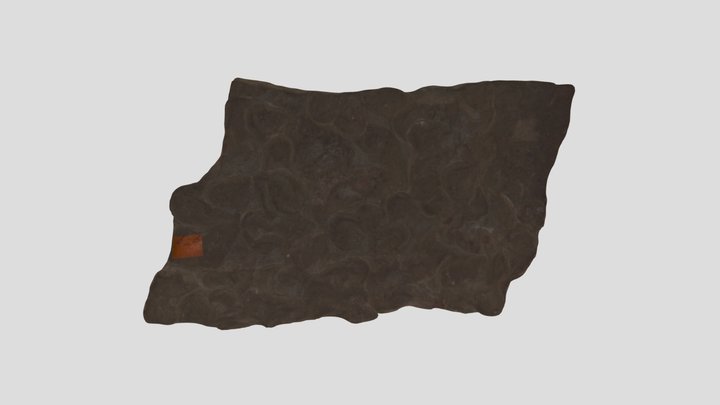
No picture of Fucoides was found. Wikipedia, Wikidata and iDigBio were searched and had none.
GBIF was not searched: the Paleobiology Database does not place Fucoides firmly enough to tell it from something else bearing the same name, and a search on the name alone returns whichever of them was photographed.
Smithsonian Open Access did not answer, so this is what the others held rather than everything there is.
Smithsonian Open Access and MorphoSource were not reached for this taxon, so this list is what the others held rather than everything there is.
This is what the site found, which is not the same as what exists.
Keep going
What may have been alongside itAlgae through timeFormations of the OrdovicianThe world it lived on
Occurrence data from the Paleobiology Database, CC BY 4.0. (Brongniart 1822)