Galea
Galea is a genus of South American rodents of the family Caviidae. 5-6 extant species are known, found in Argentina, Bolivia, Chile, Peru and Brazil. They are:Southern highland yellow-toothed cavy Brazilian yellow-toothed cavy Lowland yellow-toothed cavy Common yellow-toothed cavy Muenster yellow-toothed cavy Spix's yellow-toothed cavy

-- Duden-Dödel 19:22, 20 April 2007 (UTC) · Public Domain · via Wikipedia/Commons. May be a photograph of a specimen, or an artist’s reconstruction — an interpretation of a skeleton, since colour and soft tissue are almost never preserved.
On record
Recorded, not inferred- Sits inside
- CaviinaePBDB
- Diet
- herbivorePBDB, for Caviidae
- Life habit
- ground dwellingPBDB, for Caviidae
- Motility
- actively mobilePBDB, for Osteichthyes
- Environment
- terrestrialPBDB, for Eutheria
Time the record covers
At least 165 million years on record.
The record covers at least 165.3 Mya to 11.7 ka. No occurrence read is dated outside 168.2 Mya to 0 Mya.
30 occurrences of Galea on record, most of them in the Pleistocene. The Paleobiology Database records this as a living group. Bar height is expected occurrences, not a count: each fossil is spread across the span it is dated to, so a tall narrow bar means tight dating and a low wide one means loose.
When
30 occurrences- Middle Jurassic7%
- Miocene3%
- Plioceneunder 1%
- Pleistocene70%
- Holocene20%
These are dates about fossils, not the animal: the record can only begin after it arose and end before it died out, so either end may reach further. Shares are expected occurrences: a fossil dated to a span is counted partly in each period it straddles. More on what this infers.
Found in
13 formations
- Nuapua Formation2
- Yupoi Formation1
- Agua Blanca Formation1
- Santa Clara Formation1
- Forest Marble Formation1
- Frome Clay Formation1
Loading coastlines…
The named rock units Galea has been recovered from, largest first. Drawn where the rock is now, not where it formed. 16 occurrences have no formation on record, which is common for older literature.
Galea and its relatives
PleistoceneWhere Galea and its relatives were recorded in the Pleistocene.
Found in the same rock
269 taxa- Ctenomys11 sites
- Akodon8 sites
- Reithrodon auritus8 sites
- Glyptodon clavipes7 sites
- Hippidion6 sites
- Thrichomys6 sites
- Toxodon6 sites
- Calomys musculinus5 sites
- Kerodon rupestris5 sites
- Lama5 sites
- Macrauchenia patagonica5 sites
- Propraopus5 sites
- Zaedyus pichiy5 sites
- Dasypodinae4 sites
- Equus4 sites
- Equus caballus4 sites
- Eutatus seguini4 sites
- Graomys griseoflavus4 sites
- Lagostomus4 sites
- Mazama4 sites
- Microcavia australis4 sites
- Pecari tajacu4 sites
- Phyllotis4 sites
- Smilodon populator4 sites
The Paleobiology Database records 28 sites for Galea, and this reads all of them. The number is how many of those sites it was catalogued from too. The 24 sharing the most are listed.
This is not a list of everything alive at the time. It is only what has come out of the same ground as this animal and been written down.
Entered from
23 references- Small mammals taphonomy and environmental evolution during Late Pleistocene-Holocene in Monte Desert: The evidence of Gruta del Indio (central west Argentina)3
- Late Quaternary caviomorph rodents (Rodentia: Hystricognathi) from the Serra da Capivara, northeastern Brazil, with description of a new taxon3
- Pleistocene mammals from Uruguay: Biostratigraphic, biogeographic and environmental connotations2
- Neoselachian sharks and rays from the British Bathonian (Middle Jurassic)2
- La Faune Pleistocene du Piaui (Nordeste du Bresil): Implications Paleoecologiques et Biochronologiques2
- Síntesis actualizada del registro paleontológico pleistoceno en el Noroeste argentino1
- Evolution of small mammal communities during the late Quaternary in a middle-altitude valley of Northwestern Argentina1
- The Casa del Diablo cave (Puno, Peru) and the late Pleistocene demise of megafauna in the Andean Altiplano1
- Imigrantes em um continente perdido: O registro fossilífero de roedores Caviomorpha (Mammalia: Rodentia: Ctenohystrica) do Cenozoico do Brasil1
- First record of a Late Holocene fauna associated with an ephemeral fluvial sequence in La Pampa Province, Argentina. Taphonomy and paleoenvironment1
- Late Cenozoic vertebrates from the Southern Pampean region: systematic and bio-chronostratigraphic update1
- Biostratigraphy and geochronology of the late Cenozoic of Córdoba Province (central Argentina)1
Each of the 30 occurrences read was entered from one of these publications, ordered by how many each accounts for. This is not a search for papers mentioning the name. 11 further references are not listed. Entries link to doi.org where the Paleobiology Database holds an identifier, and to its own record where it does not. Relayed as the Paleobiology Database holds them, not checked against what they resolve to.
Media and terms
Media content3

Picture of Galea
- Source
- Wikipedia/Commons
- Credit
- -- Duden-Dödel 19:22, 20 April 2007 (UTC)
- Licence
- Public Domain
- Commercial use
- the licence allows it
CT scan
- Source
- MorphoSource
- Credit
- LACM Mammalogy
- Licence
- In Copyright
- Commercial use
- cannot be read from the licence given — check the record
- Specimen
- Galea sp. · LACM:Mammals:10024
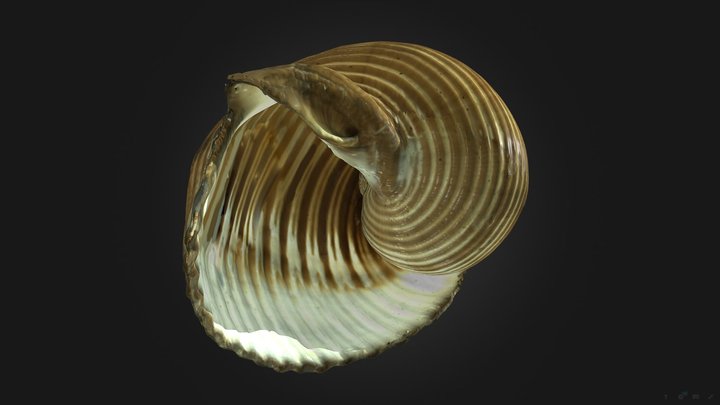
3D model
- Source
- Sketchfab
- Credit
- darwinmuseum.ru
- Licence
- CC0 Public Domain
- Commercial use
- the licence allows it
Smithsonian Open Access was not reached for this taxon, so this list is what the others held rather than everything there is.
The description on this site
- Licence
- CC BY-SA 4.0
This is what the site found, which is not the same as what exists.
Keep going
What may have been alongside itCaviinae through timeFormations of the PleistoceneThe world it lived on
Occurrence data from the Paleobiology Database, CC BY 4.0. Meyen 1832