Gastopoda sp.
No picture of Gastopoda sp. was found. Wikipedia and Wikidata were searched and had none. iDigBio and GBIF were not searched: the Paleobiology Database does not place Gastopoda sp. firmly enough to tell it from something else bearing the same name, and a search on the name alone returns whichever of them was photographed. Smithsonian Open Access did not answer, so this is what the others held rather than everything there is.
Time the record covers
At least 205 million years on record.
The record covers at least 247 Mya to 41.03 Mya. No occurrence read is dated outside 248.6 Mya to 33.9 Mya.
4 occurrences of Gastopoda sp. on record, most of them in the Eocene. Bar height is expected occurrences, not a count: each fossil is spread across the span it is dated to, so a tall narrow bar means tight dating and a low wide one means loose.
When
4 occurrences- Early Triassic25%
- Eocene75%
These are dates about fossils, not the animal: the record can only begin after it arose and end before it died out, so either end may reach further. Shares are expected occurrences: a fossil dated to a span is counted partly in each period it straddles. More on what this infers.
Found in
4 formations
- Gosport Sand Formation · Claiborne Group1
- Thaynes Formation1
- Casamayor Formation1
- Bateque Formation1
Loading coastlines…
The named rock units Gastopoda sp. has been recovered from, largest first. Drawn where the rock is now, not where it formed.
Gastopoda sp. and its relatives
EoceneWhere Gastopoda sp. and its relatives were recorded in the Eocene.
Found in the same rock
98 taxa- Gastopoda indet.2 sites
- Agaronia alabamensis1 site
- Agaronia bombylis1 site
- Amphistegina1 site
- Ancilla staminea1 site
- Annelida1 site
- Architectonica (Stellaxis) elaborata1 site
- Architectonica fungina1 site
- Athleta petrosa1 site
- Bakevellia1 site
- Bathytormus protextus1 site
- Bryozoa1 site
- Buccitriton sagenum1 site
- Bullata larvata1 site
- Bullata semen1 site
- Caestocorbula murchisonii1 site
- Callianassoidea1 site
- Callista1 site
- Callista (Callista) perovata1 site
- Callista (Costacallista) aequorea1 site
- Calyptraphorus velatus1 site
- Carcharodon1 site
- Caricella bolaris1 site
- Caricella pyruloides1 site
The Paleobiology Database records 4 sites for Gastopoda sp., and this reads all of them. The number is how many of those sites it was catalogued from too. The 24 sharing the most are listed.
This is not a list of everything alive at the time. It is only what has come out of the same ground as this animal and been written down.
Entered from
4 references- New Decapoda (Anomura, Brachyura) from the Eocene Bateque and Tepetate Formations, Baja California Sur, Mexico1
- Aftermath of the Permian-Triassic mass extinction event: Paleoecology of Lower Triassic carbonates in the western USA1
- Effects of sampling on paleoecologic and taphonomic analyses in high-diversity fossil accumulations: an example from the Eocene Gosport Sand, Alabama1
- Note sur la géologie et la paléontologie de la Patagonie1
Each of the 4 occurrences read was entered from one of these publications, ordered by how many each accounts for. This is not a search for papers mentioning the name. Entries link to doi.org where the Paleobiology Database holds an identifier, and to its own record where it does not. Relayed as the Paleobiology Database holds them, not checked against what they resolve to.
Media and terms
Media content1
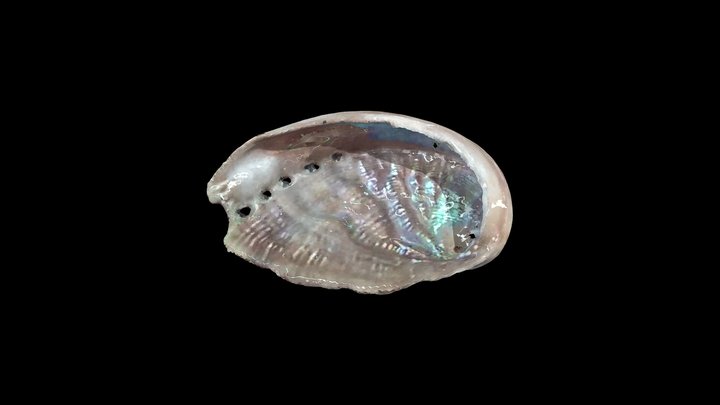
No picture of Gastopoda sp. was found. Wikipedia and Wikidata were searched and had none.
iDigBio and GBIF were not searched: the Paleobiology Database does not place Gastopoda sp. firmly enough to tell it from something else bearing the same name, and a search on the name alone returns whichever of them was photographed.
Smithsonian Open Access did not answer, so this is what the others held rather than everything there is.
Smithsonian Open Access and MorphoSource were not reached for this taxon, so this list is what the others held rather than everything there is.
This is what the site found, which is not the same as what exists.
Keep going
What may have been alongside itFormations of the EoceneThe world it lived on
Occurrence data from the Paleobiology Database, CC BY 4.0.