Glyphea
Glyphea is a genus of fossil glypheoid crustaceans that lived from the Jurassic to the Eocene. It includes the following species:

Albert Oppel · Public Domain · via Wikipedia/Commons. May be a photograph of a specimen, or an artist’s reconstruction — an interpretation of a skeleton, since colour and soft tissue are almost never preserved.
On record
Recorded, not inferred- Sits inside
- GlypheidaePBDB
- Diet
- carnivorePBDB, for Decapoda
- Life habit
- infaunalPBDB, for Glypheidae
- Motility
- actively mobilePBDB, for Malacostraca
- Vision
- well-developedPBDB, for Malacostraca
Time the record covers
At least 184 million years on record.
The record covers at least 227.3 Mya to 42.6 Mya. No occurrence read is dated outside 237 Mya to 37.71 Mya.
86 occurrences of Glyphea on record, most of them in the Early Cretaceous. Bar height is expected occurrences, not a count: each fossil is spread across the span it is dated to, so a tall narrow bar means tight dating and a low wide one means loose.
When
86 occurrences- Late Triassic5%
- Early Jurassic13%
- Middle Jurassic14%
- Late Jurassic26%
- Early Cretaceous28%
- Late Cretaceous7%
- Paleocene1%
- Eocene6%
These are dates about fossils, not the animal: the record can only begin after it arose and end before it died out, so either end may reach further. Shares are expected occurrences: a fossil dated to a span is counted partly in each period it straddles. More on what this infers.
Found in
34 formations
- Terrain à Chailles Formation11
- Maryborough Formation · Blythesdale Group6
- Spartan Glacier Formation4
- Dolomia di Forni Formation3
- Assise des Carreaux Formation3
- Atherfield Clay Formation3
Loading coastlines…
The named rock units Glyphea has been recovered from, largest first. Drawn where the rock is now, not where it formed. 10 further formations hold fewer occurrences each and are not listed. 25 occurrences have no formation on record, which is common for older literature.
Glyphea and its relatives
Early CretaceousWhere Glyphea and its relatives were recorded in the Early Cretaceous.
Found in the same rock
640 taxa- Eryma ventrosum6 sites
- Liostrea4 sites
- Modiolus4 sites
- Anomia laevigata3 sites
- Callianassa3 sites
- Eryma3 sites
- Falcimytilus lanceolata3 sites
- Globularia sublaevigata3 sites
- Gresslya3 sites
- Modiolus aequalis3 sites
- Nemocardium ibbetsoni3 sites
- Panopea (Myopsis) plicata3 sites
- Parmicorbula striatula3 sites
- Perissoptera robinaldina3 sites
- Pholadomya gigantea3 sites
- Pinna robinaldina3 sites
- Sarcinella plexus3 sites
- Senis wharburtoni3 sites
- Sphaera corrugata3 sites
- Thetironia minor3 sites
- Toxaster fittoni3 sites
- Trigonia literata3 sites
- Aetostreon latissimum2 sites
- Ammonoidea2 sites
The Paleobiology Database records 67 sites for Glyphea, and this reads all of them. The number is how many of those sites it was catalogued from too. The 24 sharing the most are listed.
This is not a list of everything alive at the time. It is only what has come out of the same ground as this animal and been written down.
Entered from
43 references- Description des crustacés fossiles de la Haute-Saône et du Haut-Jura11
- Middle Jurassic lobsters (Crustacea, Decapoda) from Normandy, France10
- Notes sur les Crustaces Jurassiques du Bassin Du Jura5
- Macrurous Decapoda from the Lower Cretaceous of South-Eastern Alexander Island4
- Macrusous Decapods from the Cretaceous of Queensland4
- Brachyura from the Cretaceous of Central Queensland4
- The stratigraphy of the Atherfield Clay Formation (Lower Aptian, Lower Cretaceous) at the type and other localities in southern England3
- The Lower Jurassic Rocks of East Greenland Part II The Mesozoic Sediments of the Kap Hope Area Southern Liverpool Land3
- The Upper Jurassic Solnhofen decapod crustacean fauna review of the types from old descriptions Part I. Infraorders Astacidea, Thalassinidea, and Palinura2
- New nephropid and glypheid lobsters from the Mesozoic of Japan2
- New Cretaceous and Tertiary decapod crustaceans from western North America2
- The macruran decapod crustaceans of the Dolomia di Forni (Norian, Upper Triassic) of Carnia (Udine, NE Italy)2
Each of the 86 occurrences read was entered from one of these publications, ordered by how many each accounts for. This is not a search for papers mentioning the name. 31 further references are not listed. Entries link to doi.org where the Paleobiology Database holds an identifier, and to its own record where it does not. Relayed as the Paleobiology Database holds them, not checked against what they resolve to.
Media and terms
Media content2

Picture of Glyphea
- Source
- Wikipedia/Commons
- Credit
- Albert Oppel
- Licence
- Public Domain
- Commercial use
- the licence allows it
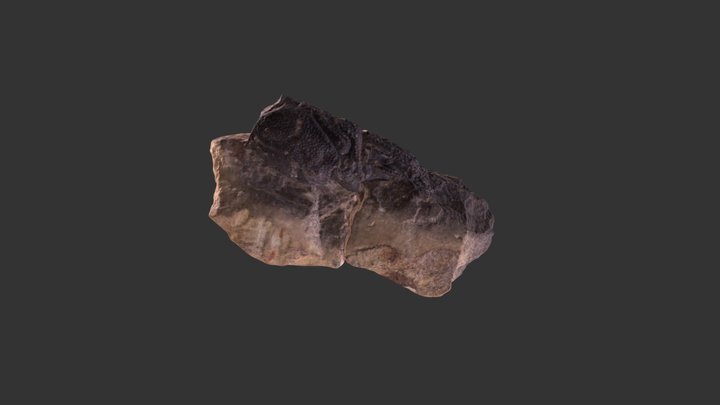
3D model
- Source
- Sketchfab
- Licence
- CC Attribution
- Commercial use
- cannot be read from the licence given — check the record
Smithsonian Open Access was not reached for this taxon, so this list is what the others held rather than everything there is.
The description on this site
- Source
- Wikipedia, “Glyphea”
- Licence
- CC BY-SA 4.0
This is what the site found, which is not the same as what exists.
Keep going
What may have been alongside itGlypheidae through timeFormations of the Early CretaceousThe world it lived on
Occurrence data from the Paleobiology Database, CC BY 4.0. Von Meyer 1835