Halysiocrinus

via iDigBio · CC0 · via iDigBio. May be a photograph of a specimen, or an artist’s reconstruction — an interpretation of a skeleton, since colour and soft tissue are almost never preserved.
On record
Recorded, not inferred- Sits inside
- CalceocrinidaePBDB
- Diet
- suspension feederPBDB, for Disparida
- Life habit
- intermediate-level epifaunalPBDB, for Disparida
- Motility
- stationary, attachedPBDB, for Disparida
- Vision
- blindPBDB, for Crinoidea
- Environment
- marinePBDB, for Echinodermata
Time the record covers
At least 35 million years on record.
The record covers at least 382.31 Mya to 346.7 Mya. No occurrence read is dated outside 387.95 Mya to 323.4 Mya.
60 occurrences of Halysiocrinus on record, most of them in the Carboniferous. Bar height is expected occurrences, not a count: each fossil is spread across the span it is dated to, so a tall narrow bar means tight dating and a low wide one means loose.
When
60 occurrencesThese are dates about fossils, not the animal: the record can only begin after it arose and end before it died out, so either end may reach further. Shares are expected occurrences: a fossil dated to a span is counted partly in each period it straddles. More on what this infers.
Found in
9 formations
- Fort Payne Formation23
- Edwardsville Formation14
- Fort Payne Chert Formation9
- Borden Formation4
- Carwood Formation · Borden Group2
- Cedar Valley Formation · Traverse Group2
Loading coastlines…
The named rock units Halysiocrinus has been recovered from, largest first. Drawn where the rock is now, not where it formed. 3 occurrences have no formation on record, which is common for older literature.
Halysiocrinus and its relatives
CarboniferousWhere Halysiocrinus and its relatives were recorded in the Carboniferous.
Found in the same rock
341 taxa- Platycrinites40 sites
- Barycrinus38 sites
- Synbathocrinus37 sites
- Agaricocrinus32 sites
- Actinocrinites27 sites
- Eretmocrinus magnificus26 sites
- Cyathocrinites25 sites
- Catillocrinus24 sites
- Alloprosallocrinus conicus21 sites
- Fenestella19 sites
- Paradichocrinus19 sites
- Cyathocrinites iowensis18 sites
- Gilbertsocrinus tuberosus17 sites
- Platyceras16 sites
- Macrocrinus15 sites
- Cheilotrypa14 sites
- Cystodictya14 sites
- Rhombopora14 sites
- Barycrinus spurius13 sites
- Cladochonus beecheri13 sites
- Cyathocrinites multibrachiatus13 sites
- Thamniscus13 sites
- Amplexus12 sites
- Bryozoa12 sites
The Paleobiology Database records 50 sites for Halysiocrinus, and this reads all of them. The number is how many of those sites it was catalogued from too. The 24 sharing the most are listed.
This is not a list of everything alive at the time. It is only what has come out of the same ground as this animal and been written down.
Entered from
14 references- Crinoid assemblages from the Fort Payne Formation (late Osagean, early Viséan, Mississippian) from Kentucky, Tennessee, and Alabama28
- Community Organization, Paleontology, and Sedimentology of the Lower Mississippian Borden Delta Platform (Edwardsville Formation, Southern Indiana)12
- Fossil communities of the Borden (Mississippian) delta in Indiana and northern Kentucky4
- Paleoecology and Paleocommunity Analysis of Green Shale Faunas from the Fort Payne Formation (Lower Mississippian) of South-central Kentucky and North-central Tennessee3
- Fossil communities of the Borden (Mississippi) delta in Indiana and northern Kentucky3
- Notes on the Devonian crinoid fauna of Cedar Valley Formation of Iowa2
- Camerate and disparid crinoids from the late Kinderhookian Meadville Shale, Cuyahoga Formation of Ohio1
- Crinoids from the Nada Member of the Borden Formation (Lower Mississippian) in eastern Kentucky1
- Crinoids from the Muldraugh Member of the Borden Formation in north-central Kentucky (Echinodermata, Lower Mississippian)1
- Origin and composition of carbonate buildups and associated facies in the Fort Payne Formation (Lower Mississippian, south-central Kentucky): an integrated sedimentologic and paleoecologic analysis1
- Crinoids from the New Providence Shale member of the Borden Formation (Mississippian) in Kentucky and Indiana1
- Ecologic stability of the dysaerobic biofacies during the Late Paleozoic1
Each of the 60 occurrences read was entered from one of these publications, ordered by how many each accounts for. This is not a search for papers mentioning the name. 2 further references are not listed. Entries link to doi.org where the Paleobiology Database holds an identifier, and to its own record where it does not. Relayed as the Paleobiology Database holds them, not checked against what they resolve to.
Media and terms
Media content2
Picture of Halysiocrinus
- Source
- iDigBio
- Credit
- via iDigBio
- Licence
- CC0
- Commercial use
- the licence allows it
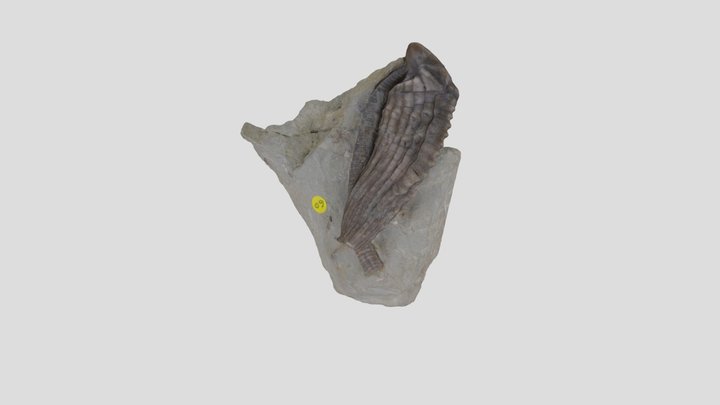
3D model
- Source
- Sketchfab
- Licence
- CC Attribution-NonCommercial
- Commercial use
- the licence does not allow it
This is what the site found, which is not the same as what exists.
Keep going
What may have been alongside itCalceocrinidae through timeFormations of the CarboniferousThe world it lived on
Occurrence data from the Paleobiology Database, CC BY 4.0. Ulrich 1886