Helicotomidae
Helicotomidae is an extinct family of Paleozoic molluscs (gastropods?) with anisostrophically coiled shells of uncertain position (Gastropoda?).
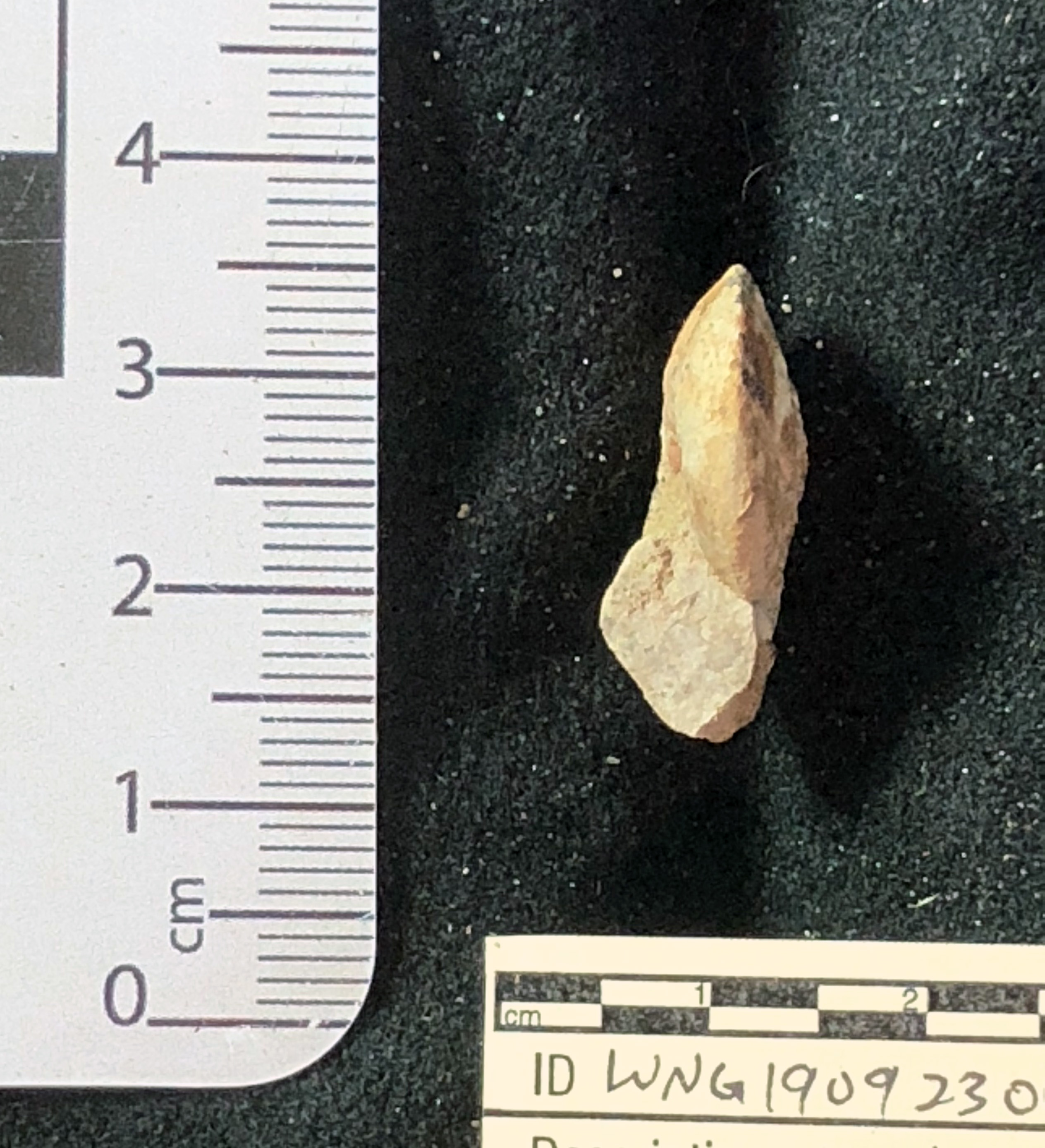
via iDigBio · via iDigBio. May be a photograph of a specimen, or an artist’s reconstruction — an interpretation of a skeleton, since colour and soft tissue are almost never preserved.
On record
Recorded, not inferred- Sits inside
- EuomphaloideaPBDB
- Diet
- suspension feederPBDB, for Euomphaloidea
- Life habit
- epifaunalPBDB, for Euomphaloidea
- Motility
- stationaryPBDB, for Euomphaloidea
- Vision
- limitedPBDB, for Gastropoda
Time the record covers
At least 310 million years on record.
The record covers at least 481.7 Mya to 170.9 Mya. No occurrence read is dated outside 486.85 Mya to 168.2 Mya.
290 occurrences of Helicotomidae on record, most of them in the Ordovician. Bar height is expected occurrences, not a count: each fossil is spread across the span it is dated to, so a tall narrow bar means tight dating and a low wide one means loose.
When
290 occurrences- Ordovician97%
- Silurian2%
- Devonianunder 1%
- Middle Jurassicunder 1%
These are dates about fossils, not the animal: the record can only begin after it arose and end before it died out, so either end may reach further. Shares are expected occurrences: a fossil dated to a span is counted partly in each period it straddles. More on what this infers.
Found in
83 formations
- Smithville Formation81
- Cliffield Formation18
- Kangaroo Creek Formation15
- Witten Limestone Formation10
- Chaumont Formation7
- Antelope Valley Formation · Pogonip Group6
Loading coastlines…
The named rock units Helicotomidae has been recovered from, largest first. Drawn where the rock is now, not where it formed. 59 further formations hold fewer occurrences each and are not listed. 8 occurrences have no formation on record, which is common for older literature.
Helicotomidae and its relatives
OrdovicianWhere Helicotomidae and its relatives were recorded in the Ordovician.
Found in the same rock
1,661 taxa- Lophospira perangulata62 sites
- Hormotoma gracilis44 sites
- Helicotoma31 sites
- Trochonema umbilicata31 sites
- Cyrtodonta30 sites
- Helicotoma planulata26 sites
- Clathrospira subconica25 sites
- Lophospira23 sites
- Lophospira milleri23 sites
- Ctenodonta22 sites
- Eunema centralis22 sites
- Tetradium22 sites
- Anazyga recurvirostra21 sites
- Lophonema taneyensis21 sites
- Ophiletina sublaxa21 sites
- Sinuites cancellatus21 sites
- Lophonema20 sites
- Lophospira serrulata20 sites
- Maclurina bigsbyi20 sites
- Tetranota sexcarinata20 sites
- Vanuxemia20 sites
- Liospira vitruvia19 sites
- Ceratopea unguis18 sites
- Cyrtodontula18 sites
The Paleobiology Database records 186 sites for Helicotomidae, and this reads all of them. The number is how many of those sites it was catalogued from too. The 24 sharing the most are listed.
This is not a list of everything alive at the time. It is only what has come out of the same ground as this animal and been written down.
Entered from
67 references- Paleozoic Gastropod, Rostroconch, Helcionelloid and Tergomyan Database (2006 - 2023)67
- Stratigraphic ranges of Middle and Late Ordovician Gastropoda and Monoplacophora of Minnesota31
- Stratigraphy of the Lower Middle Ordovician of Tazewell County, Virginia28
- The Paleontology and stratigraphy of the Smithville and Blackrock Formations of Southeastern Missouri26
- Ordovician - Devonian Gastropoda from the Klamath Mountains, California15
- Gastropoda and Conularida of the Ottawa Formation of the Ottawa - St. Lawrence Lowland9
- Palaeozoic geology of the Lake Simcoe Area, Ontario8
- Pre-Chattanooga stratigraphy in Central Tennessee6
- The Lower Silurian Gastropoda of Minnesota6
- On the Lower Ordovician faunas of East Greenland5
- Australian Ordovician pelecypod molluscs4
- Koken and Perner, 19254
Each of the 290 occurrences read was entered from one of these publications, ordered by how many each accounts for. This is not a search for papers mentioning the name. 55 further references are not listed. Entries link to doi.org where the Paleobiology Database holds an identifier, and to its own record where it does not. Relayed as the Paleobiology Database holds them, not checked against what they resolve to.
Media and terms
Media content1
Picture of Helicotomidae
- Source
- iDigBio
- Credit
- via iDigBio
- Licence
- not stated by the source
- Commercial use
- cannot be read from the licence given — check the record
No 3D scan of Helicotomidae was found in Sketchfab.
Smithsonian Open Access and MorphoSource were not reached for this taxon, so this list is what the others held rather than everything there is.
The description on this site
- Licence
- CC BY-SA 4.0
This is what the site found, which is not the same as what exists.
Keep going
What may have been alongside itEuomphaloidea through timeFormations of the OrdovicianThe world it lived on
Occurrence data from the Paleobiology Database, CC BY 4.0. (Wenz 1938)