Humiryssus
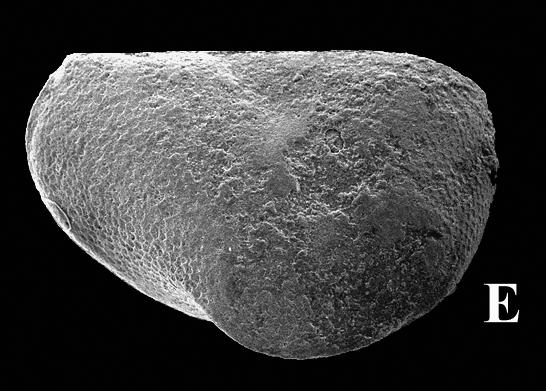
via GBIF · CC BY-NC 4.0 · via GBIF. May be a photograph of a specimen, or an artist’s reconstruction — an interpretation of a skeleton, since colour and soft tissue are almost never preserved.
On record
Recorded, not inferred- Sits inside
- BaissidaePBDB
- Motility
- actively mobilePBDB, for Arthropoda
- Environment
- terrestrialPBDB, for Insecta
Time the record covers
At least 347 million years on record.
The record covers at least 469.1 Mya to 121.4 Mya. No occurrence read is dated outside 471.3 Mya to 113.2 Mya.
7 occurrences of Humiryssus on record, most of them in the Early Cretaceous. Bar height is expected occurrences, not a count: each fossil is spread across the span it is dated to, so a tall narrow bar means tight dating and a low wide one means loose.
When
7 occurrencesThese are dates about fossils, not the animal: the record can only begin after it arose and end before it died out, so either end may reach further. Shares are expected occurrences: a fossil dated to a span is counted partly in each period it straddles. More on what this infers.
Found in
4 formations
- Laiyang Formation4
- Laocun Formation1
- Durlston Formation · Purbeck Group1
- Volkhov Formation1
Loading coastlines…
The named rock units Humiryssus has been recovered from, largest first. Drawn where the rock is now, not where it formed.
Humiryssus and its relatives
Early CretaceousWhere Humiryssus and its relatives were recorded in the Early Cretaceous.
Found in the same rock
174 taxa- Coptoclava longipoda2 sites
- Mesolygaeus laiyangensis2 sites
- Allopelecinus terpnus1 site
- Allopterus luianus1 site
- Angarosphex strigosus1 site
- Antigonambonites planus1 site
- Aortomima shandongensis1 site
- Apocritites distinctus1 site
- Apomatella1 site
- Archaeosoma serratum1 site
- Archeoviparosiphum latum1 site
- Archijassus plurinervis1 site
- Asaphus (Asaphus) lepidurus1 site
- Asaphus broeggeri1 site
- Asiochaoborus tenuous1 site
- Asteusloffia1 site
- Atrirabus shandongensis1 site
- Atrirabus tuanwangensis1 site
- Aulacopsis laiyangensis1 site
- Bethylonymellus feltoni1 site
- Brezelina1 site
- Caudaphis minulissima1 site
- Ceuthoneura dolichoptera1 site
- Chaoboropsis longipedalis1 site
The Paleobiology Database records 5 sites for Humiryssus, and this reads all of them. The number is how many of those sites it was catalogued from too. The 24 sharing the most are listed.
This is not a list of everything alive at the time. It is only what has come out of the same ground as this animal and been written down.
Entered from
5 references- Minute members of Baissinae (Insecta: Hymenoptera: Gasteruptiidae) from the upper Mesozoic of China and limits of the genus Manlaya Rasnitsyn, 19803
- Legend of the Central European series of sheets of the State Geological Map of the Russian Federation, scale 1:1,000,000 (third generation)1
- Wasps (Insecta: Vespida = Hymenoptera) from the Purbeck and Wealden (Lower Cretaceous) of southern England and their biostratigraphical and palaeoenvironmental significance1
- Fossil insects from the Laiyang Basin, Shandong Province1
- Fossil insects from the Mesozoic of Zhejiang and Anhui provinces1
Each of the 7 occurrences read was entered from one of these publications, ordered by how many each accounts for. This is not a search for papers mentioning the name. Entries link to doi.org where the Paleobiology Database holds an identifier, and to its own record where it does not. Relayed as the Paleobiology Database holds them, not checked against what they resolve to.
Media and terms
Media content1
Picture of Humiryssus
- Source
- GBIF
- Credit
- via GBIF
- Licence
- CC BY-NC 4.0
- Commercial use
- the licence does not allow it
No 3D scan of Humiryssus was found in MorphoSource and Sketchfab.
Smithsonian Open Access was not reached for this taxon, so this list is what the others held rather than everything there is.
This is what the site found, which is not the same as what exists.
Keep going
What may have been alongside itBaissidae through timeFormations of the Early CretaceousThe world it lived on
Occurrence data from the Paleobiology Database, CC BY 4.0. Lin 1980