Imitoceras

via iDigBio · CC0 · via iDigBio. May be a photograph of a specimen, or an artist’s reconstruction — an interpretation of a skeleton, since colour and soft tissue are almost never preserved.
On record
Recorded, not inferred- Sits inside
- ImitoceratinaePBDB
- Diet
- carnivorePBDB, for Ammonoidea
- Life habit
- nektonicPBDB, for Goniatitida
- Motility
- fast-movingPBDB, for Ammonoidea
- Vision
- well-developedPBDB, for Cephalopoda
- Environment
- marinePBDB, for Cephalopoda
Time the record covers
At least 98 million years on record.
The record covers at least 365.2 Mya to 266.9 Mya. No occurrence read is dated outside 372.15 Mya to 264.28 Mya.
77 occurrences of Imitoceras on record, most of them in the Carboniferous. Bar height is expected occurrences, not a count: each fossil is spread across the span it is dated to, so a tall narrow bar means tight dating and a low wide one means loose.
When
77 occurrences- Devonian19%
- Carboniferous78%
- Permian3%
These are dates about fossils, not the animal: the record can only begin after it arose and end before it died out, so either end may reach further. Shares are expected occurrences: a fossil dated to a span is counted partly in each period it straddles. More on what this infers.
Found in
23 formations
- Argiles de Teguentour Formation27
- Wangyou Formation4
- Stourscombe Formation4
- Davis Spring Formation2
- Rangari limestone Formation2
- Walls Ferry Formation2
Loading coastlines…
The named rock units Imitoceras has been recovered from, largest first. Drawn where the rock is now, not where it formed. 18 occurrences have no formation on record, which is common for older literature.
Imitoceras and its relatives
CarboniferousWhere Imitoceras and its relatives were recorded in the Carboniferous.
Found in the same rock
308 taxa- Dzhaprakoceras vergum12 sites
- Pericyclus circulus12 sites
- Progoniatites uncus12 sites
- Jerania sicilicula11 sites
- Pericyclus intercisus11 sites
- Pericyclus trochus10 sites
- Jerania jeranensis9 sites
- Jerania persimilis9 sites
- Temertassetia coarta9 sites
- Temertassetia decorata9 sites
- Acrocanites disparilis8 sites
- Muensteroceras subparallelum8 sites
- Prolecanites lyoni8 sites
- Temertassetia temertassetensis8 sites
- Habadraites weyeri7 sites
- Jerania subvexa7 sites
- Progoniatites pilus7 sites
- Becanites inflateralis6 sites
- Cymaclymenia6 sites
- Habadraites supralatus6 sites
- Progoniatites paenacutus6 sites
- Crinoidea5 sites
- Cyrtoclymenia5 sites
- Dzhaprakoceras biconvexum5 sites
The Paleobiology Database records 56 sites for Imitoceras, and this reads all of them. The number is how many of those sites it was catalogued from too. The 24 sharing the most are listed.
This is not a list of everything alive at the time. It is only what has come out of the same ground as this animal and been written down.
Entered from
24 references- The ammonoids from the Argiles de Teguentour of Oued Temertasset (early Late Tournaisian; Mouydir, Algeria)27
- Ammonoideen aus dem Untertournai von Schleiz (Ostthüringisches Schiefergebirge) [Lower Tournaisian ammonoids from Schleiz (Thuringia)]6
- Devonskie ammonoidei I. Agoniatitidy6
- Ammonoids and trilobites from the Upper Devonian and Lowest Carboniferous of the Launceston area of Cornwall6
- Late Kinderhookian (Early Mississippian) ammonoids of the western United States4
- The Lali Section: An Excellent Reference Section for Upper Devonian in South China3
- Carboniferous Cephalopods of Arkansas3
- The faunas of the Tournaisian Tulcumba Sandstone and its members in the Werrie and Belvue synclines, New South Wales3
- Early Carboniferous ammonoids from the Chatkal River basin (Middle Tien Shan, Uzbekistan)2
- A new ammonoid fauna from the Gattendorfia-Eocanites Genozone of the Anti-Atlas (Early Carboniferous; Morocco)2
- Palaeogeographical meaning of a Middle Tournaisian ammonoid fauna from Morocco2
- The Late Devonian and Early Carboniferous ammonoids (Cephalopoda) from Milivojevića Kamenjar, Družetić (NW Serbia) and their stratigraphy1
Each of the 77 occurrences read was entered from one of these publications, ordered by how many each accounts for. This is not a search for papers mentioning the name. 12 further references are not listed. Entries link to doi.org where the Paleobiology Database holds an identifier, and to its own record where it does not. Relayed as the Paleobiology Database holds them, not checked against what they resolve to.
Media and terms
Media content2
Picture of Imitoceras
- Source
- iDigBio
- Credit
- via iDigBio
- Licence
- CC0
- Commercial use
- the licence allows it
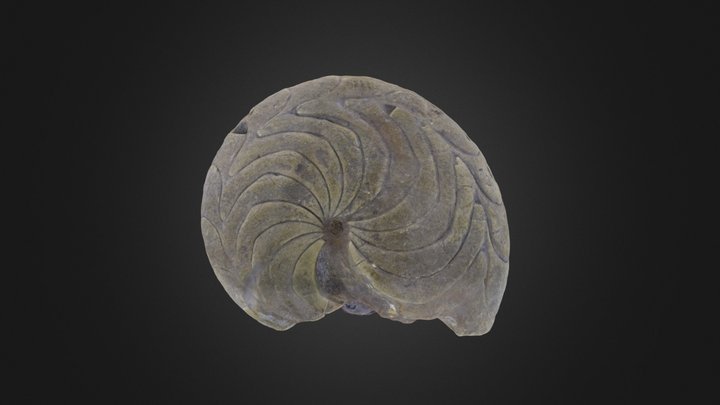
3D model
- Source
- Sketchfab
- Licence
- CC0 Public Domain
- Commercial use
- the licence allows it
This is what the site found, which is not the same as what exists.
Keep going
What may have been alongside itImitoceratinae through timeFormations of the CarboniferousThe world it lived on
Occurrence data from the Paleobiology Database, CC BY 4.0. (Schindewolf 1923)