Kogia sima
The dwarf sperm whale is a sperm whale that inhabits temperate and tropical oceans worldwide, in particular continental shelves and slopes. It was first described by biologist Richard Owen in 1866, based on illustrations by naturalist Sir Walter Elliot. The species was considered to be synonymous with the pygmy sperm whale from 1878 until 1998. The dwarf sperm whale is a small whale, 2 to 2.7 m and 136 to 272 kg, that has a grey coloration, square head, small jaw, and robust body. Its appearance is very similar to the pygmy sperm whale, distinguished mainly by the position of the dorsal fin on the body–nearer the middle in the dwarf sperm whale and nearer the tail in the other.

Robert Pitman (NOAA) · Public Domain · via Wikipedia/Commons. May be a photograph of a specimen, or an artist’s reconstruction — an interpretation of a skeleton, since colour and soft tissue are almost never preserved.
On record
Recorded, not inferred- Also called
- dwarf sperm whalePBDB
- Sits inside
- KogiaPBDB
- Diet
- carnivorePBDB, for Odontoceti
- Life habit
- aquatic, depth=surfacePBDB, for Cetacea
- Motility
- actively mobilePBDB, for Cetacea
- Environment
- marine,freshwaterPBDB, for Odontoceti
Time the record covers
At least 2.5 million years on record.
The record covers at least 2.58 Mya to 11.7 ka. No occurrence read is dated outside 3.6 Mya to 0 Mya.
5 occurrences of Kogia sima on record. The Paleobiology Database records this as a living group. Bar height is expected occurrences, not a count: each fossil is spread across the span it is dated to, so a tall narrow bar means tight dating and a low wide one means loose.
When
5 occurrencesThese are dates about fossils, not the animal: the record can only begin after it arose and end before it died out, so either end may reach further. Shares are expected occurrences: a fossil dated to a span is counted partly in each period it straddles. More on what this infers.
Found in the same rock
34 taxa- Kogia breviceps2 sites
- Alca ausonia1 site
- Balaena1 site
- Balaena montalionis1 site
- Balaenidae1 site
- Balaenoptera1 site
- Balaenotus1 site
- Balaenotus insignis1 site
- Balaenotus orcianensis1 site
- Balaenula1 site
- Balaenula balaenopsis1 site
- Cetotheriophanes capellinii1 site
- Cheloniidae1 site
- Columba pisana1 site
- Delphinidae1 site
- Etruridelphis giulii1 site
- Fuligula arctina1 site
- Hemisyntrachelus1 site
- Hemisyntrachelus cortesii1 site
- Lophius piscatorius1 site
- Mesocetus1 site
- Mesoplodon1 site
- Metaxytherium1 site
- Odontoceti1 site
The Paleobiology Database records 5 sites for Kogia sima, and this reads all of them. The number is how many of those sites it was catalogued from too. The 24 sharing the most are listed.
This is not a list of everything alive at the time. It is only what has come out of the same ground as this animal and been written down.
Entered from
3 references- Marine mammal strandings in the New Caledonia region, Southwest Pacific3
- Pygmy sperm whales (Kogia) in the Italian Pliocene1
- Catalog of Living Whales1
Each of the 5 occurrences read was entered from one of these publications, ordered by how many each accounts for. This is not a search for papers mentioning the name. Entries link to doi.org where the Paleobiology Database holds an identifier, and to its own record where it does not. Relayed as the Paleobiology Database holds them, not checked against what they resolve to.
Media and terms
Media content2
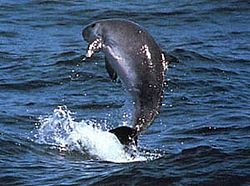
Picture of Kogia sima
- Source
- Wikipedia/Commons
- Credit
- Robert Pitman (NOAA)
- Licence
- Public Domain
- Commercial use
- the licence allows it
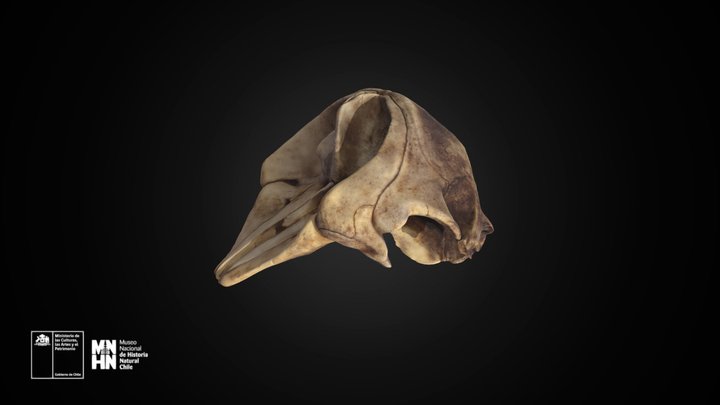
3D model
- Source
- Sketchfab
- Licence
- CC0 Public Domain
- Commercial use
- the licence allows it
Smithsonian Open Access and MorphoSource were not reached for this taxon, so this list is what the others held rather than everything there is.
The description on this site
- Licence
- CC BY-SA 4.0
This is what the site found, which is not the same as what exists.
Keep going
What may have been alongside itKogia through timeThe world it lived on
Occurrence data from the Paleobiology Database, CC BY 4.0. (Owen 1866)