Lacuna (Epheria) unifasciata
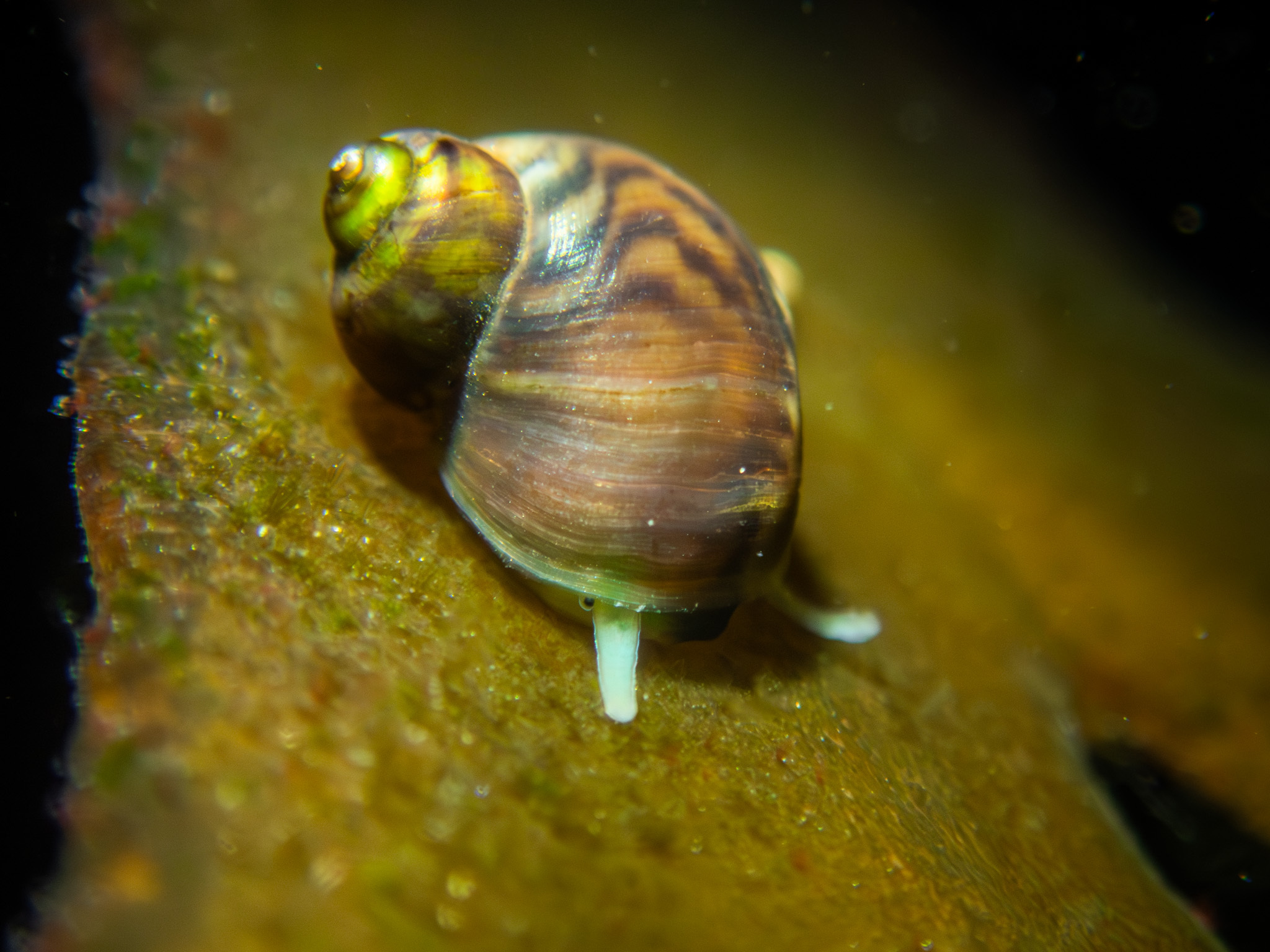
Sean · CC BY-NC 4.0 · via GBIF. May be a photograph of a specimen, or an artist’s reconstruction — an interpretation of a skeleton, since colour and soft tissue are almost never preserved.
On record
Recorded, not inferred- Also called
- one-banded lacunaPBDB
- Sits inside
- Lacuna (Epheria)PBDB
- Diet
- grazerPBDB, for Littorinidae
- Life habit
- epifaunalPBDB, for Littorinidae
- Motility
- actively mobilePBDB, for Littorinidae
- Vision
- limitedPBDB, for Gastropoda
Time the record covers
At least 1.6 million years on record.
The record covers at least 1.8 Mya to 129 ka. No occurrence read is dated outside 3.6 Mya to 0 Mya.
50 occurrences of Lacuna (Epheria) unifasciata on record, most of them in the Pleistocene. The Paleobiology Database records this as a living group. Bar height is expected occurrences, not a count: each fossil is spread across the span it is dated to, so a tall narrow bar means tight dating and a low wide one means loose.
When
50 occurrences- Pliocene1%
- Pleistocene99%
- Holoceneunder 1%
These are dates about fossils, not the animal: the record can only begin after it arose and end before it died out, so either end may reach further. Shares are expected occurrences: a fossil dated to a span is counted partly in each period it straddles. More on what this infers.
Found in
7 formations
- Palos Verdes Sand Formation13
- Unnamed Formation12
- Quaternary terrace Formation3
- Lomita Marl Formation3
- San Pedro Sand Formation3
- Palos Verdes Formation1
Loading coastlines…
The named rock units Lacuna (Epheria) unifasciata has been recovered from, largest first. Drawn where the rock is now, not where it formed. 14 occurrences have no formation on record, which is common for older literature.
Lacuna (Epheria) unifasciata and its relatives
PleistoceneWhere Lacuna (Epheria) unifasciata and its relatives were recorded in the Pleistocene.
Found in the same rock
1,118 taxa- Callianax biplicata36 sites
- Californiconus californicus32 sites
- Epilucina californica27 sites
- Thylacodes squamigerus27 sites
- Alia carinata26 sites
- Caesia perpinguis25 sites
- Crepidula adunca25 sites
- Leukoma staminea25 sites
- Cumingia californica24 sites
- Littorina (Littorina) scutulata24 sites
- Amphissa versicolor23 sites
- Crepidula onyx23 sites
- Paciocinebrina interfossa23 sites
- Antisabia panamensis22 sites
- Caesia fossatus22 sites
- Diodora aspera22 sites
- Fissurella volcano22 sites
- Leptopecten latiauratus22 sites
- Lottia scabra22 sites
- Mytilus californianus22 sites
- Nutricola tantilla22 sites
- Dentalium neohexagonum21 sites
- Glans carpenteri21 sites
- Homalopoma (Homalopoma) luridum21 sites
The Paleobiology Database records 41 sites for Lacuna (Epheria) unifasciata, and this reads all of them. The number is how many of those sites it was catalogued from too. The 24 sharing the most are listed.
This is not a list of everything alive at the time. It is only what has come out of the same ground as this animal and been written down.
Entered from
17 references- Geology of San Nicolas Island, California12
- A review of the Quaternary Mollusca of the Palos Verdes Peninsula6
- The paleontology of the Pleistocene molluscan fauna of the Newport Bay area, California6
- Late Pleistocene molluscan faunas from upper terraces of the Palos Verdes Hills, California5
- Geology and Paleontology of Palos Verdes Hills, California5
- Late Pleistocene faunas from the northwestern coast of Baja California, Mexico4
- Late Pleistocene invertebrates of the Newport Bay area, California2
- A Late Pliocene macrofossil fauna of Newport Beach, Orange County, California1
- Pleistocene invertebrates from the Dume Terrace, western Santa Monica Mountains, California1
- Upper Pleistocene Mollusca from Potrero Canyon, Pacific Palisades, California1
- The paleontology and stratigraphy of the Pleistocene at Signal hill, Long Beach, California1
- Paleontology of the Pleistocene of Point Loma, San Diego County, California1
Each of the 50 occurrences read was entered from one of these publications, ordered by how many each accounts for. This is not a search for papers mentioning the name. 5 further references are not listed. Entries link to doi.org where the Paleobiology Database holds an identifier, and to its own record where it does not. Relayed as the Paleobiology Database holds them, not checked against what they resolve to.
Media and terms
Media content1
Picture of Lacuna (Epheria) unifasciata
- Source
- GBIF
- Credit
- Sean
- Licence
- CC BY-NC 4.0
- Commercial use
- the licence does not allow it
No 3D scan was found. Smithsonian Open Access, MorphoSource and Sketchfab were all searched.
This is what the site found, which is not the same as what exists.
Keep going
What may have been alongside itLacuna (Epheria) through timeFormations of the PleistoceneThe world it lived on
Occurrence data from the Paleobiology Database, CC BY 4.0. (Carpenter 1857)