Lepidodendron
Lepidodendron, from Ancient Greek λεπίς (lepís), meaning "scale", and δένδρον (déndron), meaning "tree", is an extinct genus of primitive lycopodian vascular plants belonging to the order Lepidodendrales. It is well preserved and common in the fossil record. Like other Lepidodendrales, species of Lepidodendron grew as large-tree-like plants in wetland coal forest environments. They sometimes reached heights of 50 metres, and the trunks were often over 1 m in diameter. They are often known as "scale trees", due to their bark having been covered in diamond-shaped leaf-bases, from which leaves grew during earlier stages of growth. However, they are correctly defined as arborescent lycophytes. They thrived during the Carboniferous Period, and persisted until the end of the Permian around 252 million years ago. Sometimes erroneously called "giant club mosses", the genus was actually more closely related to modern quillworts than to modern club mosses. In the form classification system used in paleobotany, Lepidodendron is both used for the whole plant as well as specifically the stems and leaves.

Falconaumanni · CC BY-SA 3.0 · via Wikipedia/Commons. May be a photograph of a specimen, or an artist’s reconstruction — an interpretation of a skeleton, since colour and soft tissue are almost never preserved.
On record
Recorded, not inferred- Sits inside
- LepidodendraceaePBDB
- Diet
- "photoautotroph"PBDB, for Streptophyta
Time the record covers
At least 155 million years on record.
The record covers at least 382.31 Mya to 227.3 Mya. No occurrence read is dated outside 387.95 Mya to 205.7 Mya.
313 occurrences of Lepidodendron on record, most of them in the Carboniferous. Bar height is expected occurrences, not a count: each fossil is spread across the span it is dated to, so a tall narrow bar means tight dating and a low wide one means loose.
When
313 occurrences- Devonian2%
- Carboniferous63%
- Permian35%
- Late Triassicunder 1%
These are dates about fossils, not the animal: the record can only begin after it arose and end before it died out, so either end may reach further. Shares are expected occurrences: a fossil dated to a span is counted partly in each period it straddles. More on what this infers.
Found in
85 formations
- Taiyuan Formation30
- Pottsville Formation21
- Shanxi Formation15
- Brazil Formation9
- Carbondale Formation7
- New Albany Shale Formation5
Loading coastlines…
The named rock units Lepidodendron has been recovered from, largest first. Drawn where the rock is now, not where it formed. 61 further formations hold fewer occurrences each and are not listed. 112 occurrences have no formation on record, which is common for older literature.
Lepidodendron and its relatives
CarboniferousWhere Lepidodendron and its relatives were recorded in the Carboniferous.
Found in the same rock
732 taxa- Pecopteris87 sites
- Sphenophyllum83 sites
- Cordaites72 sites
- Neuropteris68 sites
- Calamites61 sites
- Annularia60 sites
- Sphenopteris56 sites
- Pecopteris (Alethopteris)48 sites
- Stigmaria46 sites
- Taeniopteris40 sites
- Lobatannularia33 sites
- Stigmaria ficoides30 sites
- Lepidostrobus29 sites
- Asterophyllites28 sites
- Sigillaria28 sites
- Gigantopteris22 sites
- Odontopteris21 sites
- Mariopteris20 sites
- Tingia20 sites
- Lepidophloios19 sites
- Lepidostrobophyllum19 sites
- Callipteridium18 sites
- Imparipteris heterophylla17 sites
- Calamostachys16 sites
The Paleobiology Database records 194 sites for Lepidodendron, and this reads all of them. The number is how many of those sites it was catalogued from too. The 24 sharing the most are listed.
This is not a list of everything alive at the time. It is only what has come out of the same ground as this animal and been written down.
Entered from
98 references- Report on the Fossil Plants of the Lower Carboniferous and Millstone Grit Formations of Canada23
- Fossil Flora of the Michigan Coal Basin12
- Regional Geology of Hebei Province, Beijing Municipality and Tianjing Municipality11
- The Stratigraphic Tables of Ningxia11
- A paleontological study of an Early Pennsylvanian forest preserved above the Blue Creek Coal seam, Pottsville, Formation, Northwestern Alabama10
- Coal-ball floras of the Namurian-Westphalian of Europe10
- A paleoecological study of an in situ peat-forming Carboniferous forest in the Black Warrior Basin, Alabama9
- The floras characteristic of Taiyuan Formation and Shansi Formation of the eastern Shungeerqi, Inner Mongol9
- The Stanley Cemetery Flora (Early Pennsylvanian) of Greene County, Indiana9
- Regional Geology of Liaoning Province8
- Geology of Korea8
- Distribution of anatomically-preserved floras in the Lower Carboniferous in Western Europe8
Each of the 313 occurrences read was entered from one of these publications, ordered by how many each accounts for. This is not a search for papers mentioning the name. 86 further references are not listed. Entries link to doi.org where the Paleobiology Database holds an identifier, and to its own record where it does not. Relayed as the Paleobiology Database holds them, not checked against what they resolve to.
Media and terms
Media content2

Picture of Lepidodendron
- Source
- Wikipedia/Commons
- Credit
- Falconaumanni
- Licence
- CC BY-SA 3.0
- Commercial use
- the licence allows it
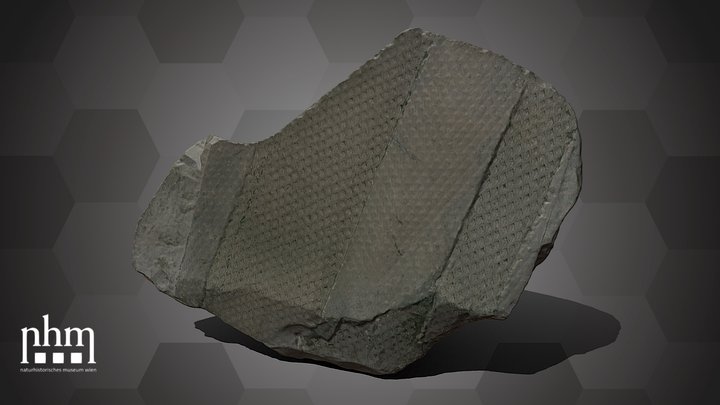
3D model
- Source
- Sketchfab
- Licence
- CC Attribution-NonCommercial
- Commercial use
- the licence does not allow it
Smithsonian Open Access was not reached for this taxon, so this list is what the others held rather than everything there is.
The description on this site
- Licence
- CC BY-SA 4.0
This is what the site found, which is not the same as what exists.
Keep going
What may have been alongside itLepidodendraceae through timeFormations of the CarboniferousThe world it lived on
Occurrence data from the Paleobiology Database, CC BY 4.0. Sternberg 1820