Lochriea commutata
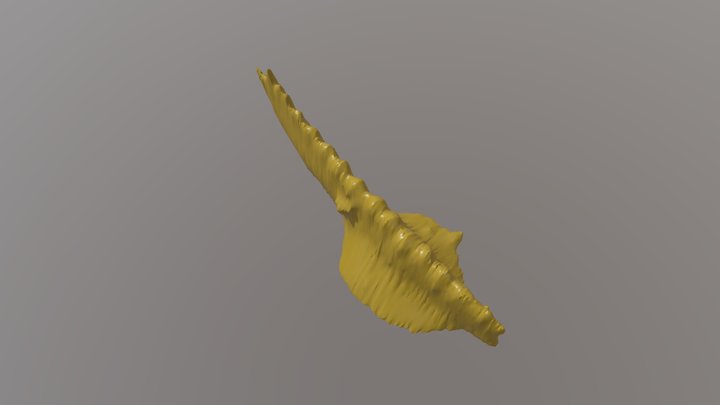
Naturalis Biodiversity Center · CC0 · via GBIF. May be a photograph of a specimen, or an artist’s reconstruction — an interpretation of a skeleton, since colour and soft tissue are almost never preserved.
On record
Recorded, not inferred- Sits inside
- LochrieaPBDB
- Diet
- carnivorePBDB, for Conodonta
- Life habit
- nektonicPBDB, for Conodonta
- Motility
- actively mobilePBDB, for Conodonta
- Vision
- well-developedPBDB, for Conodonta
Time the record covers
At least 35 million years on record.
The record covers at least 358.86 Mya to 323.4 Mya. No occurrence read is dated outside 382.31 Mya to 298.9 Mya.
26 occurrences of Lochriea commutata on record, most of them in the Carboniferous. Bar height is expected occurrences, not a count: each fossil is spread across the span it is dated to, so a tall narrow bar means tight dating and a low wide one means loose.
When
26 occurrencesThese are dates about fossils, not the animal: the record can only begin after it arose and end before it died out, so either end may reach further. Shares are expected occurrences: a fossil dated to a span is counted partly in each period it straddles. More on what this infers.
Found in
10 formations
- Alba Formation4
- Panching limestone Formation · Kuantan Group4
- Doulingshan Formation3
- Bluefield Shale Formation2
- Tsingyuan Formation1
- Bangor Limestone Formation1
Loading coastlines…
The named rock units Lochriea commutata has been recovered from, largest first. Drawn where the rock is now, not where it formed. 7 occurrences have no formation on record, which is common for older literature.
Lochriea commutata and its relatives
CarboniferousWhere Lochriea commutata and its relatives were recorded in the Carboniferous.
Found in the same rock
128 taxa- Gnathodus23 sites
- Idioprioniodus10 sites
- Ozarkodina10 sites
- Spathognathodus9 sites
- Oulodus7 sites
- Lonchodina6 sites
- Cavusgnathus5 sites
- Hibbardella5 sites
- Palmatolepis5 sites
- Palmatolepis glabra5 sites
- Palmatolepis minuta5 sites
- Declinognathodus noduliferus4 sites
- Gnathodus texanus4 sites
- Palmatolepis subrecta4 sites
- Streptognathodus4 sites
- Ancyrodella3 sites
- Geniculatus3 sites
- Kladognathus3 sites
- Polygnathus3 sites
- Synprioniodina3 sites
- Anthracospirifer2 sites
- Apatognathus2 sites
- Archimedes2 sites
- Eostaffella2 sites
The Paleobiology Database records 26 sites for Lochriea commutata, and this reads all of them. The number is how many of those sites it was catalogued from too. The 24 sharing the most are listed.
This is not a list of everything alive at the time. It is only what has come out of the same ground as this animal and been written down.
Entered from
9 references- The Fossil Record of Conodonts in Greece7
- Serpukhovian conodonts from Northern Spain and their biostratigraphic application4
- Upper Carboniferous conodont faunas of the Panching Limestone, Pahang, West Malaysia4
- The Lali Section: An Excellent Reference Section for Upper Devonian in South China3
- Conodonts from the Glen Dean Formation of Kentucky and Equivalent Formations of Virginia and West Virginia3
- Conodonts of the Polotnyany Zavod section (Lower Carboniferous, west Russia)2
- Namurian (Lower Carboniferous) gastropod assemblages from Ningxia, China1
- Significance of the Goniatite Bilingulites eliasi and associated biotas, Parkwood Formation and Bangor Limestone, Northeastern Alabama1
- Biostratigraphy of the Great Blue Formation1
Each of the 26 occurrences read was entered from one of these publications, ordered by how many each accounts for. This is not a search for papers mentioning the name. Entries link to doi.org where the Paleobiology Database holds an identifier, and to its own record where it does not. Relayed as the Paleobiology Database holds them, not checked against what they resolve to.
Media and terms
Media content2
Picture of Lochriea commutata
- Source
- GBIF
- Credit
- Naturalis Biodiversity Center
- Licence
- CC0
- Commercial use
- the licence allows it
This is what the site found, which is not the same as what exists.
Keep going
What may have been alongside itLochriea through timeFormations of the CarboniferousThe world it lived on
Occurrence data from the Paleobiology Database, CC BY 4.0. (Branson and Mehl 1941)