Lumbricaria
No picture of Lumbricaria was found. Wikipedia, Wikidata and Smithsonian Open Access were searched and had none. iDigBio and GBIF were not searched: the Paleobiology Database does not place Lumbricaria firmly enough to tell it from something else bearing the same name, and a search on the name alone returns whichever of them was photographed.
On record
Recorded, not inferred- Sits inside
- IchnofossilsPBDB
Time the record covers
At most 9.2 million years on record.
Every occurrence read is dated to somewhere between 152.21 Mya and 143.1 Mya, and nothing in the dating separates them, so that window is what the record shows rather than a span.
3 occurrences of Lumbricaria on record, most of them in the Late Jurassic. Bar height is expected occurrences, not a count: each fossil is spread across the span it is dated to, so a tall narrow bar means tight dating and a low wide one means loose.
When
3 occurrences- Late Jurassic100%
These are dates about fossils, not the animal: the record can only begin after it arose and end before it died out, so either end may reach further. Shares are expected occurrences: a fossil dated to a span is counted partly in each period it straddles. More on what this infers.
Found in
2 formations
Loading coastlines…
The named rock units Lumbricaria has been recovered from, largest first. Drawn where the rock is now, not where it formed.
Lumbricaria and its relatives
Late JurassicWhere Lumbricaria and its relatives were recorded in the Late Jurassic.
Found in the same rock
32 taxa- Apsidocrinus moeschi1 site
- Aspidoceras rogoznicense1 site
- Asteroidea1 site
- Aulacothyris1 site
- Balanocrinus subteres1 site
- Bivalvia1 site
- Bochianites1 site
- Cardiolampas altissimus1 site
- Chilodonta1 site
- Emarginula1 site
- Gastropoda1 site
- Hemicidaris zignoi1 site
- Hemicrinus tithonicus1 site
- Holcophylloceras1 site
- Lonchocrinus pskaboirensis1 site
- Neolissoceras carachteis1 site
- Nucleata rupicola1 site
- Ophiuroidea1 site
- Phyllocrinus belbekensis1 site
- Phyllocrinus stellaris1 site
- Protancyloceras1 site
- Protetragonites quadrisulcatum1 site
- Psalidocrinus armatus1 site
- Ptychophylloceras ptychoicum1 site
The Paleobiology Database records 1 site for Lumbricaria, and this reads all of them. The number is how many of those sites it was catalogued from too. The 24 sharing the most are listed.
This is not a list of everything alive at the time. It is only what has come out of the same ground as this animal and been written down.
Entered from
2 references- Im Reich der Meerengel. Der Nusplinger Plattenkalk und seine Fossilien2
- Tithonian crinoids from Rogoznik (Pieniny Klippen Belt, Poland) and their evolutionary relationships1
Each of the 3 occurrences read was entered from one of these publications, ordered by how many each accounts for. This is not a search for papers mentioning the name. Each entry links to the Paleobiology Database's own record for the work.
Media and terms
Media content1
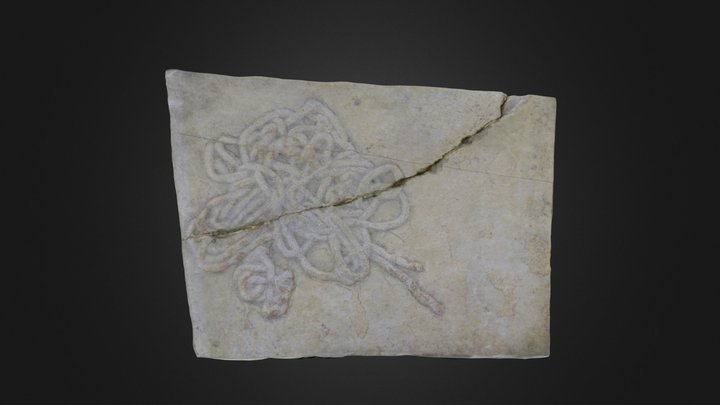
3D model
- Source
- Sketchfab
- Licence
- CC0 Public Domain
- Commercial use
- the licence allows it
No picture of Lumbricaria was found. Wikipedia, Wikidata and Smithsonian Open Access were searched and had none.
iDigBio and GBIF were not searched: the Paleobiology Database does not place Lumbricaria firmly enough to tell it from something else bearing the same name, and a search on the name alone returns whichever of them was photographed.
This is what the site found, which is not the same as what exists.
Keep going
What may have been alongside itIchnofossils through timeFormations of the Late JurassicThe world it lived on
Occurrence data from the Paleobiology Database, CC BY 4.0. Massalongo 1855