Macropoma
Macropoma is an extinct genus of coelacanth in the class Sarcopterygii. Fossils of Macropoma have been found in both England and Czech Republic, dating to the mid-Cretaceous (Albian-Turonian). Recorded fossils have bodies under two feet in length. A modern coelacanth measures five or more, but in other respects the two genera are remarkably similar, and share the same body plan with a three-lobed tail and stalked fins.

Harold9595959 · CC0 · via Wikipedia/Commons. May be a photograph of a specimen, or an artist’s reconstruction — an interpretation of a skeleton, since colour and soft tissue are almost never preserved.
On record
Recorded, not inferred- Sits inside
- LatimeriinaePBDB
- Motility
- actively mobilePBDB, for Osteichthyes
Time the record covers
At least 51 million years on record.
The record covers at least 145.06 Mya to 93.9 Mya. No occurrence read is dated outside 149.2 Mya to 89.8 Mya.
6 occurrences of Macropoma on record, most of them in the Late Cretaceous. Bar height is expected occurrences, not a count: each fossil is spread across the span it is dated to, so a tall narrow bar means tight dating and a low wide one means loose.
When
6 occurrencesThese are dates about fossils, not the animal: the record can only begin after it arose and end before it died out, so either end may reach further. Shares are expected occurrences: a fossil dated to a span is counted partly in each period it straddles. More on what this infers.
Found in
4 formations
- Lewes Nodular Chalk Formation · Chalk Group1
- Grey Chalk Formation1
- Solnhofen Formation1
- Speeton Clay Formation · Cromer Knoll Group1
Loading coastlines…
The named rock units Macropoma has been recovered from, largest first. Drawn where the rock is now, not where it formed. 2 occurrences have no formation on record, which is common for older literature.
Macropoma and its relatives
Late CretaceousWhere Macropoma and its relatives were recorded in the Late Cretaceous.
Found in the same rock
131 taxa- Inoceramus2 sites
- Actea sphinx1 site
- Aeschnogomphus buchi1 site
- Aeschnogomphus intermedius1 site
- Amarodes pseudozabrus1 site
- Amiopsis damoni1 site
- Anisophlebia helle1 site
- Apiaria oppenheimi1 site
- Apocrita1 site
- Apomesodon gibbosus1 site
- Archaeogracilidens macer1 site
- Archotaulius bavaricus1 site
- Aspidorhynchus fisheri1 site
- Asteroidea1 site
- Brunetaeschnidium1 site
- Carabicina decipiens1 site
- Cerambycinus dubius1 site
- Chresmoda obscura1 site
- Collignoniceras woollgari1 site
- Conexicoxa tripartita1 site
- Corydalus vetustus1 site
- Curculionites striatus1 site
- Cymatophlebia longialata1 site
- Cyrtophyllites rogeri1 site
The Paleobiology Database records 6 sites for Macropoma, and this reads all of them. The number is how many of those sites it was catalogued from too. The 24 sharing the most are listed.
This is not a list of everything alive at the time. It is only what has come out of the same ground as this animal and been written down.
Entered from
6 references- The correlation of the lower chalk of south-east England1
- A coelacanth, Macropoma, from the Chalk of Wiltshire1
- The Fossil Fishes of the English Chalk. Part V1
- Die Fische aus dem lithographischen Schiefer in Dresdener Museum1
- Figures and descriptions illustrative of British organic remains1
- Agassiz, 18331
Each of the 6 occurrences read was entered from one of these publications, ordered by how many each accounts for. This is not a search for papers mentioning the name. Entries link to doi.org where the Paleobiology Database holds an identifier, and to its own record where it does not. Relayed as the Paleobiology Database holds them, not checked against what they resolve to.
Media and terms
Media content2

Picture of Macropoma
- Source
- Wikipedia/Commons
- Credit
- Harold9595959
- Licence
- CC0
- Commercial use
- the licence allows it
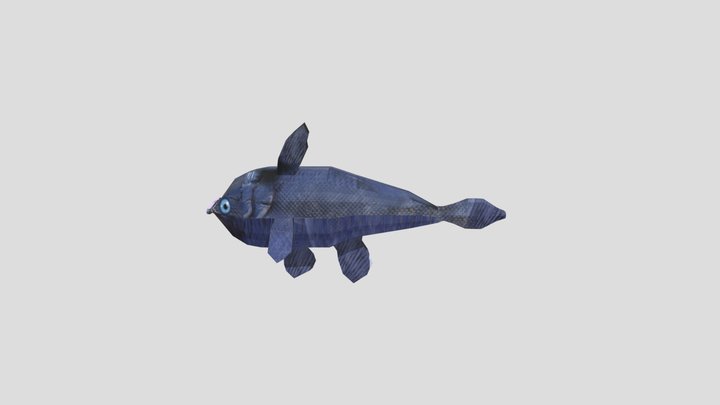
3D model
- Source
- Sketchfab
- Credit
- Rainbow Yoshi Gun
- Licence
- CC Attribution
- Commercial use
- cannot be read from the licence given — check the record
Smithsonian Open Access and MorphoSource were not reached for this taxon, so this list is what the others held rather than everything there is.
The description on this site
- Source
- Wikipedia, “Macropoma”
- Licence
- CC BY-SA 4.0
This is what the site found, which is not the same as what exists.
Keep going
What may have been alongside itLatimeriinae through timeFormations of the Late CretaceousThe world it lived on
Occurrence data from the Paleobiology Database, CC BY 4.0. Agassiz 1833