Manticoceras
Manticoceras is a genus of agoniatitid ammonoids included in the family Gephuroceratidae. These fast-moving nektonic carnivores lived in the Devonian period, from 382.4 to 376.1 Ma.

Jonathan Chen · CC BY-SA 4.0 · via Wikipedia/Commons. May be a photograph of a specimen, or an artist’s reconstruction — an interpretation of a skeleton, since colour and soft tissue are almost never preserved.
On record
Recorded, not inferred- Sits inside
- GephuroceratinaePBDB
- Diet
- carnivorePBDB, for Ammonoidea
- Life habit
- nektonicPBDB, for Agoniatitida
- Motility
- fast-movingPBDB, for Ammonoidea
- Vision
- well-developedPBDB, for Cephalopoda
- Environment
- marinePBDB, for Cephalopoda
Time the record covers
At least 6.8 million years on record.
The record covers at least 379 Mya to 372.15 Mya. No occurrence read is dated outside 382.31 Mya to 368.5 Mya.
295 occurrences of Manticoceras on record, most of them in the Devonian. Bar height is expected occurrences, not a count: each fossil is spread across the span it is dated to, so a tall narrow bar means tight dating and a low wide one means loose.
When
295 occurrences- Devonian100%
These are dates about fossils, not the animal: the record can only begin after it arose and end before it died out, so either end may reach further. Shares are expected occurrences: a fossil dated to a span is counted partly in each period it straddles. More on what this infers.
Found in
22 formations
- Lyaiol Formation110
- Virgin Hills Formation32
- Domanik Formation29
- Cashaqua Formation · Sonyea Group18
- Gogo Formation15
- Sand Formation14
Loading coastlines…
The named rock units Manticoceras has been recovered from, largest first. Drawn where the rock is now, not where it formed. 37 occurrences have no formation on record, which is common for older literature.
Manticoceras and its relatives
DevonianWhere Manticoceras and its relatives were recorded in the Devonian.
Found in the same rock
293 taxa- Tornoceras25 sites
- Linguatornoceras clausum22 sites
- Probeloceras lutheri20 sites
- Beloceras sagittarium14 sites
- Aulatornoceras12 sites
- Aulatornoceras eifliense12 sites
- Sphaeromanticoceras solnzevi12 sites
- Sphaeromanticoceras rhynchostomum11 sites
- Carinoceras menneri10 sites
- Tornoceras simplex10 sites
- Carinoceras ljaschenkoae9 sites
- Prochorites alveolatus9 sites
- Tornoceras typum9 sites
- Acanthoclymenia neapolitana8 sites
- Archoceras varicosum8 sites
- Linguatornoceras8 sites
- Linguatornoceras linguum8 sites
- Lobobactrites8 sites
- Serramanticoceras serratum8 sites
- Acanthoclymenia7 sites
- Carinoceras vagans7 sites
- Crassotornoceras crassum7 sites
- Sphaeromanticoceras affine7 sites
- Aulatornoceras auris6 sites
The Paleobiology Database records 185 sites for Manticoceras, and this reads all of them. The number is how many of those sites it was catalogued from too. The 24 sharing the most are listed.
This is not a list of everything alive at the time. It is only what has come out of the same ground as this animal and been written down.
Entered from
21 references- Revision of ammonoid biostratigraphy in the Frasnian (Upper Devonian) of the Southern Timan (northeast Russian Platform)89
- Devonskie ammonoidei I. Agoniatitidy76
- Late Devonian goniatites (Cephalopoda, Ammonoidea) from New York State39
- Devonian goniatite biostratigraphy and timing of facies movements in the Frasnian of the Canning Basin, Western Australia27
- Upper Devonian ammonoids from the Manticoceras zone, Fitzroy Basin, Western Australia22
- Upper Frasnian Tornoceratidae (Ammonoidea) from the Sand Formation (Bergisch Gladbach‑Pafrath Syncline, Rhenish Massif)14
- Definition of the Frasnian/Famennian Stage boundary4
- Frasnian crinoid associations of the Prüm Syncline (Eifel, Rhenish Massif, Germany) – biostratigraphic framework and macrofossil assemblages3
- Upper Devonian goniatites and co-occurring conodonts from the Holy Cross Mountains: studies of the Polish Geological Institute collections3
- A contribution to the knowledge of Upper Devonian ammonoids from the Holy Cross Mts3
- Silurian and Devonian conodonts from Spanish Sahara3
- Devonian (Frasnian) goniatites from Waterside Cove and Staverton Wood, south Devon2
Each of the 295 occurrences read was entered from one of these publications, ordered by how many each accounts for. This is not a search for papers mentioning the name. 9 further references are not listed. Entries link to doi.org where the Paleobiology Database holds an identifier, and to its own record where it does not. Relayed as the Paleobiology Database holds them, not checked against what they resolve to.
Media and terms
Media content2

Picture of Manticoceras
- Source
- Wikipedia/Commons
- Credit
- Jonathan Chen
- Licence
- CC BY-SA 4.0
- Commercial use
- the licence allows it
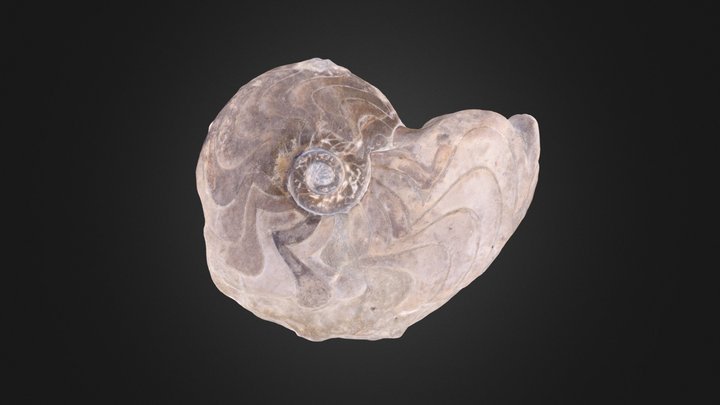
3D model
- Source
- Sketchfab
- Licence
- CC0 Public Domain
- Commercial use
- the licence allows it
Smithsonian Open Access and MorphoSource were not reached for this taxon, so this list is what the others held rather than everything there is.
The description on this site
- Licence
- CC BY-SA 4.0
This is what the site found, which is not the same as what exists.
Keep going
What may have been alongside itGephuroceratinae through timeFormations of the DevonianThe world it lived on
Occurrence data from the Paleobiology Database, CC BY 4.0. (Hyatt 1884)