Mastodonsaurus
Mastodonsaurus is an extinct genus of temnospondyl amphibian from the Middle Triassic of Europe. It remains one of the largest amphibians known in the fossil record, and may have exceeded 6 meters in length. Mastodonsaurus belongs to a Triassic group of stereospondyl temnospondyls called Capitosauria, characterized by their large body size, large flattened skulls, and probably predatory aquatic lifestyles analogous to some later crocodilian reptiles.

Ghedoghedo · CC BY-SA 3.0 · via Wikipedia/Commons. May be a photograph of a specimen, or an artist’s reconstruction — an interpretation of a skeleton, since colour and soft tissue are almost never preserved.
On record
Recorded, not inferred- Sits inside
- CapitosauroideaPBDB
- Diet
- piscivorePBDB
- Life habit
- amphibiousPBDB, for Temnospondyli
- Motility
- actively mobilePBDB, for Temnospondyli
- Environment
- brackish,freshwater,terrestrialPBDB, for Tetrapoda
- Length
- 6 mWikidata
Time the record covers
At least 38 million years on record.
The record covers at least 244.4 Mya to 205.7 Mya. No occurrence read is dated outside 247 Mya to 201.4 Mya.
28 occurrences of Mastodonsaurus on record, most of them in the Middle Triassic. Bar height is expected occurrences, not a count: each fossil is spread across the span it is dated to, so a tall narrow bar means tight dating and a low wide one means loose.
When
28 occurrencesThese are dates about fossils, not the animal: the record can only begin after it arose and end before it died out, so either end may reach further. Shares are expected occurrences: a fossil dated to a span is counted partly in each period it straddles. More on what this infers.
Found in
7 formations
- Erfurt Formation · Keuper Group12
- Bromsgrove Sandstone Formation · Sherwood Sandstone Group4
- Bukobay Formation3
- Upper Buntsandstein Formation2
- Blue Anchor Formation · Mercia Mudstone Group1
- Gutenstein Formation1
Loading coastlines…
The named rock units Mastodonsaurus has been recovered from, largest first. Drawn where the rock is now, not where it formed. 4 occurrences have no formation on record, which is common for older literature.
Mastodonsaurus and its relatives
Middle TriassicWhere Mastodonsaurus and its relatives were recorded in the Middle Triassic.
Found in the same rock
161 taxa- Archosauria4 sites
- Nothosaurus4 sites
- Tatrasuchus wildi4 sites
- Cyclotosaurus3 sites
- Langeronyx brodiei3 sites
- Plagiosternum granulosum3 sites
- Plagiosuchus pustuliferus3 sites
- Rhombopholis scutulata3 sites
- Simosaurus gaillardoti3 sites
- Trematolestes hagdorni3 sites
- Acrodus2 sites
- Actinistia2 sites
- Batrachotomus kupferzellensis2 sites
- Bromsgroveia walkeri2 sites
- Bystrowiella schumanni2 sites
- Callistomordax kugleri2 sites
- Ceratodus2 sites
- Chalishevia cothurnata2 sites
- Cyamodus2 sites
- Dipteronotus2 sites
- Gerrothorax2 sites
- Gerrothorax pulcherrimus2 sites
- Gyrolepis2 sites
- Jaxtasuchus salomoni2 sites
The Paleobiology Database records 25 sites for Mastodonsaurus, and this reads all of them. The number is how many of those sites it was catalogued from too. The 24 sharing the most are listed.
This is not a list of everything alive at the time. It is only what has come out of the same ground as this animal and been written down.
Entered from
15 references- Comparative osteology of Mastodonsaurus giganteus (Jaeger, 1828) from the Middle Triassic (Lettenkeuper: Longobardian) of Germany (Baden-Württemberg, Bayern, Thüringen)9
- The Triassic labyrinthodonts from Germany3
- Tetrapod localities from the Triassic of the SE of European Russia2
- Benton and Spencer, 19952
- A review of the British Middle Triassic tetrapod assemblages2
- Revision of the type material and nomenclature of Mastodonsaurus giganteus (Jaeger) (Temnospondyli) from the Middle Triassic of Germany1
- A complete trematosaurid amphibian from the Middle Triassic of Germany1
- A systematic revision and phylogenetic analysis of Triassic mastodonsauroids (Temnospondyli: Stereospondyli)1
- Permian and Triassic temnospondyls from Russia1
- The Rhaetic and contiguous deposits of Glamorganshire1
- Die Cephalopodenfauna der Reiflinger Kalke1
- Die Schwäbischen Trias-Saurier nach dem Material der Kgl. Naturalien-Sammlung in Stuttgart zusammengestellt [Swabian Triassic dinosaurs based on the material in the Royal Natural History Collection compiled in Stuttgart]1
Each of the 28 occurrences read was entered from one of these publications, ordered by how many each accounts for. This is not a search for papers mentioning the name. 3 further references are not listed. Entries link to doi.org where the Paleobiology Database holds an identifier, and to its own record where it does not. Relayed as the Paleobiology Database holds them, not checked against what they resolve to.
Media and terms
Media content3

Picture of Mastodonsaurus
- Source
- Wikipedia/Commons
- Credit
- Ghedoghedo
- Licence
- CC BY-SA 3.0
- Commercial use
- the licence allows it
CT scan
- Source
- MorphoSource
- Licence
- not stated by the source
- Commercial use
- cannot be read from the licence given — check the record
- Specimen
- Mastodonsaurus sp. · smns:p:54677
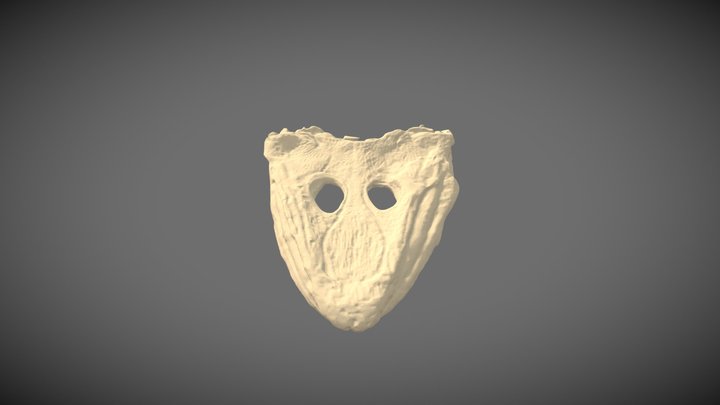
3D model
- Source
- Sketchfab
- Credit
- EDDyLab @ULiege
- Licence
- CC Attribution-NonCommercial
- Commercial use
- the licence does not allow it
The description on this site
- Licence
- CC BY-SA 4.0
This is what the site found, which is not the same as what exists.
Keep going
What may have been alongside itCapitosauroidea through timeFormations of the Middle TriassicThe world it lived on
Occurrence data from the Paleobiology Database, CC BY 4.0. (Jaeger 1828)