Mytilus (Mytilus)
No picture of Mytilus (Mytilus) was found. Wikipedia, Wikidata, iDigBio and Smithsonian Open Access were searched and had none. GBIF was asked, and what came back is not recorded: nothing, or a picture this site could not tie to Mytilus (Mytilus), or no answer at all. This entry cannot say which.
On record
Recorded, not inferred- Sits inside
- MytilusPBDB
- Diet
- suspension feederPBDB, for Mytilus
- Life habit
- epifaunalPBDB, for Mytilus
- Motility
- stationary, attachedPBDB, for Mytilus
- Vision
- blindPBDB, for Bivalvia
- Environment
- lagoonal,coastal,inner shelf,outer shelf,oceanic,brackish,freshwaterPBDB, for Mytilidae
Time the record covers
At least 199 million years on record.
The record covers at least 211.18 Mya to 11.63 Mya. No occurrence read is dated outside 227.3 Mya to 5.333 Mya.
55 occurrences of Mytilus (Mytilus) on record, most of them in the Oligocene. The Paleobiology Database records this as a living group, and the chart stops with its fossils rather than at the present. Bar height is expected occurrences, not a count: each fossil is spread across the span it is dated to, so a tall narrow bar means tight dating and a low wide one means loose.
When
55 occurrences- Late Triassic2%
- Paleocene7%
- Eocene25%
- Oligocene40%
- Miocene25%
These are dates about fossils, not the animal: the record can only begin after it arose and end before it died out, so either end may reach further. Shares are expected occurrences: a fossil dated to a span is counted partly in each period it straddles. More on what this infers.
Found in
27 formations
- San Emigdio Formation · San Lorenzo Group6
- Vaqueros Formation5
- Amaninskaya Formation4
- Pleito Formation · San Lorenzo Group4
- Temblor Formation4
- Gakkhinskaya Formation2
Loading coastlines…
The named rock units Mytilus (Mytilus) has been recovered from, largest first. Drawn where the rock is now, not where it formed. 3 further formations hold fewer occurrences each and are not listed. 4 occurrences have no formation on record, which is common for older literature.
Mytilus (Mytilus) and its relatives
OligoceneWhere Mytilus (Mytilus) and its relatives were recorded in the Oligocene.
Found in the same rock
439 taxa- Mactromeris ramonensis9 sites
- Solena (Plectosolen) conradi9 sites
- Antigona (Ventricola) undosa8 sites
- Lucinoma acutilineata8 sites
- Ostrea8 sites
- Cardium7 sites
- Yoldia (Portlandia) cooperii7 sites
- Cyclocardia6 sites
- Natica recluziana6 sites
- Solen6 sites
- Yoldia (Yoldia)6 sites
- Amiantis mathewsoni5 sites
- Bullia (Buccinanops) clarki5 sites
- Macoma5 sites
- Megayoldia (Portlandella) watasei5 sites
- Periploma (Aelga)5 sites
- Pholadomya5 sites
- Siphonalia (Kelletia) merriami5 sites
- Bruclarkia seattlensis4 sites
- Corbicula (Corbicula)4 sites
- Dosinia (Dosinia) whitneyi4 sites
- Eucrassatella4 sites
- Fusinus (Priscofusus) hecoxi4 sites
- Here excavata4 sites
The Paleobiology Database records 37 sites for Mytilus (Mytilus), and this reads all of them. The number is how many of those sites it was catalogued from too. The 24 sharing the most are listed.
This is not a list of everything alive at the time. It is only what has come out of the same ground as this animal and been written down.
Entered from
13 references- Neogene and Paleogene Molluscan (Bivalvia) Cenozones of the Russian Northeast.16
- Neogene and Paleogene Molluscan (Bivalvia) Cenozones of Sakhalin and Kurile Islands10
- The San Lorenzo Group of the San Emigdio region, California10
- Oligocene molluscan biostratigraphy and paleontology of the Lower Part of the type Temblor Formation, California4
- The Vaqueros Formation, Lower Miocene of California. I. Paleontology4
- Tertiary faunal horizons of western Washington3
- Fauna and stratigraphic relations of the Tejon Eocene at the type locality in Kern County, California2
- Cenozoic molluscan (Bivavia) cenozone of Hokkaido, Northern Japan1
- Markevich and Zakharov, 20041
- Stratigraphic relations of phosphate- and gypsum-bearing Upper Miocene strata, upper Sespe Creek, Ventura County, California1
- New Miocene mollusks from California1
- The San Lorenzo series of Middle California. a stratigraphic and paleontologic study of the San Lorenzo Oligocene series of the general region of Mount Diablo, California1
Each of the 55 occurrences read was entered from one of these publications, ordered by how many each accounts for. This is not a search for papers mentioning the name. 1 further reference is not listed. Entries link to doi.org where the Paleobiology Database holds an identifier, and to its own record where it does not. Relayed as the Paleobiology Database holds them, not checked against what they resolve to.
Media and terms
Media content2
Photogrammetry
- Source
- MorphoSource
- Licence
- not stated by the source
- Commercial use
- cannot be read from the licence given — check the record
- Specimen
- mytilus edulis · MST:PALEO:MST-SP-561
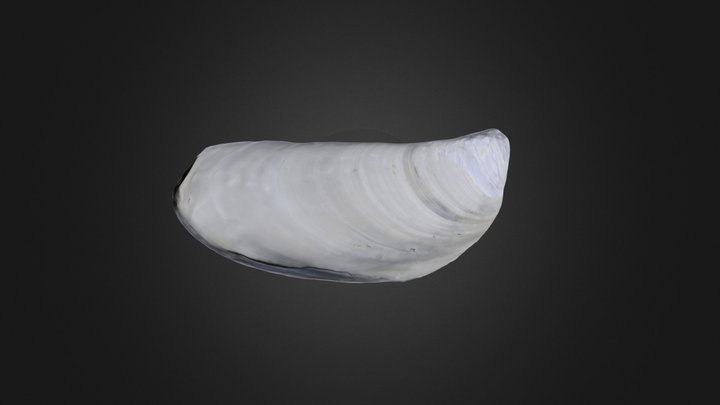
3D model
- Source
- Sketchfab
- Licence
- CC0 Public Domain
- Commercial use
- the licence allows it
No picture of Mytilus (Mytilus) was found. Wikipedia, Wikidata, iDigBio and Smithsonian Open Access were searched and had none.
GBIF was asked, and what came back is not recorded: nothing, or a picture this site could not tie to Mytilus (Mytilus), or no answer at all. This entry cannot say which.
Smithsonian Open Access was not reached for this taxon, so this list is what the others held rather than everything there is.
This is what the site found, which is not the same as what exists.
Keep going
What may have been alongside itMytilus through timeFormations of the OligoceneThe world it lived on
Occurrence data from the Paleobiology Database, CC BY 4.0. Linnaeus 1758