Neospirifer cameratus

via iDigBio · CC0 · via iDigBio. May be a photograph of a specimen, or an artist’s reconstruction — an interpretation of a skeleton, since colour and soft tissue are almost never preserved.
On record
Recorded, not inferred- Sits inside
- NeospiriferPBDB
- Diet
- suspension feederPBDB, for Spiriferida
- Life habit
- epifaunalPBDB, for Spiriferida
- Motility
- stationaryPBDB, for Spiriferida
- Vision
- blindPBDB, for Rhynchonellata
- Environment
- marinePBDB, for Lophophorata
Time the record covers
At least 83 million years on record.
The record covers at least 342.9 Mya to 259.857 Mya. No occurrence read is dated outside 358.86 Mya to 251.902 Mya.
89 occurrences of Neospirifer cameratus on record, most of them in the Carboniferous. Bar height is expected occurrences, not a count: each fossil is spread across the span it is dated to, so a tall narrow bar means tight dating and a low wide one means loose.
When
89 occurrences- Carboniferous74%
- Permian26%
These are dates about fossils, not the animal: the record can only begin after it arose and end before it died out, so either end may reach further. Shares are expected occurrences: a fossil dated to a span is counted partly in each period it straddles. More on what this infers.
Found in
24 formations
- Cabaniss Formation · Cherokee Group12
- Pottawatomie Formation · Kansas City Group10
- Bird Spring Formation5
- Krebs Formation · Cherokee Group5
- Glenshaw Formation · Conemaugh Group5
- Abu Durba Formation3
Loading coastlines…
The named rock units Neospirifer cameratus has been recovered from, largest first. Drawn where the rock is now, not where it formed. 22 occurrences have no formation on record, which is common for older literature.
Neospirifer cameratus and its relatives
CarboniferousWhere Neospirifer cameratus and its relatives were recorded in the Carboniferous.
Found in the same rock
1,001 taxa- Composita subtilita26 sites
- Derbyia crassa25 sites
- Parajuresania nebrascensis25 sites
- Crurithyris planoconvexa24 sites
- Linoproductus cora22 sites
- Dictyoclostus semireticulatus21 sites
- Desmoinesia muricatina19 sites
- Hustedia mormoni19 sites
- Condrathyris perplexa18 sites
- Punctospirifer kentuckensis17 sites
- Cymatospira montfortianus15 sites
- Derbyia14 sites
- Mesolobus mesolobus lioderma14 sites
- Polypora14 sites
- Fenestella13 sites
- Lophophyllidium profundum13 sites
- Neochonetes granulifer13 sites
- Septopora biserialis13 sites
- Aviculopecten occidentalis12 sites
- Eomarginifera longispinus12 sites
- Neospirifer dunbari12 sites
- Trepospira illinoisensis12 sites
- Acanthopecten carboniferous11 sites
- Composita argentea11 sites
The Paleobiology Database records 89 sites for Neospirifer cameratus, and this reads all of them. The number is how many of those sites it was catalogued from too. The 24 sharing the most are listed.
This is not a list of everything alive at the time. It is only what has come out of the same ground as this animal and been written down.
Entered from
28 references- Desmoinesian Brachiopoda and Mollusca from southwest Missouri18
- Coal Measures faunal studies. I.13
- Geology and mineral deposits of southeastern Alaska9
- Brachiopoda and Mollusca from the Productus limestones of the Salt Range7
- A preliminary list of the fauna of the Allegheny and Conemaugh series in western Pennsylvania6
- Kalashnikov, 19983
- Upper Paleozoic of Peru3
- Biostratigraphy of the Late Paleozoic succession in Gabal Ekma, southwestern Sinai, Egypt2
- Preliminary report of the brachiopod fauna, Arrow Canyon section, southern Nevada, U.S.A.2
- Geological Reconnaissance of northeastern Ellesmere Island, District of Franklin2
- Early Pennsylvanian History of Ely Basin, Nevada2
- Geology of the Northern Needle Range Millard County, Utah2
Each of the 89 occurrences read was entered from one of these publications, ordered by how many each accounts for. This is not a search for papers mentioning the name. 16 further references are not listed. Entries link to doi.org where the Paleobiology Database holds an identifier, and to its own record where it does not. Relayed as the Paleobiology Database holds them, not checked against what they resolve to.
Media and terms
Media content2
Picture of Neospirifer cameratus
- Source
- iDigBio
- Credit
- via iDigBio
- Licence
- CC0
- Commercial use
- the licence allows it
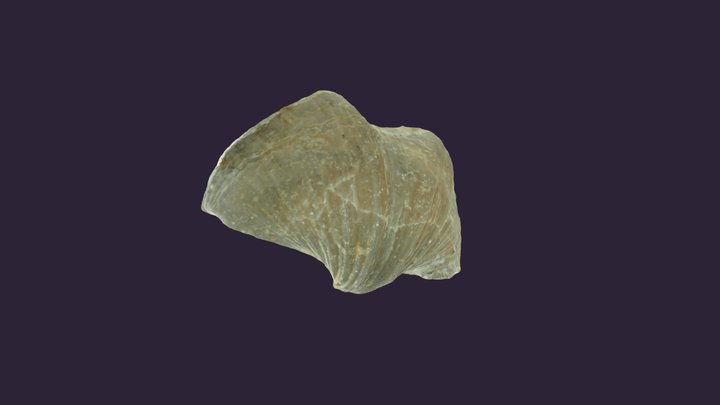
3D model
- Source
- Sketchfab
- Credit
- Shellie Luallin
- Licence
- CC Attribution
- Commercial use
- cannot be read from the licence given — check the record
Smithsonian Open Access and MorphoSource were not reached for this taxon, so this list is what the others held rather than everything there is.
This is what the site found, which is not the same as what exists.
Keep going
What may have been alongside itNeospirifer through timeFormations of the CarboniferousThe world it lived on
Occurrence data from the Paleobiology Database, CC BY 4.0. (Morton 1836)