Orodus
Orodus is an extinct genus of orodontiform cartilaginous fish. Fossils are known from the late Devonian to Late Carboniferous of Europe, Asia and North America. Most species are only known from their rounded, ridge covered teeth, designed for crushing prey (durophagy). The genus has a long and complicated taxonomic history, and numerous species have been assigned to the genus that are now either considered invalid or unrelated to true orodontids. Two species, O. greggi and O. micropterygius from the Carboniferous of North America are known from remains preserving the body. O. greggi reached around 2–4 metres (6.6–13.1 ft) long, while O. micropterygius just reached 1 metre (3.3 ft). The largest species, O. ramosus, had a tooth width about 11 centimetres (4.3 in), and cross-scaling those teeth with related species with known body fossils implies a total length of 12–15 metres (39–49 ft), although these estimates have been considered unreasonable. These remains show that these species of Orodus lacked fin spines on their dorsal fins, and that they had small pectoral fins, and that the morphology of the teeth varied depending on their position in the mouth. Orodus was considered to be the only member of the family Orodontidae by Ginter et al. 2010. Like other orodontiforms, the closest living relatives of Orodus are thought to be chimaeras.

Jonathan Chen · CC BY-SA 4.0 · via Wikipedia/Commons. May be a photograph of a specimen, or an artist’s reconstruction — an interpretation of a skeleton, since colour and soft tissue are almost never preserved.
On record
Recorded, not inferred- Sits inside
- OrodontidaePBDB
- Diet
- carnivorePBDB, for Holocephali
- Life habit
- nektobenthicPBDB, for Holocephali
- Motility
- actively mobilePBDB, for Holocephali
Time the record covers
At least 82 million years on record.
The record covers at least 358.86 Mya to 276.8 Mya. No occurrence read is dated outside 382.31 Mya to 264.9 Mya.
16 occurrences of Orodus on record, most of them in the Carboniferous. Bar height is expected occurrences, not a count: each fossil is spread across the span it is dated to, so a tall narrow bar means tight dating and a low wide one means loose.
When
16 occurrences- Devonian6%
- Carboniferous56%
- Permian38%
These are dates about fossils, not the animal: the record can only begin after it arose and end before it died out, so either end may reach further. Shares are expected occurrences: a fossil dated to a span is counted partly in each period it straddles. More on what this infers.
Found in
10 formations
- Lueders Formation · Wichita Group2
- Carbondale Formation2
- Wood Siding Formation · Wabaunsee Group1
- Grenola Limestone Formation · Council Grove Group1
- Irati Formation1
- Naco Formation1
Loading coastlines…
The named rock units Orodus has been recovered from, largest first. Drawn where the rock is now, not where it formed. 4 occurrences have no formation on record, which is common for older literature.
Orodus and its relatives
CarboniferousWhere Orodus and its relatives were recorded in the Carboniferous.
Found in the same rock
103 taxa- Glikmanius occidentalis5 sites
- Heslerodus divergens3 sites
- Iniopera richardsoni3 sites
- Sibyrhynchus denisoni3 sites
- Cervifurca nasuta2 sites
- Cyrtonodus hornei2 sites
- Derbyia crassa2 sites
- Iniopteryx rushlaui2 sites
- Linoproductus prattenianus2 sites
- Paecilodus jonesii2 sites
- Petalodus acuminatus2 sites
- Pristodus falcatus2 sites
- Promexyele peyeri2 sites
- Stethacanthulus meccaensis2 sites
- Acondylacanthus1 site
- Acrodus1 site
- Agassizodus1 site
- Agassizodus variabilis1 site
- Agelacrinitidae1 site
- Aglaocrinus1 site
- Amelacanthus1 site
- Amphiscapha subrugosa1 site
- Anthracospirifer occiduus1 site
- Antiquatonia1 site
The Paleobiology Database records 14 sites for Orodus, and this reads all of them. The number is how many of those sites it was catalogued from too. The 24 sharing the most are listed.
This is not a list of everything alive at the time. It is only what has come out of the same ground as this animal and been written down.
Entered from
9 references- Chondrichthyes I: Paleozoic Elasmobranchii4
- Catalogue of the Fossil Fishes in the British Museum (Natural History) Part 13
- Vertebrate Fossils from the Lueders Formation, Lower Permian of North-Central Texas.2
- Stratigraphy and Paleontology of the Uppermost Pennsylvanian and Lowermost Permian Rocks in Kansas2
- Chondrichthyans from the base of the Irati Formation (Early Permian, Paraná Basin), São Paulo, Brazil1
- A Paleozoic shark fauna from the Council Grove Group (Lower Permian)1
- Chondrichthyans from the Pennsylvanian (Desmoinesian) Naco Formation of Central Arizona1
- Late Devonian Conodonts from the Lost Burro Formation of California1
- Carboniferous fishes from the central western States1
Each of the 16 occurrences read was entered from one of these publications, ordered by how many each accounts for. This is not a search for papers mentioning the name. Entries link to doi.org where the Paleobiology Database holds an identifier, and to its own record where it does not. Relayed as the Paleobiology Database holds them, not checked against what they resolve to.
Media and terms
Media content2

Picture of Orodus
- Source
- Wikipedia/Commons
- Credit
- Jonathan Chen
- Licence
- CC BY-SA 4.0
- Commercial use
- the licence allows it
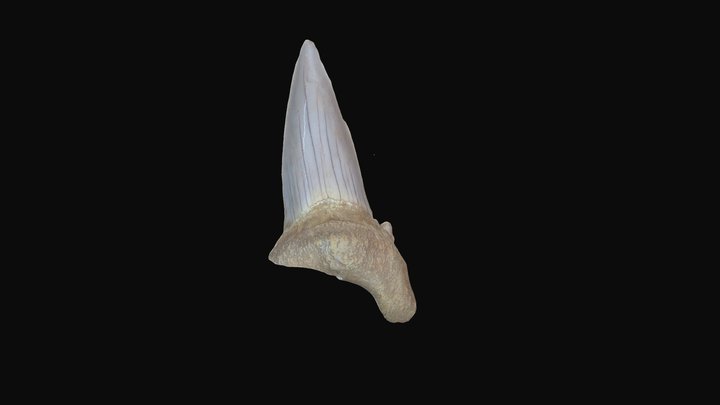
3D model
- Source
- Sketchfab
- Credit
- Marc de RAFELIS
- Licence
- CC Attribution
- Commercial use
- cannot be read from the licence given — check the record
MorphoSource was not reached for this taxon, so this list is what the others held rather than everything there is.
The description on this site
- Source
- Wikipedia, “Orodus”
- Licence
- CC BY-SA 4.0
This is what the site found, which is not the same as what exists.
Keep going
What may have been alongside itOrodontidae through timeFormations of the CarboniferousThe world it lived on
Occurrence data from the Paleobiology Database, CC BY 4.0. Agassiz 1836