Osteopilus septentrionalis
The Cuban tree frog is a large species of tree frog that is native to Cuba, the Bahamas, and the Cayman Islands; but has become invasive in several other places around the Americas. Its wide diet and ability to thrive in urban areas has made it a highly invasive species with established colonies in places such as Florida, the Hawaiian island of Oahu, and the Caribbean Islands. These tree frogs can vary in size from 2 to 5.5 inches in length. Due to their large size, Cuban tree frogs can eat a wide variety of things, particularly native tree frogs, and their removal has shown to result in an increase in the amount of native tree frogs in an area. The tadpoles of Cuban tree frogs also heavily compete with native frog tadpoles, which can cause negative effects in body mass, size at metamorphosis, and growth rates for the native tadpoles.

Charles J. Sharp · CC BY-SA 4.0 · via Wikipedia/Commons. May be a photograph of a specimen, or an artist’s reconstruction — an interpretation of a skeleton, since colour and soft tissue are almost never preserved.
On record
Recorded, not inferred- Sits inside
- OsteopilusPBDB
- Diet
- carnivorePBDB, for Temnospondyli
- Life habit
- amphibiousPBDB, for Temnospondyli
- Motility
- actively mobilePBDB, for Temnospondyli
- Environment
- brackish,freshwater,terrestrialPBDB, for Tetrapoda
Time the record covers
At most 129 thousand years on record.
Every occurrence read is dated to somewhere between 129 ka and 0 Mya, and nothing in the dating separates them, so that window is what the record shows rather than a span.
10 occurrences of Osteopilus septentrionalis on record, most of them in the Holocene. The Paleobiology Database records this as a living group. Bar height is expected occurrences, not a count: each fossil is spread across the span it is dated to, so a tall narrow bar means tight dating and a low wide one means loose.
When
10 occurrences- Pleistocene36%
- Holocene64%
These are dates about fossils, not the animal: the record can only begin after it arose and end before it died out, so either end may reach further. Shares are expected occurrences: a fossil dated to a span is counted partly in each period it straddles. More on what this infers.
Osteopilus septentrionalis and its relatives
HoloceneWhere Osteopilus septentrionalis and its relatives were recorded in the Holocene.
Found in the same rock
101 taxa- Anolis8 sites
- Cyclura6 sites
- Geocapromys6 sites
- Leiocephalus6 sites
- Macrotus waterhousii6 sites
- Chiroptera4 sites
- Cubophis vudii4 sites
- Passeriformes4 sites
- Ameiva3 sites
- Anolis sagrei3 sites
- Chilabothrus3 sites
- Coereba flaveola3 sites
- Eleutherodactylus planirostris3 sites
- Eptesicus fuscus3 sites
- Erophylla sezekorni3 sites
- Mimus gundlachii3 sites
- Psittacus leucocephalus3 sites
- Alsophis cantherigerus2 sites
- Anolis conspersus2 sites
- Athene cunicularia2 sites
- Capromys2 sites
- Corvus nasicus2 sites
- Crocodylus2 sites
- Cyclura nubila2 sites
The Paleobiology Database records 10 sites for Osteopilus septentrionalis, and this reads all of them. The number is how many of those sites it was catalogued from too. The 24 sharing the most are listed.
This is not a list of everything alive at the time. It is only what has come out of the same ground as this animal and been written down.
Entered from
4 references- Holocene vertebrates from a dry cave on Eleuthera Island, Commonwealth of The Bahamas4
- Studies on Fossil and Extant Vertebrates from San Salvador (Watling's) Island, Bahamas3
- Late Quaternary fossil vertebrates from the Cayman Islands2
- Fossil Amphibians and Reptiles from New Providence Island, Bahamas1
Each of the 10 occurrences read was entered from one of these publications, ordered by how many each accounts for. This is not a search for papers mentioning the name. Each entry links to doi.org. Relayed as the Paleobiology Database holds them, not checked against what they resolve to.
Media and terms
Media content3

Picture of Osteopilus septentrionalis
- Source
- Wikipedia/Commons
- Credit
- Charles J. Sharp
- Licence
- CC BY-SA 4.0
- Commercial use
- the licence allows it
CT scan
- Source
- MorphoSource
- Licence
- not stated by the source
- Commercial use
- cannot be read from the licence given — check the record
- Specimen
- Osteopilus septentrionalis · UF:Herp:63656
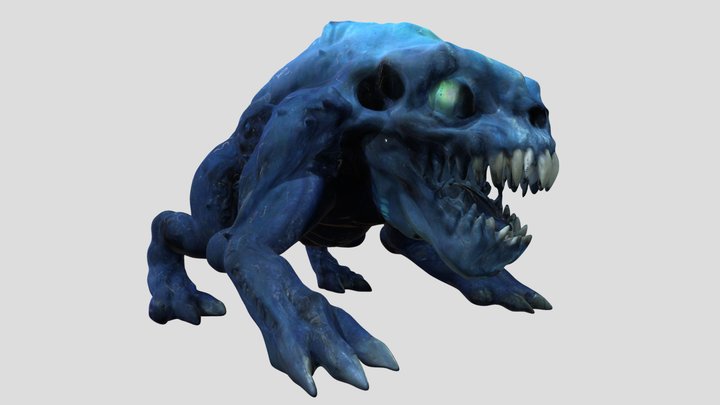
3D model
- Source
- Sketchfab
- Credit
- Brian Trepanier
- Licence
- CC Attribution
- Commercial use
- cannot be read from the licence given — check the record
Smithsonian Open Access was not reached for this taxon, so this list is what the others held rather than everything there is.
The description on this site
- Licence
- CC BY-SA 4.0
This is what the site found, which is not the same as what exists.
Keep going
What may have been alongside itOsteopilus through timeFormations of the HoloceneThe world it lived on
Occurrence data from the Paleobiology Database, CC BY 4.0. (Dumétil and Bibron 1841)