Pachyaena
Pachyaena was a paraphyletic or monophyletic genus of heavily built, relatively short-legged mesonychids. Mesonychids were part of the now extinct order of hoofed mammals known as Mesonychia, a group mammalian predators that evolved before modern ungulates or carnivorans. Despite this, mesonychians are found to have combined characteristics of both carnivorans and ungulates. The genus first appeared in East Asia during the Gashatan ALMA of the Late Paleocene. Pachyaena would disperse into North America via the Bering land bridge. From North America, it would disperse into Northwestern Europe via the North Atlantic land bridge. However, Pachyaena presence in Europe was notably short, lasting only 500,000 years. They would go extinct following a faunal turnover event and were later replaced by Hyaenodictis. North American Pachyaena, would go extinct around 52.8 Ma. The last population of Pachyaena persisted in the Lushi Formation, which dates to the Irdinmanhan faunal stage.

Ghedoghedo · CC BY-SA 3.0 · via Wikipedia/Commons. May be a photograph of a specimen, or an artist’s reconstruction — an interpretation of a skeleton, since colour and soft tissue are almost never preserved.
On record
Recorded, not inferred- Sits inside
- MesonychidaePBDB
- Diet
- carnivorePBDB, for Mesonychidae
- Life habit
- ground dwellingPBDB, for Mesonychidae
- Motility
- actively mobilePBDB, for Osteichthyes
- Environment
- terrestrialPBDB, for Eutheria
Time the record covers
At least 11 million years on record.
The record covers at least 59.24 Mya to 48.07 Mya. No occurrence read is dated outside 61.66 Mya to 37.71 Mya.
75 occurrences of Pachyaena on record, most of them in the Eocene. Bar height is expected occurrences, not a count: each fossil is spread across the span it is dated to, so a tall narrow bar means tight dating and a low wide one means loose.
When
75 occurrencesThese are dates about fossils, not the animal: the record can only begin after it arose and end before it died out, so either end may reach further. Shares are expected occurrences: a fossil dated to a span is counted partly in each period it straddles. More on what this infers.
Found in
12 formations
- Willwood Formation54
- Wasatch Formation7
- DeBeque Formation3
- Nongshan Formation2
- Vaugirard Formation2
- San Jose Formation1
Loading coastlines…
The named rock units Pachyaena has been recovered from, largest first. Drawn where the rock is now, not where it formed.
Pachyaena and its relatives
EoceneWhere Pachyaena and its relatives were recorded in the Eocene.
Found in the same rock
529 taxa- Haplomylus speirianus32 sites
- Ectocion osbornianus28 sites
- Diacodexis metsiacus25 sites
- Thryptacodon antiquus24 sites
- Allognathosuchus23 sites
- Esthonyx bisulcatus23 sites
- Phenacodus vortmani23 sites
- Coryphodon20 sites
- Homogalax protapirinus20 sites
- Hyopsodus loomisi20 sites
- Phenacodus intermedius20 sites
- Arenahippus aemulor19 sites
- Hyopsodus19 sites
- Cantius mckennai18 sites
- Didymictis protenus18 sites
- Sifrhippus grangeri18 sites
- Viverravus acutus18 sites
- Esthonyx spatularius17 sites
- Paramys copei17 sites
- Phenacodus17 sites
- Diacodexis16 sites
- Arenahippus pernix14 sites
- Arfia shoshoniensis14 sites
- Cardiolophus radinskyi13 sites
The Paleobiology Database records 71 sites for Pachyaena, and this reads all of them. The number is how many of those sites it was catalogued from too. The 24 sharing the most are listed.
This is not a list of everything alive at the time. It is only what has come out of the same ground as this animal and been written down.
Entered from
23 references- Stratigraphy and mammalian paleontology of the McCullough Peaks, northern Bighorn Basin, Wyoming: Implications for biochronology, basin development, and community reorganization across the Paleocene-Eocene boundary34
- Faunal Zonation of the Willwood Formation in the Central Bighorn Basin, Wyoming10
- Fossil Mammalia from the early Wasatchian Four Mile fauna, Eocene of northwest Colorado4
- Postcranial Skeleton of the Early Eocene Mesonychid Pachyaena (Mammalia: Mesonychia)3
- Early Eocene Mammalian Fauna of the Piceance Creek Basin. Northwestern Colorado3
- The European Mesonychid Mammals: Phylogeny, Ecology, Biogeography, and Biochronology2
- New mesonychian dentitions from the Paleocene of the Bighorn Basin, Wyoming2
- A Further Study Of The Lower Eocene Mammalian Faunas Of Southwestern Wyoming2
- The mammal fauna of the early Eocene Blackheath Formation of Abbey Wood, London1
- The Tiffanian Land-Mammal Age (middle and late Paleocene) in the northern Bighorn Basin, Wyoming1
- Mesonychids from Lushi Basin, Henan Province, China1
- Glires (Mammalia) from the Late Paleocene Bayan Ulan Locality of Inner Mongolia1
Each of the 75 occurrences read was entered from one of these publications, ordered by how many each accounts for. This is not a search for papers mentioning the name. 11 further references are not listed. Entries link to doi.org where the Paleobiology Database holds an identifier, and to its own record where it does not. Relayed as the Paleobiology Database holds them, not checked against what they resolve to.
Media and terms
Media content3

Picture of Pachyaena
- Source
- Wikipedia/Commons
- Credit
- Ghedoghedo
- Licence
- CC BY-SA 3.0
- Commercial use
- the licence allows it
Laser scan
- Source
- MorphoSource
- Licence
- In Copyright
- Commercial use
- cannot be read from the licence given — check the record
- Specimen
- Pachyaena gracilis · AMNH:FM:16154
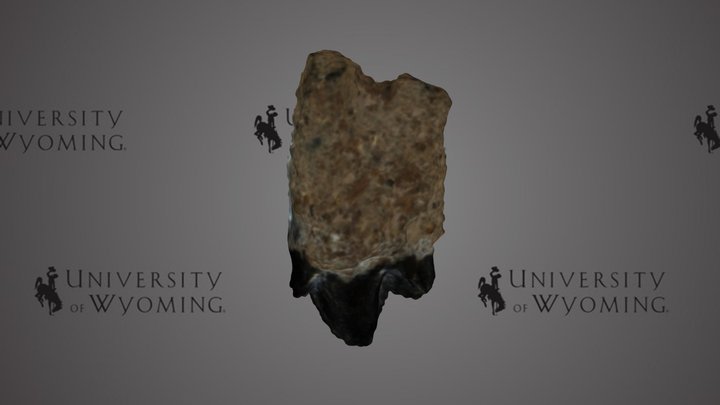
3D model
- Source
- Sketchfab
- Licence
- CC Attribution-NonCommercial
- Commercial use
- the licence does not allow it
Smithsonian Open Access was not reached for this taxon, so this list is what the others held rather than everything there is.
The description on this site
- Source
- Wikipedia, “Pachyaena”
- Licence
- CC BY-SA 4.0
This is what the site found, which is not the same as what exists.
Keep going
What may have been alongside itMesonychidae through timeFormations of the EoceneThe world it lived on
Occurrence data from the Paleobiology Database, CC BY 4.0. Cope 1874