Pachymeridiidae
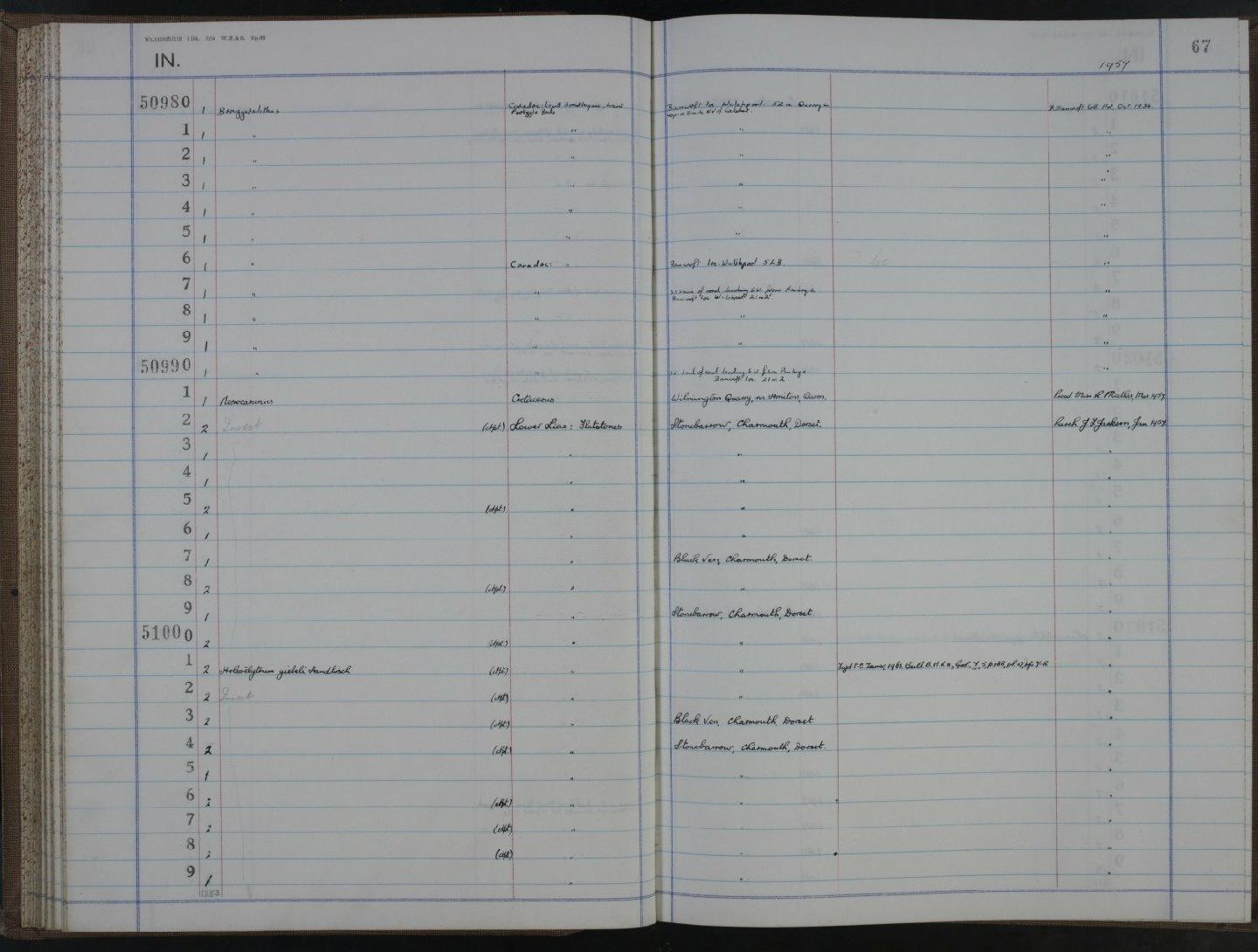
via iDigBio · CC BY · via iDigBio. May be a photograph of a specimen, or an artist’s reconstruction — an interpretation of a skeleton, since colour and soft tissue are almost never preserved.
On record
Recorded, not inferred- Sits inside
- PentatomomorphaPBDB
- Motility
- actively mobilePBDB, for Arthropoda
- Environment
- terrestrialPBDB, for Insecta
Time the record covers
At least 80 million years on record.
The record covers at least 201.4 Mya to 121.4 Mya. No occurrence read is dated outside 205.7 Mya to 113.2 Mya.
68 occurrences of Pachymeridiidae on record, most of them in the Early Cretaceous. Bar height is expected occurrences, not a count: each fossil is spread across the span it is dated to, so a tall narrow bar means tight dating and a low wide one means loose.
When
68 occurrencesThese are dates about fossils, not the animal: the record can only begin after it arose and end before it died out, so either end may reach further. Shares are expected occurrences: a fossil dated to a span is counted partly in each period it straddles. More on what this infers.
Found in
13 formations
- Turga Formation18
- Daohugou Formation8
- Posidonia Shale Formation7
- Turga Formation5
- Gidarinskaya Formation4
- Daya Formation4
Loading coastlines…
The named rock units Pachymeridiidae has been recovered from, largest first. Drawn where the rock is now, not where it formed. 12 occurrences have no formation on record, which is common for older literature.
Pachymeridiidae and its relatives
Early CretaceousWhere Pachymeridiidae and its relatives were recorded in the Early Cretaceous.
Found in the same rock
1,389 taxa- Aphanocoris turgensis9 sites
- Orthoptera5 sites
- Elateridae4 sites
- Heterothemis brodiei4 sites
- Necrotaulius parvulus4 sites
- Odonata4 sites
- Panorpidium geinitzi4 sites
- Panorpidium minima4 sites
- Staphylinidae4 sites
- Aphanocoris femoratus3 sites
- Aphanocoris porrectus3 sites
- Archegocimicidae3 sites
- Eoptychoptera simplex3 sites
- Holcoptera giebeli3 sites
- Limoniidae3 sites
- Mesogyrus striatus3 sites
- Panorpidium media3 sites
- Positocoris sibiricus3 sites
- Prosynactus gracilis3 sites
- Vespina3 sites
- Aboilus khasurty2 sites
- Acromocoris angustus2 sites
- Allaboilus gigantus2 sites
- Alydidae2 sites
The Paleobiology Database records 30 sites for Pachymeridiidae, and this reads all of them. The number is how many of those sites it was catalogued from too. The 24 sharing the most are listed.
This is not a list of everything alive at the time. It is only what has come out of the same ground as this animal and been written down.
Entered from
17 references- Bugs, Cimicina, in Pozdne-Mezozoyskie Nasekomye Vostochnogo Zabaykal'ya31
- Die Insektenfauna des Ostniedersachsischen Oberen Lias7
- British Upper Triassic and Lower Jurassic Heteroptera and Coleorrhyncha (Insecta: Hemiptera)6
- New Jurassic fossil true bugs of the Pachymeridiidae (Hemiptera: Pentatomomorpha) from northeast China4
- Mesozoic Velocipedinae (Nabidae s. l.) and Ceresopseidae (Reduvioidea), with notes on the phylogeny of Cimicomorpha (Heteroptera)3
- Neue Untersuchungen über die fossilen Insekten mit Ergänzungen und Nachträgen sowie Ausblicken auf phylogenetische, palaeogeographische und allgemein biologische Probleme. II Teil3
- New insects from the Middle Jurassic reveal early diversification of membranous veins of Pentatomomorpha (Hemiptera: Heteroptera)2
- The Khasurty fossil insect Lagerstätte2
- Two new genera and species of fossil true bugs (Hemiptera: Heteroptera: Pachymeridiidae) from northeastern China2
- A foul odor from the Mesozoic: early evolution of scent gland defense in pentatomomorphan true bugs (Hemiptera: Heteroptera)1
- New Cretaceous bugs from northeastern China imply the systematic position of Pachymeridiidae (Hemiptera: Heteroptera)1
- Sinopachymeridium popovi gen. and sp. nov. - a new fossil true bug (Heteroptera: Pachymeridiidae) from the Middle Jurassic of Inner Mongolia, China1
Each of the 68 occurrences read was entered from one of these publications, ordered by how many each accounts for. This is not a search for papers mentioning the name. 5 further references are not listed. Entries link to doi.org where the Paleobiology Database holds an identifier, and to its own record where it does not. Relayed as the Paleobiology Database holds them, not checked against what they resolve to.
Media and terms
Media content1
Picture of Pachymeridiidae
- Source
- iDigBio
- Credit
- via iDigBio
- Licence
- CC BY
- Commercial use
- the licence allows it
No 3D scan of Pachymeridiidae was found in Sketchfab.
Smithsonian Open Access and MorphoSource were not reached for this taxon, so this list is what the others held rather than everything there is.
This is what the site found, which is not the same as what exists.
Keep going
What may have been alongside itPentatomomorpha through timeFormations of the Early CretaceousThe world it lived on
Occurrence data from the Paleobiology Database, CC BY 4.0. Handlirsch 1906