Pachyrisma
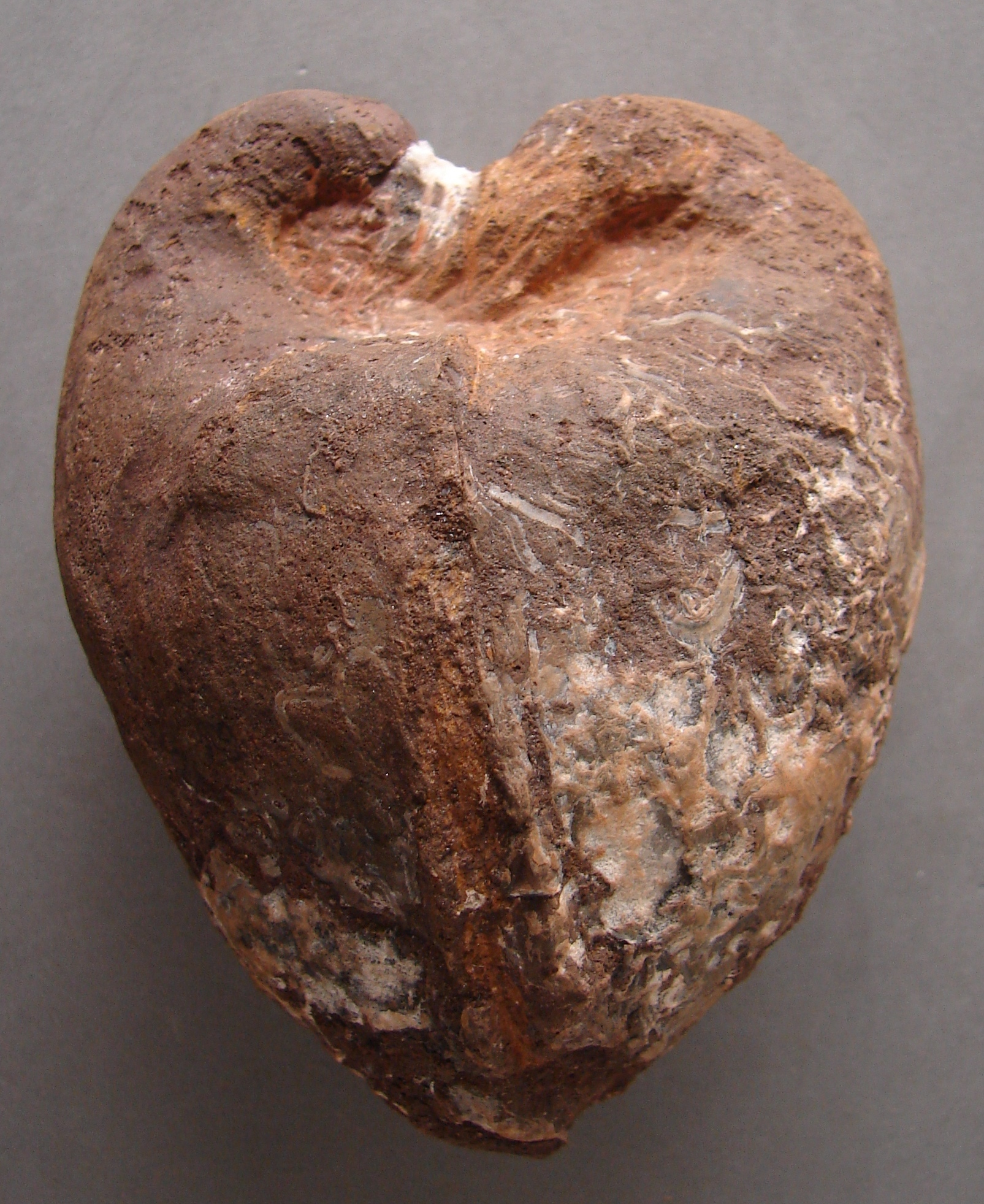
V. Logelin · CC0 · via GBIF. May be a photograph of a specimen, or an artist’s reconstruction — an interpretation of a skeleton, since colour and soft tissue are almost never preserved.
On record
Recorded, not inferred- Sits inside
- MegalodontidaePBDB
- Diet
- suspension feederPBDB, for Megalodontidae
- Life habit
- semi-infaunalPBDB, for Megalodontidae
- Motility
- stationaryPBDB, for Megalodontidae
- Vision
- blindPBDB, for Megalodontidae
Time the record covers
At least 94 million years on record.
The record covers at least 243.43 Mya to 149.2 Mya. No occurrence read is dated outside 247 Mya to 145.06 Mya.
30 occurrences of Pachyrisma on record, most of them in the Late Triassic. Bar height is expected occurrences, not a count: each fossil is spread across the span it is dated to, so a tall narrow bar means tight dating and a low wide one means loose.
When
30 occurrencesThese are dates about fossils, not the animal: the record can only begin after it arose and end before it died out, so either end may reach further. Shares are expected occurrences: a fossil dated to a span is counted partly in each period it straddles. More on what this infers.
Found in
7 formations
- Cassian Formation · Wegen Group11
- Wetterstein Formation2
- Calcari Grigi Formation1
- Babino Formation1
- Korallenoolith Formation1
- Gurumdy Formation1
Loading coastlines…
The named rock units Pachyrisma has been recovered from, largest first. Drawn where the rock is now, not where it formed. 12 occurrences have no formation on record, which is common for older literature.
Pachyrisma and its relatives
Late TriassicWhere Pachyrisma and its relatives were recorded in the Late Triassic.
Found in the same rock
1,124 taxa- Septocardia crenata7 sites
- Cassianella beyrichii6 sites
- Chelocrinus cassianus6 sites
- Isognomon6 sites
- Coelostylina crassa5 sites
- Echinoidea5 sites
- Gervillia (Cultriopsis) angusta5 sites
- Lima5 sites
- Loxonema (Anoptychia) multitorquata5 sites
- Megalodon5 sites
- Nucula strigilata5 sites
- Zardinicrinus granulosus5 sites
- Allostrophia perversa4 sites
- Anticonulus4 sites
- Cassianella ampezzana4 sites
- Cassianella decussata4 sites
- Cassianella gryphaeata4 sites
- Cidaris alata4 sites
- Coelostylina conica4 sites
- Diplospirella wissmanni4 sites
- Gastropoda4 sites
- Gruenewaldia decussata4 sites
- Mysidioptera4 sites
- Naticopsis4 sites
The Paleobiology Database records 23 sites for Pachyrisma, and this reads all of them. The number is how many of those sites it was catalogued from too. The 24 sharing the most are listed.
This is not a list of everything alive at the time. It is only what has come out of the same ground as this animal and been written down.
Entered from
18 references- Zur Kenntnis des Juras der Insel Timor: sowie des Aucellen-Horizontes von Seran und Buru4
- Revision der Lamellibranchiaten von St. Cassian4
- Primary collection data of Cassian Formation used for publication of Fürsich and Wendt (1977) (ref. 9188)3
- Dissecting "Lithiotis" Bivalves: Implications for the Early Jurassic Reef Eclipse2
- Eine Fauna des Wettersteinkalkes bei Innsbruck2
- Die Trias von Bithynien (Anatolien)2
- Beiträge zur Geognosie und Petrefacten-Kunde des südöstlichen Tirols vorzüglich der Schichten von St. Cassian2
- Fossilien aus dem Riffschuttkalk des Kimmeridgium (Oberjura) von Saal a. d. Donau bei Kelheim (Bayern)1
- The Early Jurassic fauna from the Gurumdy and Mynhajir zones of the east Pamirs1
- Taxonomie der Muschelfauna aus dem Oberjura von Hildesheim (N-Deutschland)[Taxonomy of Upper Jurassic Bivalves from Hildesheim (Northern Germany)]1
- Brachiopod biostratigraphy of the Middle Triassic in Bulgaria and comparison with elsewhere in Europe1
- Lower Jurassic beds with bivalves in south Slovenia (Spodnjejurske plasti s školjkami v južni Sloveniji)1
Each of the 30 occurrences read was entered from one of these publications, ordered by how many each accounts for. This is not a search for papers mentioning the name. 6 further references are not listed. Entries link to doi.org where the Paleobiology Database holds an identifier, and to its own record where it does not. Relayed as the Paleobiology Database holds them, not checked against what they resolve to.
Media and terms
Media content1
Picture of Pachyrisma
- Source
- GBIF
- Credit
- V. Logelin
- Licence
- CC0
- Commercial use
- the licence allows it
No 3D scan of Pachyrisma was found in Sketchfab.
Smithsonian Open Access and MorphoSource were not reached for this taxon, so this list is what the others held rather than everything there is.
This is what the site found, which is not the same as what exists.
Keep going
What may have been alongside itMegalodontidae through timeFormations of the Late TriassicThe world it lived on
Occurrence data from the Paleobiology Database, CC BY 4.0. Morris and Lycett 1850