Palaeozygopleura
No picture of Palaeozygopleura was found. Wikipedia, Wikidata and iDigBio were searched and had none. Smithsonian Open Access did not answer, so this is what the others held rather than everything there is. GBIF was asked, and what came back is not recorded: nothing, or a picture this site could not tie to Palaeozygopleura, or no answer at all. This entry cannot say which.
On record
Recorded, not inferred- Sits inside
- PalaeozygopleuridaePBDB
- Diet
- suspension feederPBDB, for Loxonematoidea
- Life habit
- epifaunalPBDB, for Loxonematoidea
- Motility
- facultatively mobilePBDB, for Loxonematoidea
- Vision
- limitedPBDB, for Murchisoniina
- Environment
- coastal,marinePBDB, for Murchisoniina
Time the record covers
At least 152 million years on record.
The record covers at least 419.62 Mya to 266.9 Mya. No occurrence read is dated outside 443.1 Mya to 264.28 Mya.
212 occurrences of Palaeozygopleura on record, most of them in the Devonian. Bar height is expected occurrences, not a count: each fossil is spread across the span it is dated to, so a tall narrow bar means tight dating and a low wide one means loose.
When
212 occurrences- Silurianunder 1%
- Devonian80%
- Carboniferous18%
- Permianunder 1%
These are dates about fossils, not the animal: the record can only begin after it arose and end before it died out, so either end may reach further. Shares are expected occurrences: a fossil dated to a span is counted partly in each period it straddles. More on what this infers.
Found in
71 formations
- Skaneateles Formation · Hamilton Group24
- Moscow Formation · Hamilton Group17
- Ludlowville Formation · Hamilton Group14
- Praha Formation11
- Columbus Limestone Formation · Onondaga Group8
- Daleje-Trebotov Formation7
Loading coastlines…
The named rock units Palaeozygopleura has been recovered from, largest first. Drawn where the rock is now, not where it formed. 47 further formations hold fewer occurrences each and are not listed. 8 occurrences have no formation on record, which is common for older literature.
Palaeozygopleura and its relatives
DevonianWhere Palaeozygopleura and its relatives were recorded in the Devonian.
Found in the same rock
2,033 taxa- Mucrospirifer mucronatus30 sites
- Nuculites oblongatus27 sites
- Tropidoleptus carinatus27 sites
- Devonochonetes scitulus25 sites
- Calvibembexia sulcomarginata24 sites
- Eldredgeops rana24 sites
- Nuculoidea23 sites
- Ambocoelia umbonata22 sites
- Mediospirifer audaculus19 sites
- Lingula18 sites
- Protoleptostrophia perplana18 sites
- Crinoidea17 sites
- Greenops boothi17 sites
- Longispina17 sites
- Retispira leda16 sites
- Sphenotus16 sites
- Athyris spiriferoides15 sites
- Nuculites15 sites
- Palaeoneilo15 sites
- Pleurodictyum15 sites
- Pterochaenia15 sites
- Modiella14 sites
- Palaeoneilo constricta14 sites
- Platyceras14 sites
The Paleobiology Database records 165 sites for Palaeozygopleura, and this reads all of them. The number is how many of those sites it was catalogued from too. The 24 sharing the most are listed.
This is not a list of everything alive at the time. It is only what has come out of the same ground as this animal and been written down.
Entered from
78 references- Quantitative Analysis of Paleocommunities in the Lower Part of the Hamilton Group near Cazenovia, New York18
- Relative taxonomic and ecological stability in Devonian marine faunas of New York State: a test of coordinated stasis11
- Review of palaeozygopleurid gastropods (Palaeozygopleuridae, Gastropoda) from Devonian strata of the Perunica microplate (Bohemia), with a re-evaluation of their stratigraphic distribution, notes on their ontogeny, and descriptions of new taxa10
- Carboniferous Mollusca from the Tamworth Belt, New South Wales, Australia8
- Palaeozygopleuridae nov. fam. (Gastropoda) ze stredoceskeho devonu8
- Stauffer, 19098
- Regional variation and paleontology of two coral beds in the Middle Devonian Hamilton Group of Western New York7
- Gastropoda from the Givetian “Massenkalk” of Schwelm and Hohenlimburg (Saureland, Rheinsiches Schiefergebirge, Germany)6
- The Dynamics of Rapid, Asynchronous Biotic Turnover in the Middle Devonian Appalachian Basin of New York6
- Gastropoda and Monoplacophora of the Solsville member (Middle Devonian, Marcellus Formation) in the Chenango Valley, New York State6
- Mitteldevonische (Givetische) Gastropoden (Mollusca) aus der Lahnmulde (suedliches Rheinisches Schiefergebirge)5
- Stratigraphy and Paleontology of the Jaycox Shale Member, Hamilton Group of the Finger Lakes Region of New York State5
Each of the 212 occurrences read was entered from one of these publications, ordered by how many each accounts for. This is not a search for papers mentioning the name. 66 further references are not listed. Entries link to doi.org where the Paleobiology Database holds an identifier, and to its own record where it does not. Relayed as the Paleobiology Database holds them, not checked against what they resolve to.
Media and terms
Media content1
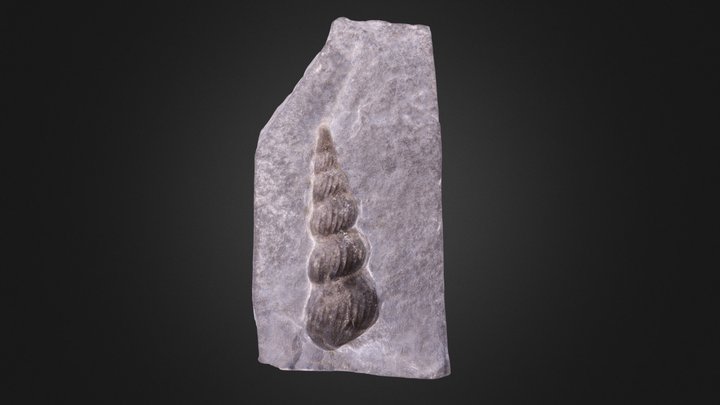
3D model
- Source
- Sketchfab
- Licence
- CC0 Public Domain
- Commercial use
- the licence allows it
No picture of Palaeozygopleura was found. Wikipedia, Wikidata and iDigBio were searched and had none.
Smithsonian Open Access did not answer, so this is what the others held rather than everything there is.
GBIF was asked, and what came back is not recorded: nothing, or a picture this site could not tie to Palaeozygopleura, or no answer at all. This entry cannot say which.
Smithsonian Open Access and MorphoSource were not reached for this taxon, so this list is what the others held rather than everything there is.
This is what the site found, which is not the same as what exists.
Keep going
What may have been alongside itPalaeozygopleuridae through timeFormations of the DevonianThe world it lived on
Occurrence data from the Paleobiology Database, CC BY 4.0. Horný 1955