Panderia megalophthalma
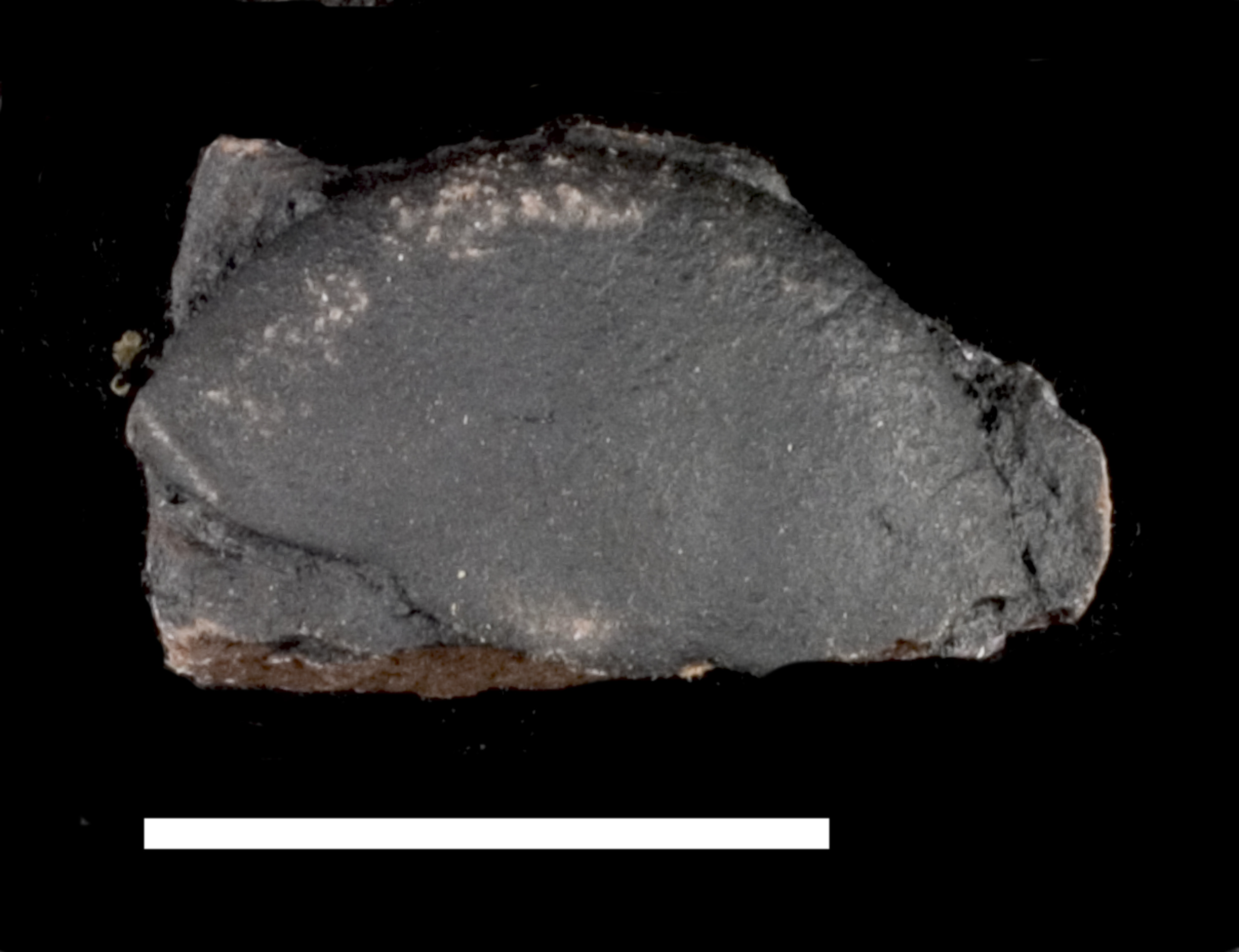
via iDigBio · via iDigBio. May be a photograph of a specimen, or an artist’s reconstruction — an interpretation of a skeleton, since colour and soft tissue are almost never preserved.
On record
Recorded, not inferred- Sits inside
- PanderiaPBDB
- Diet
- carnivorePBDB, for Corynexochida
- Life habit
- nektobenthicPBDB, for Corynexochida
- Motility
- actively mobilePBDB, for Corynexochida
- Vision
- well-developedPBDB, for Panderiidae
- Environment
- marinePBDB, for Trilobita
Time the record covers
At most 9.9 million years on record.
Every occurrence read is dated to somewhere between 453 Mya and 443.1 Mya, and nothing in the dating separates them, so that window is what the record shows rather than a span.
16 occurrences of Panderia megalophthalma on record, most of them in the Ordovician. Bar height is expected occurrences, not a count: each fossil is spread across the span it is dated to, so a tall narrow bar means tight dating and a low wide one means loose.
When
16 occurrences- Ordovician100%
These are dates about fossils, not the animal: the record can only begin after it arose and end before it died out, so either end may reach further. Shares are expected occurrences: a fossil dated to a span is counted partly in each period it straddles. More on what this infers.
Found in
8 formations
- Jerrestad Formation4
- Kirkley Bank Formation3
- Ulunda Mudstone Formation2
- Gagnum Limestone Formation2
- Jonstorp Formation2
- Pyle Mountain Argillite Formation1
Loading coastlines…
The named rock units Panderia megalophthalma has been recovered from, largest first. Drawn where the rock is now, not where it formed.
Panderia megalophthalma and its relatives
OrdovicianWhere Panderia megalophthalma and its relatives were recorded in the Ordovician.
Found in the same rock
85 taxa- Nankinolithus granulatus5 sites
- Illaenus angelini3 sites
- Lonchodomas portlocki3 sites
- Atractopyge verrucosa2 sites
- Calyptaulax2 sites
- Cyclopyge2 sites
- Decoroproetus2 sites
- Dicellograptus complanatus2 sites
- Dionide2 sites
- Gravicalymene2 sites
- Liocnemis2 sites
- Opsimasaphus jaanussoni2 sites
- Platylichas laxatus2 sites
- Primaspis2 sites
- Prionocheilus2 sites
- Pseudosphaerexochus2 sites
- Remopleurides2 sites
- Skenidioides2 sites
- Stenopareia2 sites
- Tretaspis2 sites
- Tretaspis latilimba2 sites
- Trinodus tardus2 sites
- Acanthambonia1 site
- Aegiromena1 site
The Paleobiology Database records 16 sites for Panderia megalophthalma, and this reads all of them. The number is how many of those sites it was catalogued from too. The 24 sharing the most are listed.
This is not a list of everything alive at the time. It is only what has come out of the same ground as this animal and been written down.
Entered from
7 references- The trilobite genus Panderia from the Ordovician of Scandinavia and the Baltic areas5
- Middle-Upper Ordovician trilobites and stratigraphy along the Kyrkbacken rivulet in the Rostånga area, southern Sweden3
- The age, stratigraphy and genesis of the Coniston Limestone Group in the southern Lake District3
- Norwegian Upper Ordovician illaenid trilobites2
- Legend of the Central European series of sheets of the State Geological Map of the Russian Federation, scale 1:1,000,000 (third generation)1
- Late Ordovician (Ashgill) Foliomena Fauna Brachiopods from Northeastern Maine1
- Paleoecologic aspects of an Ordovician Tretaspis fauna1
Each of the 16 occurrences read was entered from one of these publications, ordered by how many each accounts for. This is not a search for papers mentioning the name. Entries link to doi.org where the Paleobiology Database holds an identifier, and to its own record where it does not. Relayed as the Paleobiology Database holds them, not checked against what they resolve to.
Media and terms
Media content1
Picture of Panderia megalophthalma
- Source
- iDigBio
- Credit
- via iDigBio
- Licence
- not stated by the source
- Commercial use
- cannot be read from the licence given — check the record
No 3D scan of Panderia megalophthalma was found in Sketchfab.
Smithsonian Open Access and MorphoSource were not reached for this taxon, so this list is what the others held rather than everything there is.
This is what the site found, which is not the same as what exists.
Keep going
What may have been alongside itPanderia through timeFormations of the OrdovicianThe world it lived on
Occurrence data from the Paleobiology Database, CC BY 4.0. Linnarsson 1869