Paracenoceras hexagonum
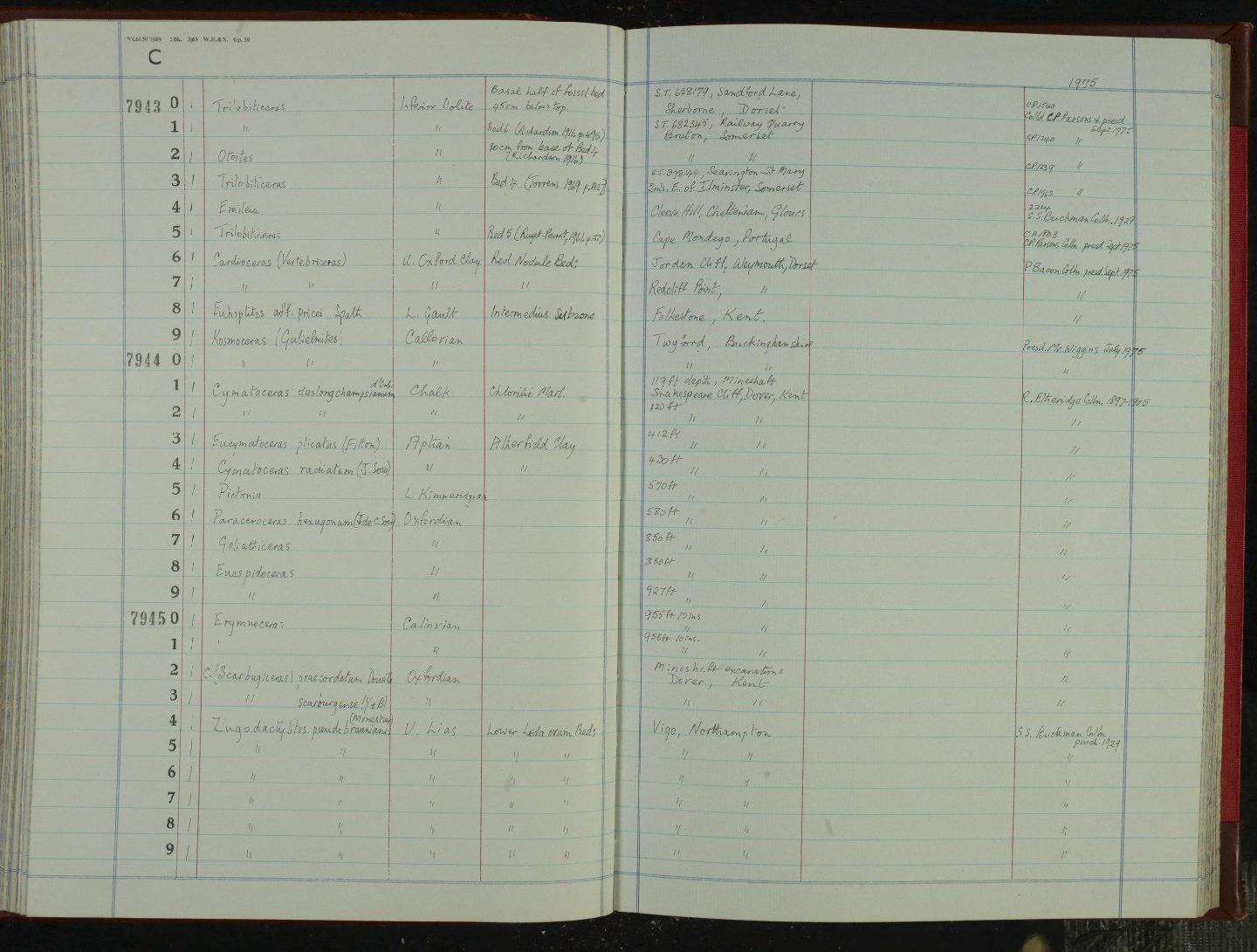
via iDigBio · CC BY · via iDigBio. May be a photograph of a specimen, or an artist’s reconstruction — an interpretation of a skeleton, since colour and soft tissue are almost never preserved.
On record
Recorded, not inferred- Sits inside
- ParacenocerasPBDB
- Diet
- carnivorePBDB, for Nautilida
- Life habit
- nektobenthicPBDB, for Nautilida
- Motility
- actively mobilePBDB, for Nautilida
- Vision
- well-developedPBDB, for Cephalopoda
- Environment
- marinePBDB, for Cephalopoda
Time the record covers
At least 10 million years on record.
The record covers at least 165.3 Mya to 154.8 Mya. No occurrence read is dated outside 168.2 Mya to 149.2 Mya.
11 occurrences of Paracenoceras hexagonum on record, most of them in the Late Jurassic. Bar height is expected occurrences, not a count: each fossil is spread across the span it is dated to, so a tall narrow bar means tight dating and a low wide one means loose.
When
11 occurrencesThese are dates about fossils, not the animal: the record can only begin after it arose and end before it died out, so either end may reach further. Shares are expected occurrences: a fossil dated to a span is counted partly in each period it straddles. More on what this infers.
Found in
6 formations
- Hanifa Formation · Shaqra Group4
- Jubaila Lst. Formation · Shaqra Group1
- Dhruma Formation · Shaqra Group1
- Sa Wer Formation1
- Chari Formation1
- Jubaila Limestone Formation1
Loading coastlines…
The named rock units Paracenoceras hexagonum has been recovered from, largest first. Drawn where the rock is now, not where it formed. 2 occurrences have no formation on record, which is common for older literature.
Paracenoceras hexagonum and its relatives
Late JurassicWhere Paracenoceras hexagonum and its relatives were recorded in the Late Jurassic.
Found in the same rock
75 taxa- Ceratomyopsis2 sites
- Nanogyra (Nanogyra) nana2 sites
- Paracenoceras wepferi2 sites
- Perisphinctes jubailensis2 sites
- Acrosalenia1 site
- Amphitrochus1 site
- Anisocardia1 site
- Arcomytilus laitmairensis1 site
- Arctostrea amor1 site
- Bathrotomaria1 site
- Bathrotomaria buddhai1 site
- Bathrotomaria dhosaensis1 site
- Bathrotomaria prasantai1 site
- Belemnopsis tanganensis1 site
- Bothryopneustes1 site
- Ceratomya1 site
- Chlamys1 site
- Cidaris schlonbachi1 site
- Citharina1 site
- Ctenostreon proboscideum1 site
- Dicroloma1 site
- Discohelix1 site
- Entolium demissum1 site
- Euaspidoceras1 site
The Paleobiology Database records 10 sites for Paracenoceras hexagonum, and this reads all of them. The number is how many of those sites it was catalogued from too. The 24 sharing the most are listed.
This is not a list of everything alive at the time. It is only what has come out of the same ground as this animal and been written down.
Entered from
6 references- Le Jurassique D`Arabie Centrale5
- First record of Plesiodiceras (Bivalvia, Hippuritida, Epidiceratidae) from the late Kimmeridgian (Late Jurassic) of Saudi Arabia, and its palaeobiogeographic significance2
- The Oxfordian (Upper Jurassic) nautiloid fauna of Kutch, western India1
- Jurassic sequences from the Somali coast of the Gulf of Aden1
- Fossili Giuresi della serie sedimentaria del Nilo Azurro meridionale [Jurassic fossils from the sedimentary series of the southern Blue Nile]1
- Les terrains secondaires dans le massif du Moghara à l’Est de l’isthme de Suez1
Each of the 11 occurrences read was entered from one of these publications, ordered by how many each accounts for. This is not a search for papers mentioning the name. Entries link to doi.org where the Paleobiology Database holds an identifier, and to its own record where it does not. Relayed as the Paleobiology Database holds them, not checked against what they resolve to.
Media and terms
Media content1
Picture of Paracenoceras hexagonum
- Source
- iDigBio
- Credit
- via iDigBio
- Licence
- CC BY
- Commercial use
- the licence allows it
No 3D scan was found. Smithsonian Open Access, MorphoSource and Sketchfab were all searched.
This is what the site found, which is not the same as what exists.
Keep going
What may have been alongside itParacenoceras through timeFormations of the Late JurassicThe world it lived on
Occurrence data from the Paleobiology Database, CC BY 4.0. (Sowerby 1826)