Pareiasauridae
Pareiasauria is an extinct clade of large, herbivorous reptiles that existed during the Permian period. Pareiasaurs were armoured with osteoderms which covered large areas of the body. They first appeared in southern Pangea during the Middle Permian, before becoming globally distributed during the Late Permian. Pareiasaurs were the largest reptiles of the Permian, some reaching sizes over 1 tonne (2,200 lb), equivalent to the largest contemporary therapsids. Pareiasaurs became extinct in the end-Permian mass extinction event.

p_a_h from United Kingdom · CC BY 2.0 · via Wikipedia/Commons. May be a photograph of a specimen, or an artist’s reconstruction — an interpretation of a skeleton, since colour and soft tissue are almost never preserved.
On record
Recorded, not inferred- Sits inside
- PareiasauriaPBDB
- Diet
- herbivorePBDB, for Pareiasauria
- Motility
- actively mobilePBDB, for Osteichthyes
- Environment
- terrestrialPBDB, for Amniota
Time the record covers
At least 5.7 million years on record.
The record covers at least 259.857 Mya to 254.14 Mya. No occurrence read is dated outside 274.4 Mya to 251.902 Mya.
35 occurrences of Pareiasauridae on record, most of them in the Permian. Bar height is expected occurrences, not a count: each fossil is spread across the span it is dated to, so a tall narrow bar means tight dating and a low wide one means loose.
When
35 occurrences- Permian100%
These are dates about fossils, not the animal: the record can only begin after it arose and end before it died out, so either end may reach further. Shares are expected occurrences: a fossil dated to a span is counted partly in each period it straddles. More on what this infers.
Found in
10 formations
- Shihtienfeng, Shiqianfeng, Sunjiagou Formation7
- Salarevo Formation7
- Urpalov Formation · Kotelnich Group3
- Rio do Rasto Formation · Passa Dois Group3
- Poldarsa Formation3
- Kutulukskaya Formation2
Loading coastlines…
The named rock units Pareiasauridae has been recovered from, largest first. Drawn where the rock is now, not where it formed. 5 occurrences have no formation on record, which is common for older literature.
Pareiasauridae and its relatives
PermianWhere Pareiasauridae and its relatives were recorded in the Permian.
Found in the same rock
235 taxa- Dvinosaurus primus6 sites
- Isadia aristoviensis6 sites
- Scutosaurus karpinskii6 sites
- Toyemia blumentalis6 sites
- Toyemia tverdochlebovi6 sites
- Dvinosaurus5 sites
- Karpinskiosaurus secundus5 sites
- Chroniosaurus dongusensis4 sites
- Chroniosaurus levis3 sites
- Inostrancevia latifrons3 sites
- Isadia3 sites
- Microphon exiguus3 sites
- Mutovinia stella3 sites
- Provelosaurus americanus3 sites
- Suchonellina3 sites
- Toyemia3 sites
- Vivaxosaurus trautscholdi3 sites
- Annatherapsidus petri2 sites
- Chroniosuchus licharevi2 sites
- Chroniosuchus paradoxus2 sites
- Elph borealis2 sites
- Eurynotoidiidae2 sites
- Geryonichthys2 sites
- Isadia suchonensis2 sites
The Paleobiology Database records 21 sites for Pareiasauridae, and this reads all of them. The number is how many of those sites it was catalogued from too. The 24 sharing the most are listed.
This is not a list of everything alive at the time. It is only what has come out of the same ground as this animal and been written down.
Entered from
13 references- Upper Permian vertebrates and their sedimentological context in the South Urals, Russia8
- Podklass Parareptilia7
- Type and reference sections of the Permian–Triassic continental sequences of the East European Platform: main isotope, magnetic, and biotic events3
- A taxonomic revision of pareiasaurian reptiles: implications for Permian terrestrial paleoecology3
- Pareiasauriden als Leitfossilien [Pareiasaurids as guide fossils]3
- Permian and Triassic therocephals (Eutherapsida) of Eastern Europe2
- Pareiasaurs from the Upper Permian of north China2
- Predvaritel'noye opisaniye novykh form permskoy i triasovoy fauny nazemnykh pozvonochnykh SSSR [Preliminary description of new forms from the Permian and Triassic terrestrial vertebrate fauna of the USSR]2
- New specimens of pareiasaurs from the Upper Permian Sunjiagou Formation of Liulin, Shanxi and their indication for the taxonomy of Chinese pareiasaurs1
- New data on the late Permian vertebrate fauna of Posto Queimado, Rio do Rasto Formation, southern Brazil1
- New Pareiasaur from Liulin, Shanxi1
- [Vertebrate Fossils]1
Each of the 35 occurrences read was entered from one of these publications, ordered by how many each accounts for. This is not a search for papers mentioning the name. 1 further reference is not listed. Entries link to doi.org where the Paleobiology Database holds an identifier, and to its own record where it does not. Relayed as the Paleobiology Database holds them, not checked against what they resolve to.
Media and terms
Media content2
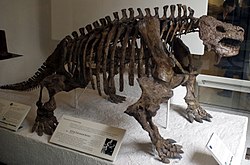
Picture of Pareiasauridae
- Source
- Wikipedia/Commons
- Credit
- p_a_h from United Kingdom
- Licence
- CC BY 2.0
- Commercial use
- the licence allows it
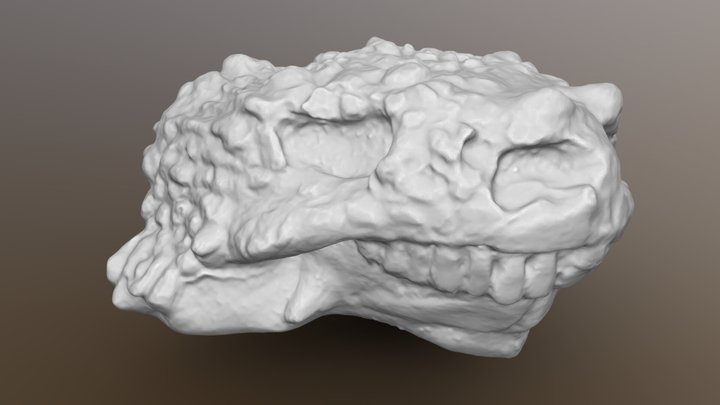
3D model
- Source
- Sketchfab
- Licence
- CC Attribution
- Commercial use
- cannot be read from the licence given — check the record
Smithsonian Open Access and MorphoSource were not reached for this taxon, so this list is what the others held rather than everything there is.
The description on this site
- Licence
- CC BY-SA 4.0
This is what the site found, which is not the same as what exists.
Keep going
What may have been alongside itPareiasauria through timeFormations of the PermianThe world it lived on
Occurrence data from the Paleobiology Database, CC BY 4.0. Lydekker 1889