Parka
Parka decipiens is a Devonian fossil believed to be an early land plant, and is the only species described in the genus Parka. It bears at least a passing resemblance to the alga Coleochaete, but the significance of this similarity is yet to be established.

Hectonichus · CC BY-SA 3.0 · via Wikipedia/Commons. May be a photograph of a specimen, or an artist’s reconstruction — an interpretation of a skeleton, since colour and soft tissue are almost never preserved.
On record
Recorded, not inferred- Sits inside
- PlantaePBDB
Time the record covers
At most 9.7 million years on record.
Every occurrence read is dated to somewhere between 422.7 Mya and 413.02 Mya, and nothing in the dating separates them, so that window is what the record shows rather than a span.
5 occurrences of Parka on record, most of them in the Devonian. Bar height is expected occurrences, not a count: each fossil is spread across the span it is dated to, so a tall narrow bar means tight dating and a low wide one means loose.
When
5 occurrencesThese are dates about fossils, not the animal: the record can only begin after it arose and end before it died out, so either end may reach further. Shares are expected occurrences: a fossil dated to a span is counted partly in each period it straddles. More on what this infers.
Found in
3 formations
- Wutubulake Formation · Hoboksar Group2
- Dundee Formation2
- St. Maughans Formation1
Loading coastlines…
The named rock units Parka has been recovered from, largest first. Drawn where the rock is now, not where it formed.
Parka and its relatives
DevonianWhere Parka and its relatives were recorded in the Devonian.
Found in the same rock
21 taxa- cf. Uskiella reticulata1 site
- Cooksonia1 site
- Cooksonia hemisphaerica1 site
- Cooksonia pertoni1 site
- Eurypterida1 site
- Hostinella1 site
- Nematasketum diversiforme1 site
- Nematothallus pseudovasculosa1 site
- Pachytheca sphaerica1 site
- Phialaspis symondsi1 site
- Prototaxites1 site
- Pteraspis rostrata1 site
- Rhyniophytina indet.1 site
- Salopella marcensis n. sp.1 site
- Salopella sp.1 site
- Tarrantia salopensis n. gen. n. sp.1 site
- Tortilicaulis transwalliensis1 site
- Uskiella reticulata n. sp.1 site
- Yarravia1 site
- Zosterophyllum1 site
- Zosterophyllum myretonianum1 site
The Paleobiology Database records 2 sites for Parka, and this reads all of them. The number is how many of those sites it was catalogued from too.
This is not a list of everything alive at the time. It is only what has come out of the same ground as this animal and been written down.
Entered from
4 references- Contributions to the Study of the Old Red Sandstone Flora of Scotland. VI. On Zosterophyllum myretonianum, Penh., and some other plant-remains from the Carmyllie Beds of the Lower Old Red Sandstone. VII. On a specimen of Pseudosporochnus from the Stromness Beds.2
- On the Late Palaeozoic plants in Northern Xinjiang1
- Devonian Plants1
- On the plant-remains from the Downtonian of England and Wales1
Each of the 5 occurrences read was entered from one of these publications, ordered by how many each accounts for. This is not a search for papers mentioning the name. Entries link to doi.org where the Paleobiology Database holds an identifier, and to its own record where it does not. Relayed as the Paleobiology Database holds them, not checked against what they resolve to.
Media and terms
Media content2
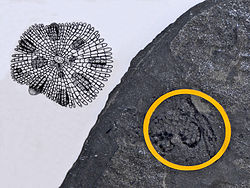
Picture of Parka
- Source
- Wikipedia/Commons
- Credit
- Hectonichus
- Licence
- CC BY-SA 3.0
- Commercial use
- the licence allows it
3D model
- Source
- Sketchfab
- Credit
- Isaias Fernandez Salazar
- Licence
- CC Attribution
- Commercial use
- cannot be read from the licence given — check the record
Smithsonian Open Access and MorphoSource were not reached for this taxon, so this list is what the others held rather than everything there is.
The description on this site
- Licence
- CC BY-SA 4.0
This is what the site found, which is not the same as what exists.
Keep going
What may have been alongside itPlantae through timeFormations of the DevonianThe world it lived on
Occurrence data from the Paleobiology Database, CC BY 4.0. Fleming 1857