Persea

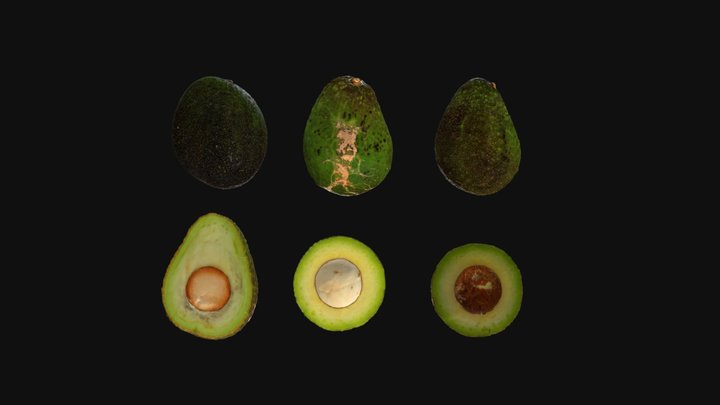
Uncredited · via Wikidata/Commons. May be a photograph of a specimen, or an artist’s reconstruction — an interpretation of a skeleton, since colour and soft tissue are almost never preserved.
On record
Recorded, not inferred- Sits inside
- LauraceaePBDB
- Diet
- "photoautotroph"PBDB, for Angiospermae
Time the record covers
At least 69 million years on record.
The record covers at least 72.2 Mya to 2.58 Mya. No occurrence read is dated outside 100.5 Mya to 11.7 ka.
83 occurrences of Persea on record, most of them in the Miocene. The Paleobiology Database records this as a living group. Bar height is expected occurrences, not a count: each fossil is spread across the span it is dated to, so a tall narrow bar means tight dating and a low wide one means loose.
When
83 occurrences- Late Cretaceous5%
- Paleocene12%
- Eocene29%
- Oligocene7%
- Miocene40%
- Pliocene6%
- Pleistocene1%
These are dates about fossils, not the animal: the record can only begin after it arose and end before it died out, so either end may reach further. Shares are expected occurrences: a fossil dated to a span is counted partly in each period it straddles. More on what this infers.
Found in
27 formations
- Yagii Formation6
- Eagle Formation3
- Fort Union Formation3
- Itahana Formation · Tomioka Group2
- Florissant Formation2
- Motojuku Formation1
Loading coastlines…
The named rock units Persea has been recovered from, largest first. Drawn where the rock is now, not where it formed. 3 further formations hold fewer occurrences each and are not listed. 45 occurrences have no formation on record, which is common for older literature.
Persea and its relatives
MioceneWhere Persea and its relatives were recorded in the Miocene.
Found in the same rock
697 taxa- Cladrastis11 sites
- Canarium californicum10 sites
- Chaetoptelea pseudofulva10 sites
- Liquidambar10 sites
- Rhus mixta10 sites
- Bambusites9 sites
- Carpites egregia9 sites
- Castanopsis longipetiolatum9 sites
- Cercidiphyllum elongatum9 sites
- Cinnamomum dilleri9 sites
- Engelhardtia nevadensis9 sites
- Gordonia egregia9 sites
- Mallotus riparius9 sites
- Platanus appendiculata9 sites
- Quercus9 sites
- Quercus nevadensis9 sites
- Salix9 sites
- Thouinopsis myricaefolia9 sites
- Zamites californica9 sites
- Zelkova ungeri9 sites
- Liquidambar californicum8 sites
- Macginitiea whitneyi8 sites
- Metasequoia occidentalis8 sites
- Rhus8 sites
The Paleobiology Database records 58 sites for Persea, and this reads all of them. The number is how many of those sites it was catalogued from too. The 24 sharing the most are listed.
This is not a list of everything alive at the time. It is only what has come out of the same ground as this animal and been written down.
Entered from
31 references- A Middle Eocene Flora from the Central Sierra Nevada12
- Late Miocene and Pliocene Floras in Central Honshu, Japan11
- Paleocene flora of the Rocky Mountains and Great Plains9
- Paleoecological and Floristic Heterogeneity in the Plant-Fossil Record - An Analysis Based on the Eocene of Washington6
- Kleinsäugerstratigraphie in der miozänen Hörnlischüttung (Ostschweiz); (Biostratigraphy of small mammals in the Hörnlischüttung of Miocene age (East Switzerland))5
- The flora of the Eagle Formation and its significance for Late Cretaceous floristic evolution3
- Allochthonous seed and fruit floras from the Pliocene of the Lower Rhine Basin3
- Die Floren des Haselbacher Serie im Weisselster-Becken (Bezirk Leipzig, DDR)3
- Fossil Plants of the Florissant Beds of Colorado3
- Tertiary plants from Venezuela3
- Contributions to the Neogene Paleobotany of Central California2
- Die Miozaenan Frucht-und Samen-Floren die Oberpfaelzer Braunkohle. I. Funde aus den sandigen zwischenmitteln2
Each of the 83 occurrences read was entered from one of these publications, ordered by how many each accounts for. This is not a search for papers mentioning the name. 19 further references are not listed. Entries link to doi.org where the Paleobiology Database holds an identifier, and to its own record where it does not. Relayed as the Paleobiology Database holds them, not checked against what they resolve to.
Media and terms
Media content2
Picture of Persea
- Source
- Wikidata/Commons
- Credit
- nobody named on the record
- Licence
- not stated by the source
- Commercial use
- cannot be read from the licence given — check the record
Smithsonian Open Access and MorphoSource were not reached for this taxon, so this list is what the others held rather than everything there is.
This is what the site found, which is not the same as what exists.
Keep going
What may have been alongside itLauraceae through timeFormations of the MioceneThe world it lived on
Occurrence data from the Paleobiology Database, CC BY 4.0. Gaertner 1805