Phyllangia

Cairns S, Kitahara M (2012) · CC BY 3.0 · via Wikidata/Commons. May be a photograph of a specimen, or an artist’s reconstruction — an interpretation of a skeleton, since colour and soft tissue are almost never preserved.
On record
Recorded, not inferred- Sits inside
- RhizangiidaePBDB
- Diet
- suspension feederPBDB, for Rhizangiidae
- Life habit
- colonial, clonalPBDB, for Rhizangiidae
- Motility
- stationary, attachedPBDB, for Rhizangiidae
- Vision
- blindPBDB, for Anthozoa
- Environment
- marinePBDB, for Rhizangiidae
Time the record covers
At least 34 million years on record.
The record covers at least 37.71 Mya to 3.6 Mya. No occurrence read is dated outside 48.07 Mya to 774 ka.
15 occurrences of Phyllangia on record, most of them in the Miocene. The Paleobiology Database records this as a living group, and the chart stops with its fossils rather than at the present. Bar height is expected occurrences, not a count: each fossil is spread across the span it is dated to, so a tall narrow bar means tight dating and a low wide one means loose.
When
15 occurrences- Eocene7%
- Oligocene7%
- Miocene67%
- Pliocene16%
- Pleistocene4%
These are dates about fossils, not the animal: the record can only begin after it arose and end before it died out, so either end may reach further. Shares are expected occurrences: a fossil dated to a span is counted partly in each period it straddles. More on what this infers.
Found in
6 formations
- Termofourà Formation2
- Caloosahatchee Formation1
- Gornji Grad Formation1
- Jackson Bluff Formation · Alum Bluff Group1
- Duplin Formation1
- Tamiami Formation1
Loading coastlines…
The named rock units Phyllangia has been recovered from, largest first. Drawn where the rock is now, not where it formed. 8 occurrences have no formation on record, which is common for older literature.
Phyllangia and its relatives
MioceneWhere Phyllangia and its relatives were recorded in the Miocene.
Found in the same rock
235 taxa- Acropora lavandulina2 sites
- Aquitanastraea pruvosti2 sites
- Aquitanophyllia grandistellae2 sites
- Defrancia irregularis2 sites
- Diploastrea multisepta2 sites
- Lithophyllia2 sites
- Pocillopora madreporacea2 sites
- Porites collegniana2 sites
- Solenastrea desmoulinsi2 sites
- Stylophora raristella2 sites
- Tarbellastraea ellisiana2 sites
- Acanthastrea crenulata1 site
- Acanthastrea termofurae1 site
- Acropora bonellii1 site
- Acropora exarata1 site
- Acropora fennemai1 site
- Akleistostoma erici1 site
- Anomocora rarogemmans1 site
- Aquitanastraea1 site
- Aquitanastraea incrustans1 site
- Aquitanastraea piveteaui1 site
- Aquitanastraea tenuitabulata1 site
- Astrangia leonensis1 site
- Astrhelia1 site
The Paleobiology Database records 5 sites for Phyllangia, and this reads all of them. The number is how many of those sites it was catalogued from too. The 24 sharing the most are listed.
This is not a list of everything alive at the time. It is only what has come out of the same ground as this animal and been written down.
Entered from
10 references- Les faunes de coraux (Anthozoaires Scléractiniaires) de la façade atlantique française au Chattien et au Miocène3
- Recherches sur les Madreporaires et les formations recifales Miocenes de la Mediterranee occidentale [Miocene corals and reefs from the western Mediterranean]3
- Die Anthozoenfauna des Jungtertiärs von Borneo [Anthozoa from the Upper Tertiary of Borneo]2
- Petuch, 20031
- Late Cenozoic corals of south Florida1
- Corals from the Chipola and Jackson Bluff Formations of Florida1
- Korallen und Balaniden aus den paläogenen Schichten Jugoslawiens [Corals and balanids from Paleogene beds of Yugoslavia]1
- Coral Studies, Part III. Three new Cretaceous corals from Texas and Alabama, Part IV. A new species of Phyllangia from the Florida Miocene, Part V. A new Coenocyathus from Florida1
- Tertiary corals from Sumba (East Indies)1
- Paläontologische Studien über die älteren Tertiärschichten der Alpen. III. Abtheilung. Die fossilien anthozoen der Schichtengruppe von S. Giovanni Ilarione und von Ronca1
Each of the 15 occurrences read was entered from one of these publications, ordered by how many each accounts for. This is not a search for papers mentioning the name. Entries link to doi.org where the Paleobiology Database holds an identifier, and to its own record where it does not. Relayed as the Paleobiology Database holds them, not checked against what they resolve to.
Media and terms
Media content2
Picture of Phyllangia
- Source
- Wikidata/Commons
- Credit
- Cairns S, Kitahara M (2012)
- Licence
- CC BY 3.0
- Commercial use
- the licence allows it
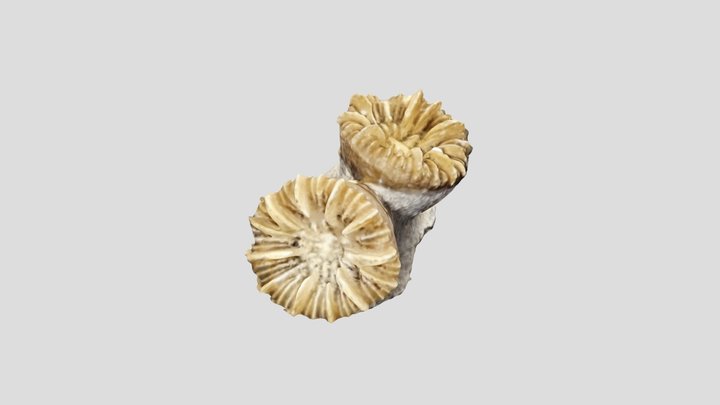
3D model
- Source
- Sketchfab
- Credit
- peppins111
- Licence
- CC Attribution
- Commercial use
- cannot be read from the licence given — check the record
Smithsonian Open Access and MorphoSource were not reached for this taxon, so this list is what the others held rather than everything there is.
This is what the site found, which is not the same as what exists.
Keep going
What may have been alongside itRhizangiidae through timeFormations of the MioceneThe world it lived on
Occurrence data from the Paleobiology Database, CC BY 4.0. Milne-Edwards and Haime 1848