Plecoptera
Plecoptera is an order of insects commonly known as stoneflies. Some 3,500 species are described worldwide, with new species still being discovered. Stoneflies are found worldwide, except Antarctica. Stoneflies are believed to be one of the most primitive groups of Neoptera, with close relatives identified from the Carboniferous and Lower Permian geological periods, while true stoneflies are known from fossils only a bit younger. Their modern diversity, however, apparently is of Mesozoic origin.

JJ Harrison ( https://www.jjharrison.com.au/ ) · CC BY-SA 3.0 · via Wikipedia/Commons. May be a photograph of a specimen, or an artist’s reconstruction — an interpretation of a skeleton, since colour and soft tissue are almost never preserved.
On record
Recorded, not inferred- Also called
- stoneflyPBDB
- Sits inside
- PlecopteridaPBDB
- Diet
- detritivore, omnivorePBDB
- Life habit
- volant, solitaryPBDB
- Motility
- actively mobilePBDB
- Vision
- well-developedPBDB
- Environment
- freshwater,terrestrialPBDB
Time the record covers
At least 279 million years on record.
The record covers at least 283.3 Mya to 3.6 Mya. No occurrence read is dated outside 290.1 Mya to 2.58 Mya.
477 occurrences of Plecoptera on record, most of them in the Permian. The Paleobiology Database records this as a living group, and the chart stops with its fossils rather than at the present. Bar height is expected occurrences, not a count: each fossil is spread across the span it is dated to, so a tall narrow bar means tight dating and a low wide one means loose.
When
477 occurrences- Permian23%
- Middle Triassic8%
- Late Triassic5%
- Early Jurassic9%
- Middle Jurassic5%
- Late Jurassic18%
- Early Cretaceous12%
- Late Cretaceous8%
- Eocene8%
- Oligoceneunder 1%
- Miocene1%
- Plioceneunder 1%
These are dates about fossils, not the animal: the record can only begin after it arose and end before it died out, so either end may reach further. Shares are expected occurrences: a fossil dated to a span is counted partly in each period it straddles. More on what this infers.
Found in
82 formations
- Madygen Formation40
- Poldarsa Formation22
- Daohugou Formation18
- Ichetuy Formation18
- Koshelevka Formation16
- Mitina Formation15
Loading coastlines…
The named rock units Plecoptera has been recovered from, largest first. Drawn where the rock is now, not where it formed. 58 further formations hold fewer occurrences each and are not listed. 137 occurrences have no formation on record, which is common for older literature.
Plecoptera and its relatives
PermianWhere Plecoptera and its relatives were recorded in the Permian.
Found in the same rock
6,812 taxa- Mesobaetis sibirica10 sites
- Mesoleuctroides saturatus9 sites
- Orthophlebiidae8 sites
- Orthoptera7 sites
- Staphylinidae7 sites
- Thuringoblatta sogdianensis7 sites
- Araneae6 sites
- Archirhyphus asiaticus6 sites
- Blattodea6 sites
- Coleoptera6 sites
- Limoniidae6 sites
- Prenolepis henschei6 sites
- Protoscelis jurassica6 sites
- Protoscelis longicornis6 sites
- Tetraponera simplex6 sites
- Ulaia communis6 sites
- Yantaromyrmex geinitzi6 sites
- Codemus synaptoides5 sites
- Ctenobethylus goepperti5 sites
- Distenorrhinus (Distenorrhinus) pallidirostris5 sites
- Gesomyrmex hoernesi5 sites
- Jurodes minor5 sites
- Kamopanorpa uralensis5 sites
- Lasius schiefferdeckeri5 sites
The Paleobiology Database records 222 sites for Plecoptera, and this reads all of them. Of that, one read hit the database's own return limit, so every count below is a floor rather than a total. The number is how many of those sites it was catalogued from too. The 24 sharing the most are listed.
This is not a list of everything alive at the time. It is only what has come out of the same ground as this animal and been written down.
Entered from
124 references- Istopicheskoe razvitie vesiyanok130
- Yurskie vesnyanki yuzhnoy Sibiri i prilegayushchikh territoriy (Perlida=Plecoptera)35
- A new stonefly assemblage (Insecta: Perlida = Plecoptera) from the Upper Permian deposits of northern European Russia21
- Die im Bernstein befindlichen Neuropteren der Vorwelt17
- New Stoneflies of the Family Palaeonemouridae from the Upper Permian of Udmurtiya and the Orenburg Region (Insecta: Perlida = Plecoptera)13
- Paleozoiskie nasekomye kuznetskogo basseina13
- New upper Mesozoic stone flies from Yakutia (Insecta: Perlida = Plecoptera)12
- New Upper Mesozoic Stoneflies from Central Transbaikalia (Insecta, Perlida=Plecoptera)11
- New stoneflies of the suborder Perlina Latreille, 1802 (Insecta: Perlida = Plecoptera) from the Middle Permian of the Kostovaty locality in Udmurtia, Russia10
- 'Rolling' stoneflies (Insecta: Plecoptera) from mid-Cretaceous Burmese amber9
- New late Mesozoic stoneflies from Shara-Teeg, Mongolia (Insecta: Perlida-Plecoptera)9
- New Jurassic stoneflies (Perlida) from Transbaikalia8
Each of the 477 occurrences read was entered from one of these publications, ordered by how many each accounts for. This is not a search for papers mentioning the name. 112 further references are not listed. Entries link to doi.org where the Paleobiology Database holds an identifier, and to its own record where it does not. Relayed as the Paleobiology Database holds them, not checked against what they resolve to.
Media and terms
Media content1
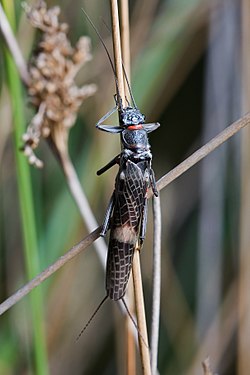
Picture of Plecoptera
- Source
- Wikipedia/Commons
- Credit
- JJ Harrison ( https://www.jjharrison.com.au/ )
- Licence
- CC BY-SA 3.0
- Commercial use
- the licence allows it
No 3D scan of Plecoptera was found in MorphoSource and Sketchfab.
Smithsonian Open Access was not reached for this taxon, so this list is what the others held rather than everything there is.
The description on this site
- Source
- Wikipedia, “Plecoptera”
- Licence
- CC BY-SA 4.0
This is what the site found, which is not the same as what exists.
Keep going
What may have been alongside itPlecopterida through timeFormations of the PermianThe world it lived on
Occurrence data from the Paleobiology Database, CC BY 4.0. Burmeister 1839