Pollen indet.
No picture of Pollen indet. was found. Wikidata was searched and had none. Wikipedia has a picture filed under this name, but nothing tied it to Pollen indet. itself, so it was not used. iDigBio and GBIF were not searched: the Paleobiology Database does not place Pollen indet. firmly enough to tell it from something else bearing the same name, and a search on the name alone returns whichever of them was photographed. Smithsonian Open Access did not answer, so this is what the others held rather than everything there is.
Time the record covers
At least 180 million years on record.
The record covers at least 274.4 Mya to 93.9 Mya. No occurrence read is dated outside 286 Mya to 66 Mya.
24 occurrences of Pollen indet. on record, most of them in the Early Cretaceous. Bar height is expected occurrences, not a count: each fossil is spread across the span it is dated to, so a tall narrow bar means tight dating and a low wide one means loose.
When
24 occurrencesThese are dates about fossils, not the animal: the record can only begin after it arose and end before it died out, so either end may reach further. Shares are expected occurrences: a fossil dated to a span is counted partly in each period it straddles. More on what this infers.
Found in
2 formations
- Belle Creek Formation · Wichita-Albany Group2
- Yolde Formation1
Loading coastlines…
The named rock units Pollen indet. has been recovered from, largest first. Drawn where the rock is now, not where it formed. 21 occurrences have no formation on record, which is common for older literature.
Pollen indet. and its relatives
Early CretaceousWhere Pollen indet. and its relatives were recorded in the Early Cretaceous.
Found in the same rock
71 taxa- Cretacaeiporites polygonalis19 sites
- Foraminifera19 sites
- Retitricolpates indet.19 sites
- Ephedripites18 sites
- Psilatricolpites17 sites
- Dinoflagellates indet.16 sites
- Classopollis14 sites
- Retitricolpites operculatus10 sites
- Verrutriletes10 sites
- Cretacaeiporites scabratus9 sites
- Elaterosporites protensus9 sites
- Perotrilites pannuceus9 sites
- Steevesipollenites binodosus9 sites
- Acritarchs indet.8 sites
- Cretacaeiporites muellerii8 sites
- Elaterosporites klaszi8 sites
- Gnetaceaepollenites diversus8 sites
- Hexaporotricolpites emelianovi8 sites
- Elaterocolpites castelaini7 sites
- Elaterosporites7 sites
- Reticulatasporites6 sites
- Reyrea6 sites
- Araucariacites5 sites
- Elateroplicites africaensis5 sites
The Paleobiology Database records 22 sites for Pollen indet., and this reads all of them. The number is how many of those sites it was catalogued from too. The 24 sharing the most are listed.
This is not a list of everything alive at the time. It is only what has come out of the same ground as this animal and been written down.
Entered from
4 references- Palynology of the Middle and Upper Cretaceous strata in Brazil19
- Palynologuie et stratigraphie du Crétacé des Bassin du Sénégal et Cote d'Ivoire2
- Late Paleozoic bissacate pollen from the United States midcontinent area2
- Palynological biostratigraphy of Cretaceous sediments in the Upper Benue basin, NE. Nigeria1
Each of the 24 occurrences read was entered from one of these publications, ordered by how many each accounts for. This is not a search for papers mentioning the name. Each entry links to the Paleobiology Database's own record for the work.
Media and terms
Media content1
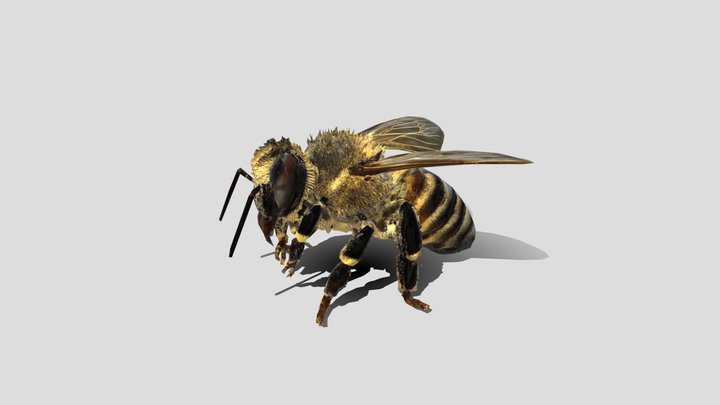
3D model
- Source
- Sketchfab
- Credit
- iRahulRajput
- Licence
- CC Attribution
- Commercial use
- cannot be read from the licence given — check the record
No picture of Pollen indet. was found. Wikidata was searched and had none.
Wikipedia has a picture filed under this name, but nothing tied it to Pollen indet. itself, so it was not used.
iDigBio and GBIF were not searched: the Paleobiology Database does not place Pollen indet. firmly enough to tell it from something else bearing the same name, and a search on the name alone returns whichever of them was photographed.
Smithsonian Open Access did not answer, so this is what the others held rather than everything there is.
Smithsonian Open Access and MorphoSource were not reached for this taxon, so this list is what the others held rather than everything there is.
This is what the site found, which is not the same as what exists.
Keep going
What may have been alongside itFormations of the Early CretaceousThe world it lived on
Occurrence data from the Paleobiology Database, CC BY 4.0.