Pseudofossil
No picture of Pseudofossil was found. Wikidata was searched and had none. iDigBio and GBIF were not searched: the Paleobiology Database does not place Pseudofossil firmly enough to tell it from something else bearing the same name, and a search on the name alone returns whichever of them was photographed. Wikipedia and Smithsonian Open Access did not answer, so this is what the others held rather than everything there is.
Time the record covers
At least 3599 million years on record.
The record covers at least 3600 Mya to 11.7 ka. No occurrence read is dated outside 4031 Mya to 0 Mya.
28 occurrences of Pseudofossil on record, most of them in the Early Jurassic. Bar height is expected occurrences, not a count: each fossil is spread across the span it is dated to, so a tall narrow bar means tight dating and a low wide one means loose.
When
28 occurrences- Permian4%
- Early Jurassic7%
- Late Jurassic4%
- Early Cretaceous2%
- Late Cretaceous1%
- Eocene4%
- Miocene4%
- Holocene7%
These are dates about fossils, not the animal: the record can only begin after it arose and end before it died out, so either end may reach further. Shares are expected occurrences: a fossil dated to a span is counted partly in each period it straddles. More on what this infers.
Found in
10 formations
- Apex Chert Formation9
- Millingport Formation · Albemarle Group3
- Appekunny Formation · Ravalli Group3
- Portland Formation · Agawam Group2
- Zhengmuguan Formation1
- Liuchapo Formation1
Loading coastlines…
The named rock units Pseudofossil has been recovered from, largest first. Drawn where the rock is now, not where it formed. 5 occurrences have no formation on record, which is common for older literature.
Pseudofossil and its relatives
Early JurassicWhere Pseudofossil and its relatives were recorded in the Early Jurassic.
Found in the same rock
113 taxa- Pteridinium carolinaensis3 sites
- Vermiforma antiqua3 sites
- Batrachoides nidificans2 sites
- Palaeopascichnus2 sites
- Aeschnogomphus intermedius1 site
- Apiaria mesozoica1 site
- Archaeosciaphilus gyrommatus1 site
- Bakevellia (Bakevellia) binneyi1 site
- Brongniartiella gigas1 site
- Brongniartiella inconditissimi1 site
- Cacomorphocerus endecacerus1 site
- Cascofilaria baltica1 site
- Caulophilus sucinopunctatus1 site
- Celaenoteuthis incerta1 site
- Chilopoda1 site
- Chresmoda obscura1 site
- Chrysomelophana rara1 site
- Coelostylina obtusa1 site
- Coleopteron antiquus1 site
- Cymatophlebia longialata1 site
- Ditomoptera defossa1 site
- Ditomoptera dubia1 site
- Elcana lithophila1 site
- Electrotribus theryi1 site
The Paleobiology Database records 20 sites for Pseudofossil, and this reads all of them. The number is how many of those sites it was catalogued from too. The 24 sharing the most are listed.
This is not a list of everything alive at the time. It is only what has come out of the same ground as this animal and been written down.
Entered from
16 references- Haematite pseudomicrofossils present in the 3.5-billion-year-old Apex Chert9
- A new tissue-grade organism 1.5 billion years old from Montana3
- Edicarian fossils from the Carolina slate belt, Stanly County, North Carolina3
- Reappraisal of purported ca. 3.7 Ga stromatolites from the Isua Supracrustal Belt (West Greenland) from detailed chemical and structural analysis1
- Silicified Horodyskia and Palaeopascichnus from Upper Ediacaran cherts in south China: tentative phylogenetic interpretation and implications for evolutionary stasis1
- Problematic macrofossils from Ediacaran successions in the North China and Chaidam Blocks: implications for their evolutionary roots and biostratigraphic significance1
- A rhabdocoel turbellarian (Platyhelminthes, Typhloplanoida) in Baltic amber with a review of fossil and sub-fossil platyhelminths1
- Neoguadalupia oregonensis new species: Reappearance of a Permian sponge genus in the Upper Triassic Wallowa terrane, Oregon1
- Verruca Withersi N.SP. (Crustacea: Cirripedia) from the Middle of the Cretaceous of Columbia1
- Früheste bisher bekannte Lebewesen; Isuasphaera isua n. gen. n. spec. aus der Isua-Serie von Groenland (ca. 3800 Mio. J.)1
- Fossil arthropods of California 7. A fossil whiptail scorpion from Cabrillo Beach1
- Organische Einschlüsse im Bergkrystall, Mittheilung1
Each of the 28 occurrences read was entered from one of these publications, ordered by how many each accounts for. This is not a search for papers mentioning the name. 4 further references are not listed. Entries link to doi.org where the Paleobiology Database holds an identifier, and to its own record where it does not. Relayed as the Paleobiology Database holds them, not checked against what they resolve to.
Media and terms
Media content1
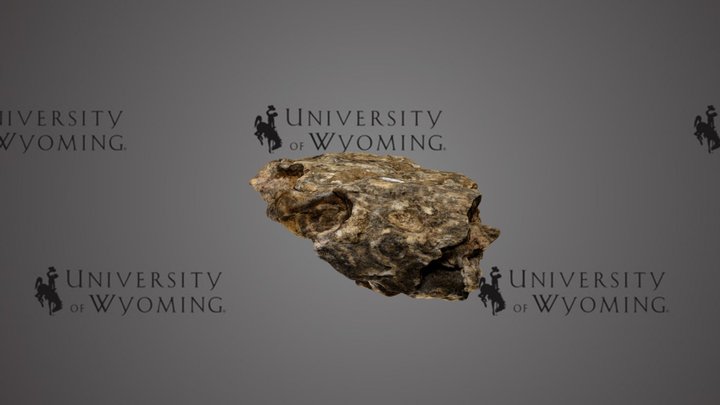
3D model
- Source
- Sketchfab
- Licence
- CC Attribution-NonCommercial
- Commercial use
- the licence does not allow it
No picture of Pseudofossil was found. Wikidata was searched and had none.
iDigBio and GBIF were not searched: the Paleobiology Database does not place Pseudofossil firmly enough to tell it from something else bearing the same name, and a search on the name alone returns whichever of them was photographed.
Wikipedia and Smithsonian Open Access did not answer, so this is what the others held rather than everything there is.
Smithsonian Open Access was not reached for this taxon, so this list is what the others held rather than everything there is.
This is what the site found, which is not the same as what exists.
Keep going
What may have been alongside itFormations of the Early JurassicThe world it lived on
Occurrence data from the Paleobiology Database, CC BY 4.0.